Naufrago
An immersive and interactive installation that invites visitors to rediscover play as an experience of freedom, memory and transformation. Through movement, sound, light and sacred geometry, Náufrago becomes a journey toward the child that still lives within us.




Details
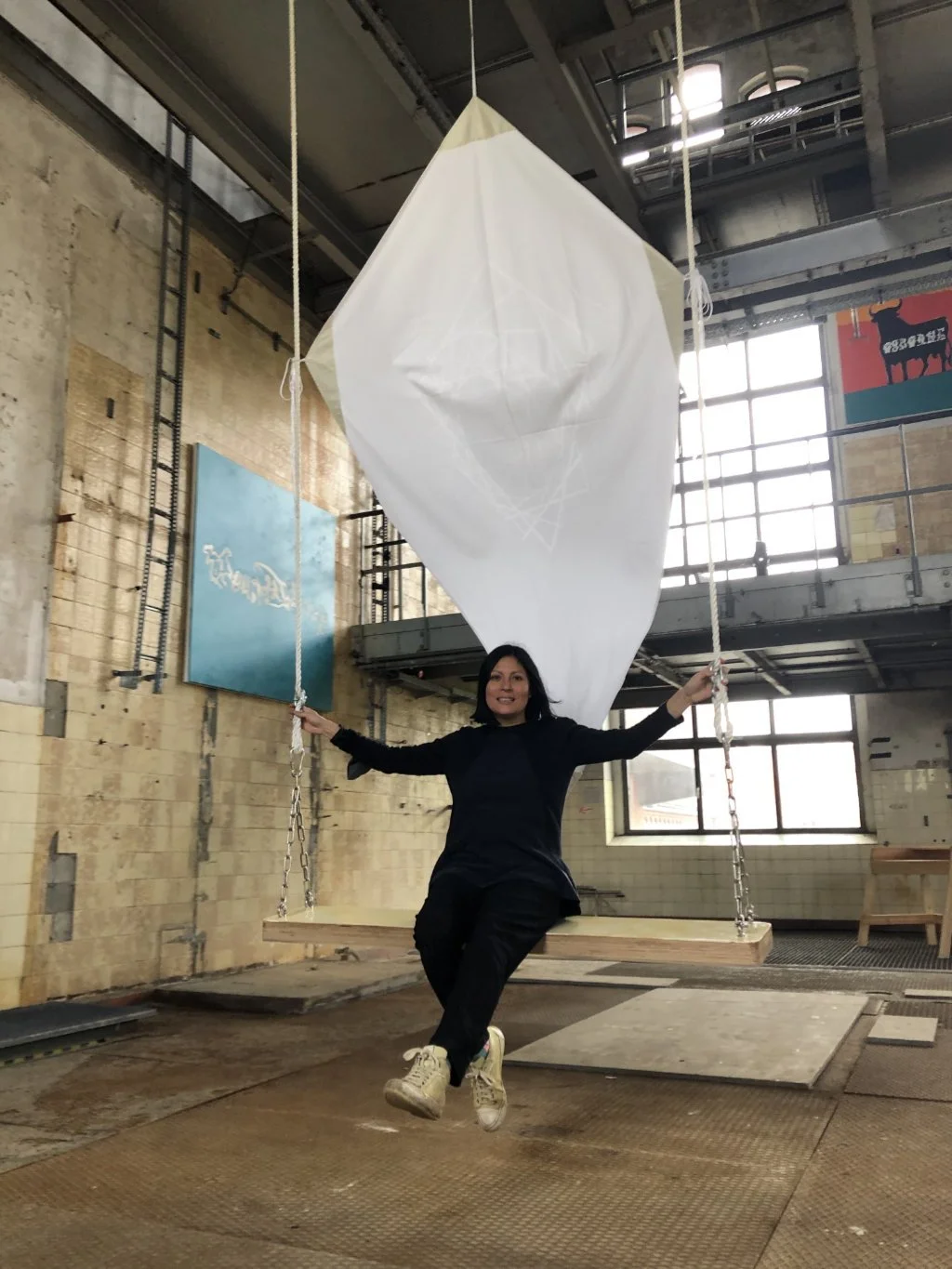
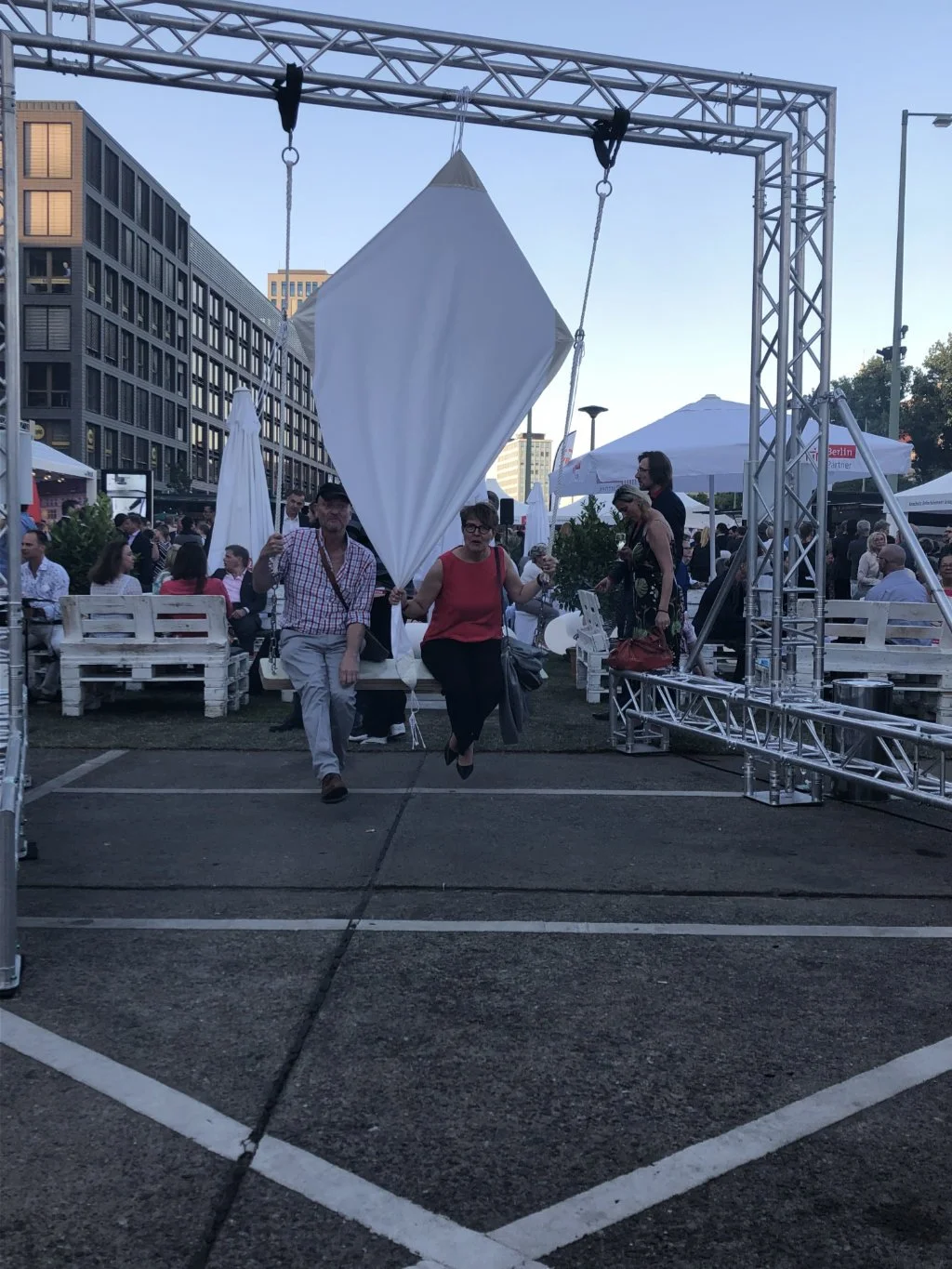
Náufrago, Spanish for "Castaway", invites visitors to step beyond the role of observer and enter the work through a simple yet deeply universal gesture: swinging.
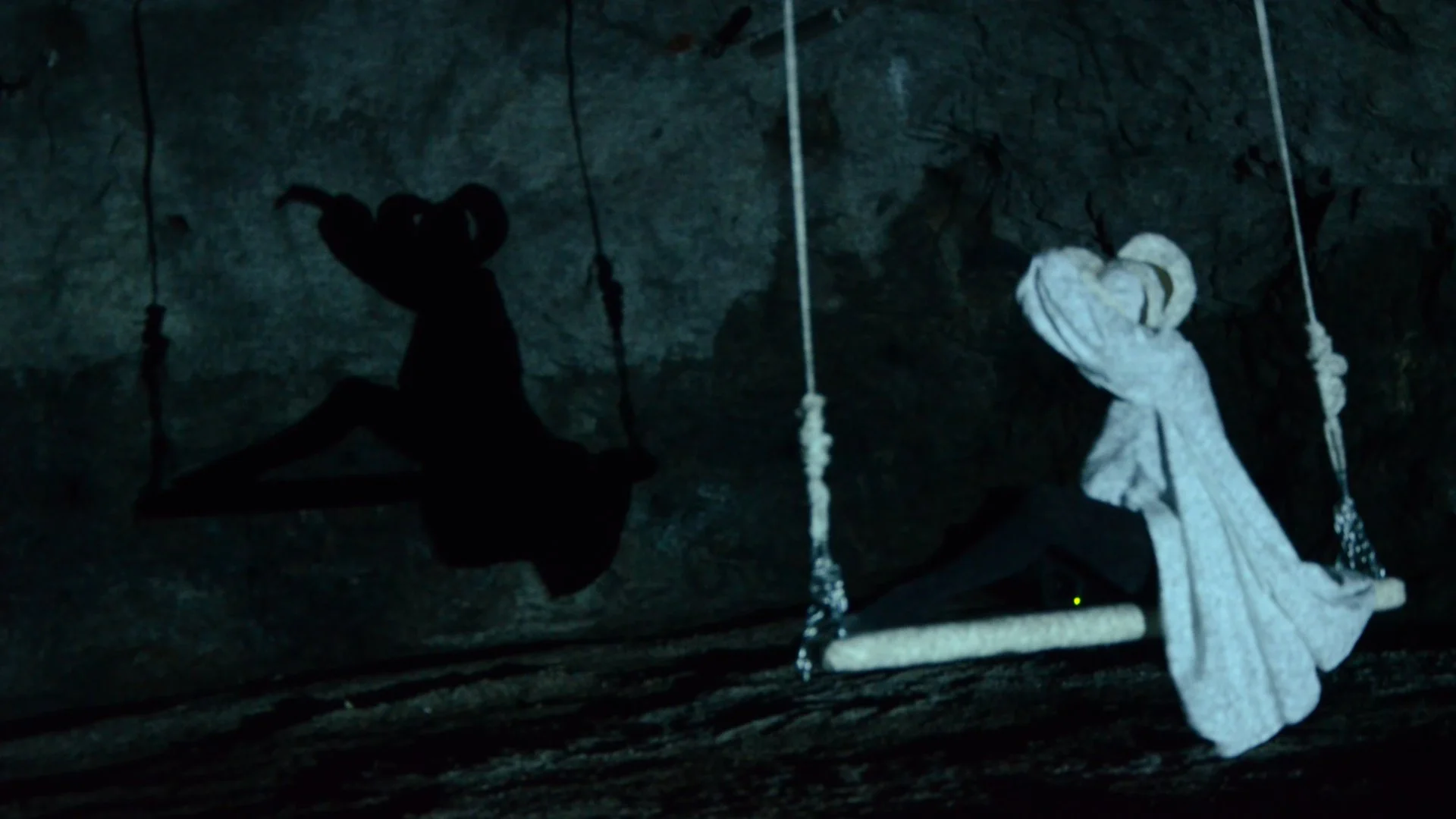
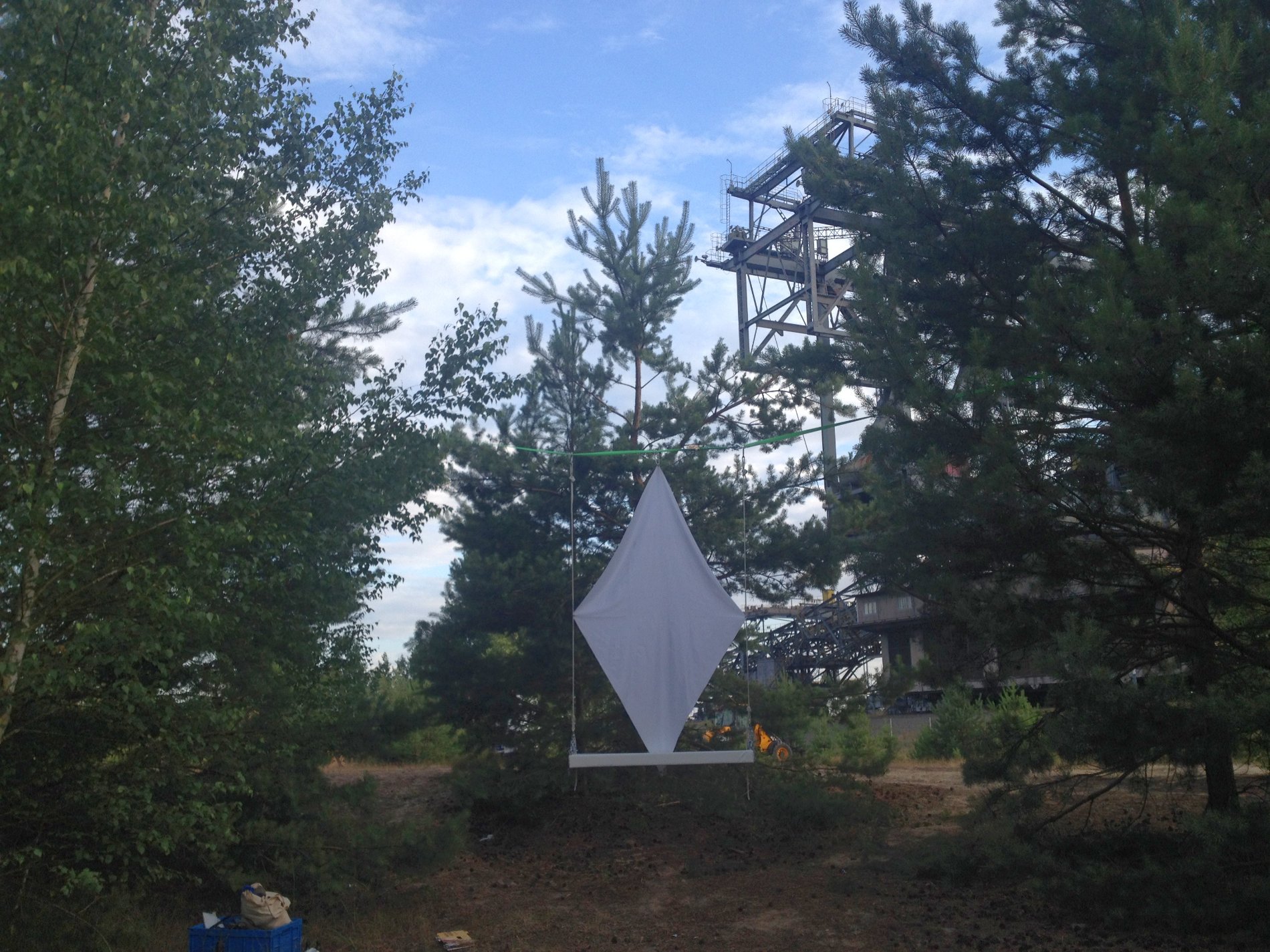
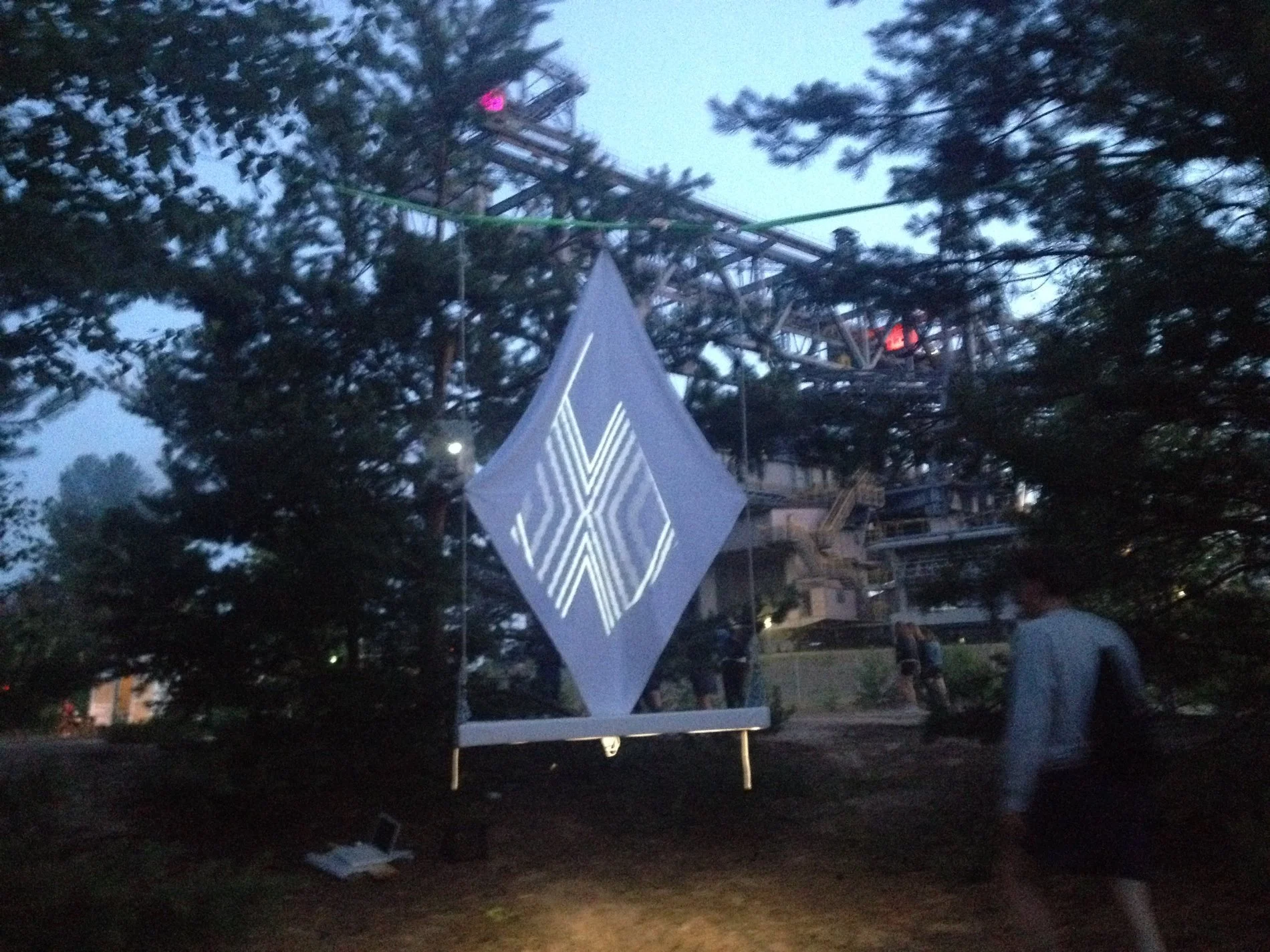
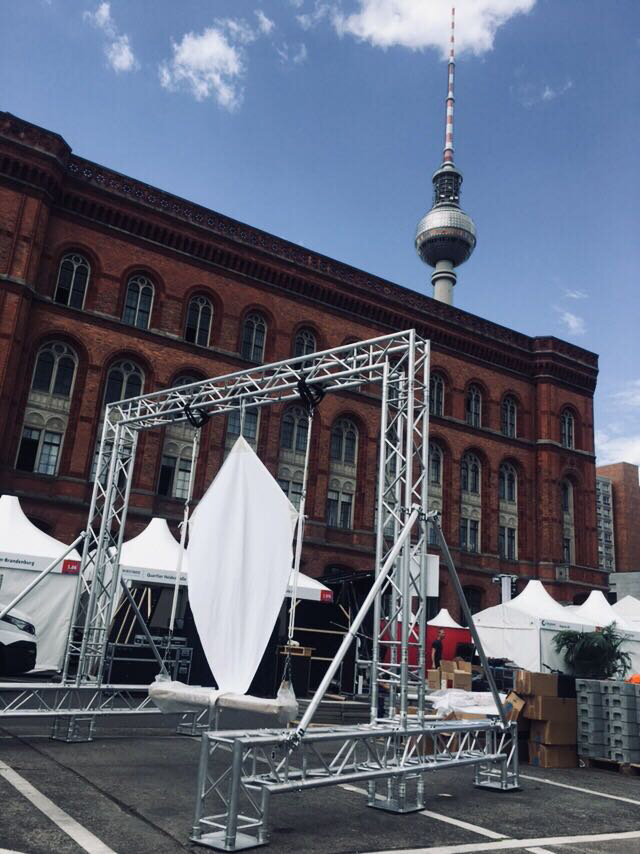
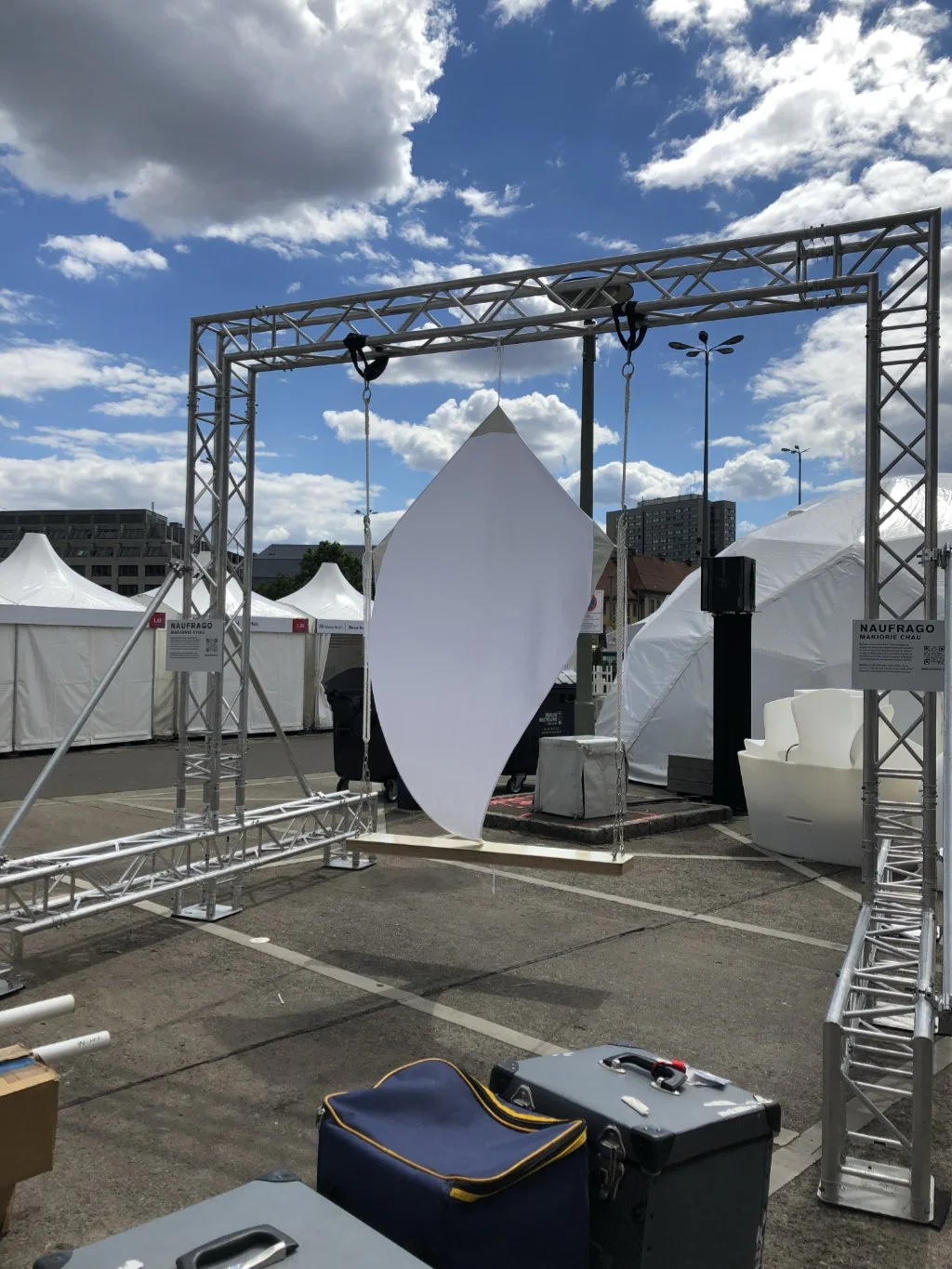
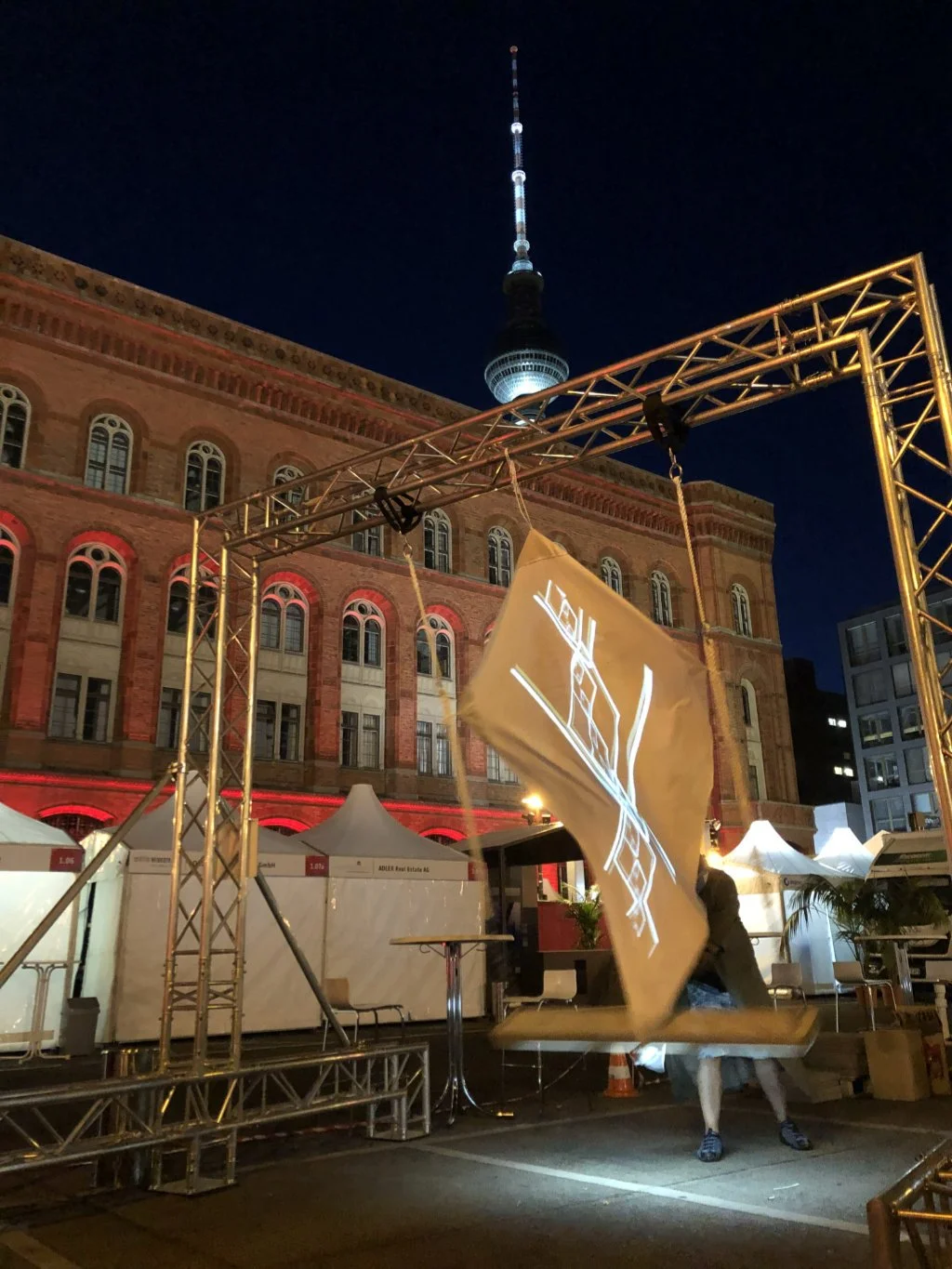
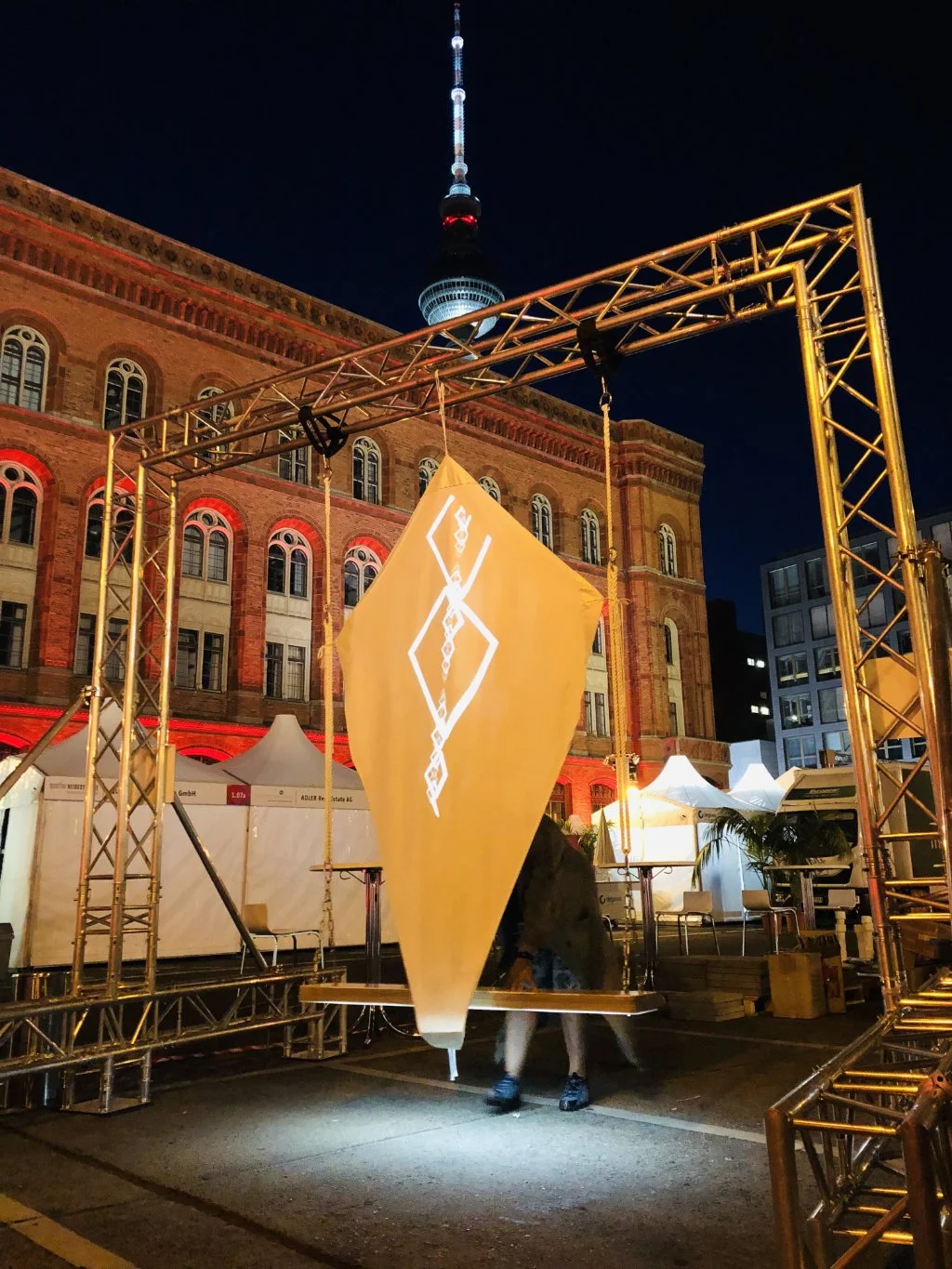
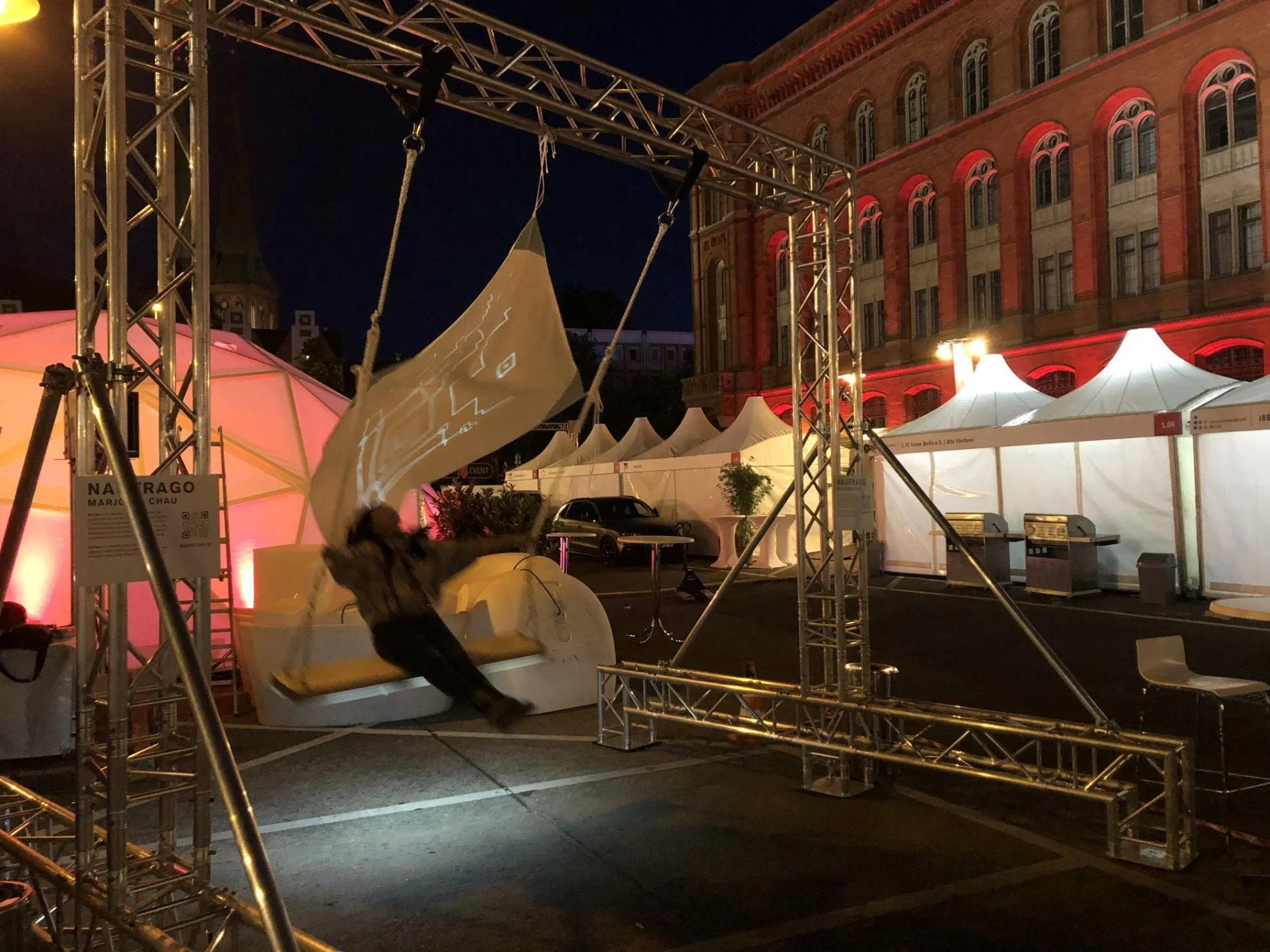
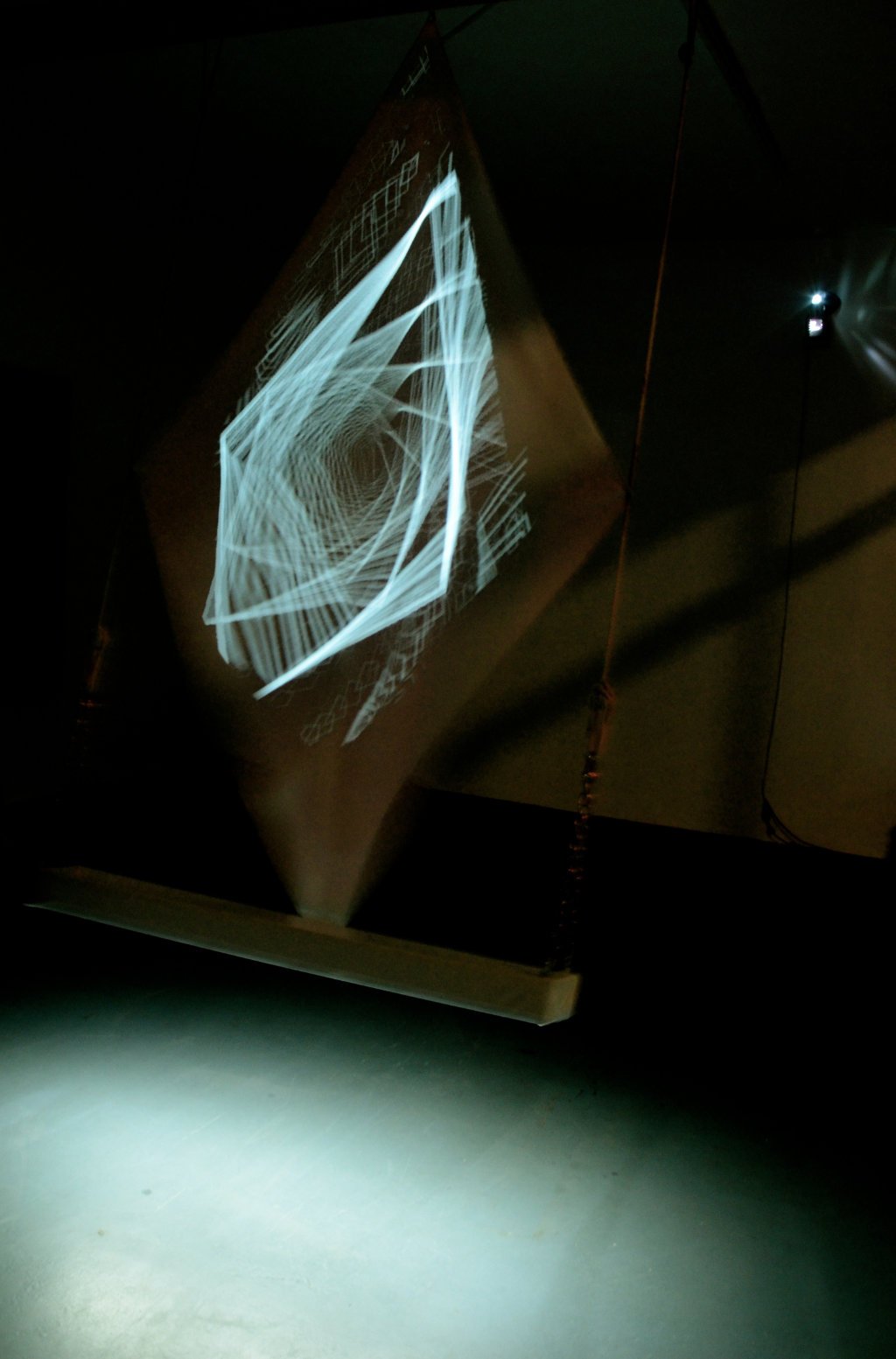
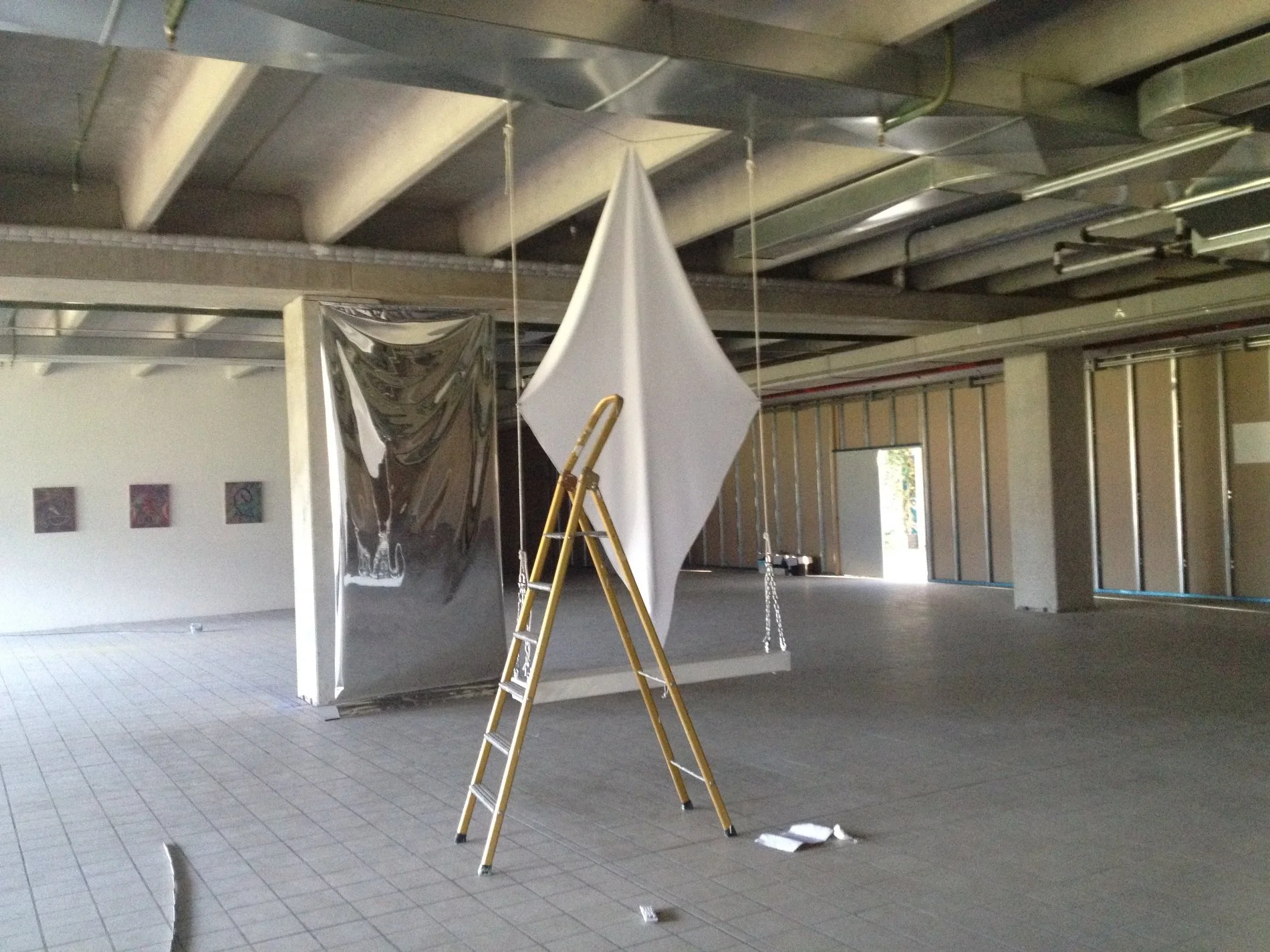
Inspired by the experience of the sea and the memory of childhood, the installation transforms the swing into the metaphor of a small boat navigating between balance and movement. Suspended beneath a structure inspired by the sail of a ship, visitors embark on a journey where body, sound and light synchronize to create an immersive experience.
While the swing remains still, the space preserves a calm and silent atmosphere. Once visitors begin to move, motion sensors trigger an audiovisual sequence of projections, sound and sacred geometric forms that evolve in response to the rhythm of the body. As the movement gradually comes to rest, the installation slowly returns to stillness: the soundscape fades back into the murmur of the sea, while the projections settle into their original state.
More than a technological interaction, Náufrago offers an experience of freedom. It invites visitors to cross the boundary between observing and participating, rediscovering the joy of play as a way of reconnecting, even if only for a moment, with the child that lives within each of us.
| Year | 2015–ongoing |
|---|---|
| Format | Interactive transmedia installation |
| Media | Interactive swing, textile projection screen, video animation, motion sensors, sound and light |
| Dimensions | Variable, adapted to the exhibition space |
| Duration | Continuous / visitor-activated |
| Configuration | Installation, performance or combined site-responsive presentation, subject to production assessment |
| Location | Adaptable to museums, galleries, festivals and site-responsive contexts |
| Availability | Available for exhibitions, festivals and commissioned presentations, subject to confirmation |
| Credits |
Interactive Programming:
Mirko Petrovic
Construction:
Malte Kebbell
Concept & Installation:
Marjorie Chau
|
Chronology
2019 — Kopanqui Light Festival, Chile
2019 — Potsdamer Lichtspektakel, Brandenburger Tor, Potsdam, Germany
2018 — Nominated for the Art of Engineering Award, Ferchau, Germany
2017 — Potsdamer Lichtspektakel, Platz der Einheit, Potsdam, Germany
2017 — Berlin Leuchtet, Potsdamer Platz, Berlin, Germany
2016 — Luminale, Naxoshalle, Frankfurt, Germany
2015 — We Skirt Together, MeboCenter, Bolzano, Italy
-
Who Is the Real Castaway?
Náufrago emerged from a reflection on what we leave behind as we grow older. The work poses a simple yet universal question: what part of ourselves is left adrift when we stop playing?
The swing becomes the starting point for an inner journey. Like a small suspended boat, it invites us to step away from everyday logic and reconnect with the freedom, imagination and sense of wonder that belong to childhood.
Movement as the Catalyst
The installation remains dormant until someone chooses to inhabit it.
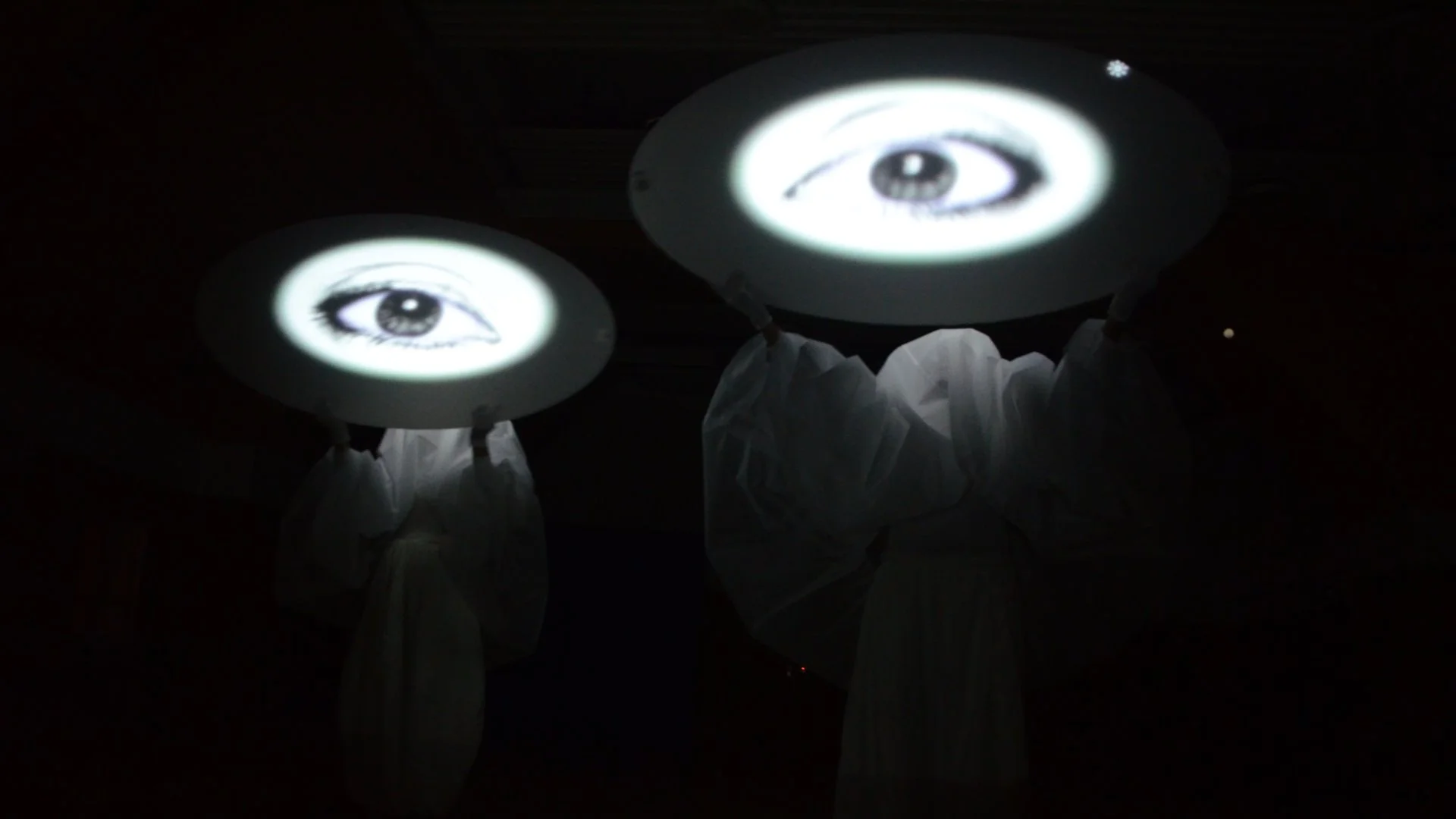
Each movement activates sensors that synchronize sound, projection and animation in real time. Across the textile screen, a rhombus and a hexagon—forms found in sacred geometry and recurring throughout nature—expand and transform into a luminous kaleidoscope that evolves with the visitor's motion.
As the swing comes to rest, the installation slowly returns to its original state. The sea reappears, the soundscape softens, and the geometry settles back into its initial form, echoing the endless rhythm of the waves and the natural cadence of breathing.
Play as Memory
In Náufrago, play ceases to be a childish act and becomes a way of remembering.
Visitors may remain spectators, watching others activate the installation, or choose to cross the threshold and become part of it themselves. In that moment, the work is no longer simply a technological object, but a shared experience.
Rather than speaking about a shipwreck at sea, Náufrago suggests another kind of journey: returning to the part of ourselves that time, responsibility and adult life have left adrift. Because perhaps the true castaway is the inner child, still waiting to be found.