Alma
An immersive installation inspired by the ancient Araucaria forests of southern Chile. Through textile, light, sound and moving image, Alma explores time, memory and the profound connection between nature and all forms of life, inviting us to reflect on what we call the soul.



Details
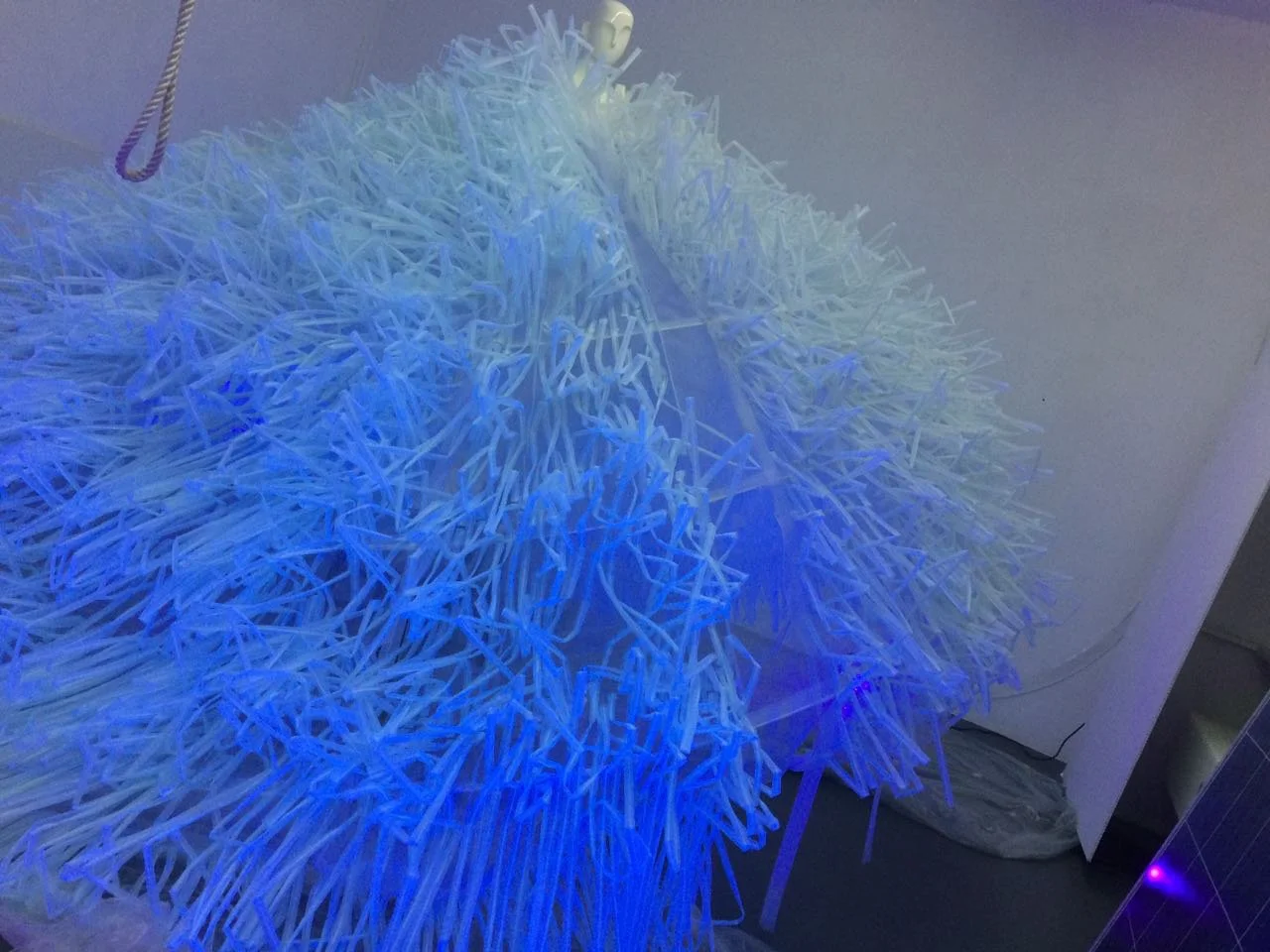
Alma, Spanish for "soul", emerged from an experience in the ancient Araucaria forests of the southern Chilean Andes. Standing in front of this ancestral landscape, home to one of the oldest tree species on Earth, a question arose that became the foundation of the entire work:
What does it mean to be alive, and which beings have a soul?
Inspired by the repetition, silence and monumentality of these forests, the installation translates their inner rhythm into an immersive environment shaped through textile, light, sound and moving image.
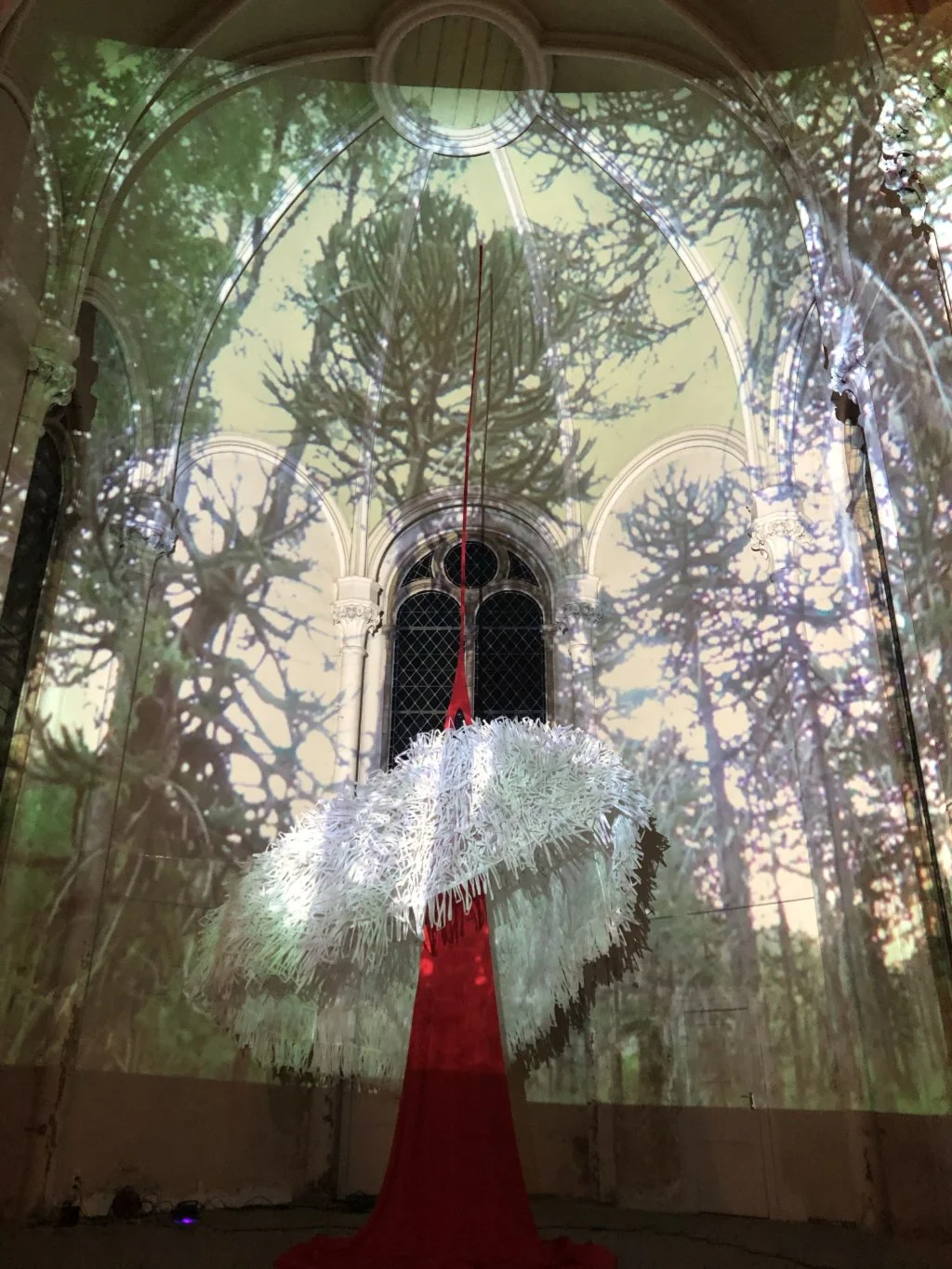
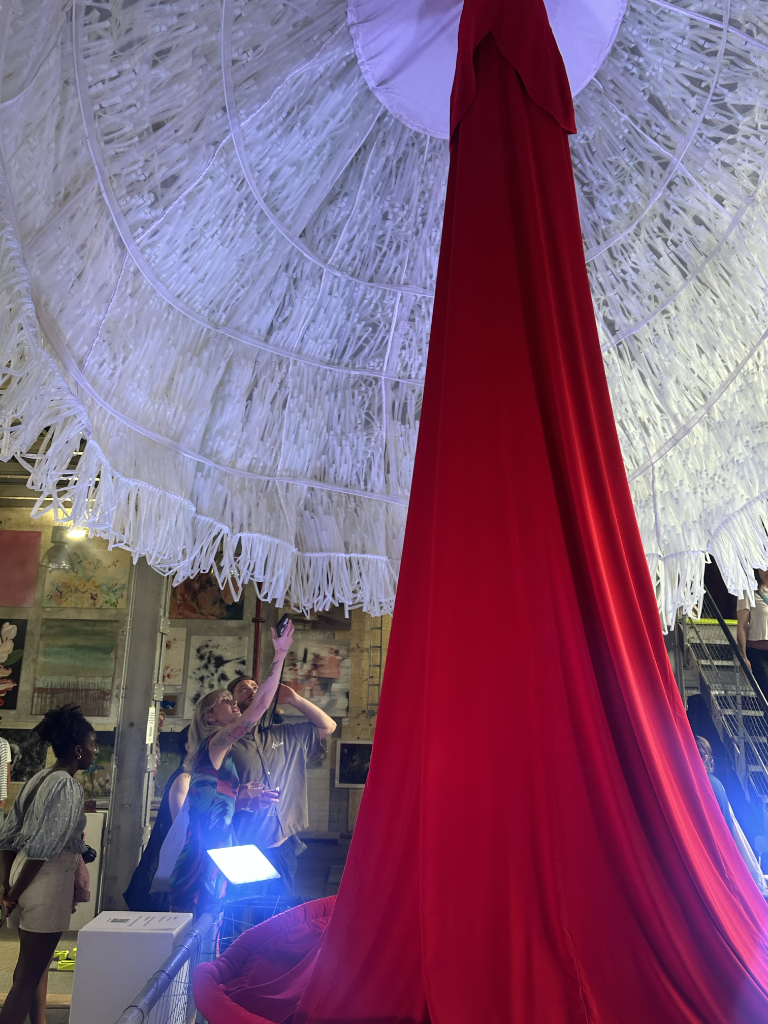
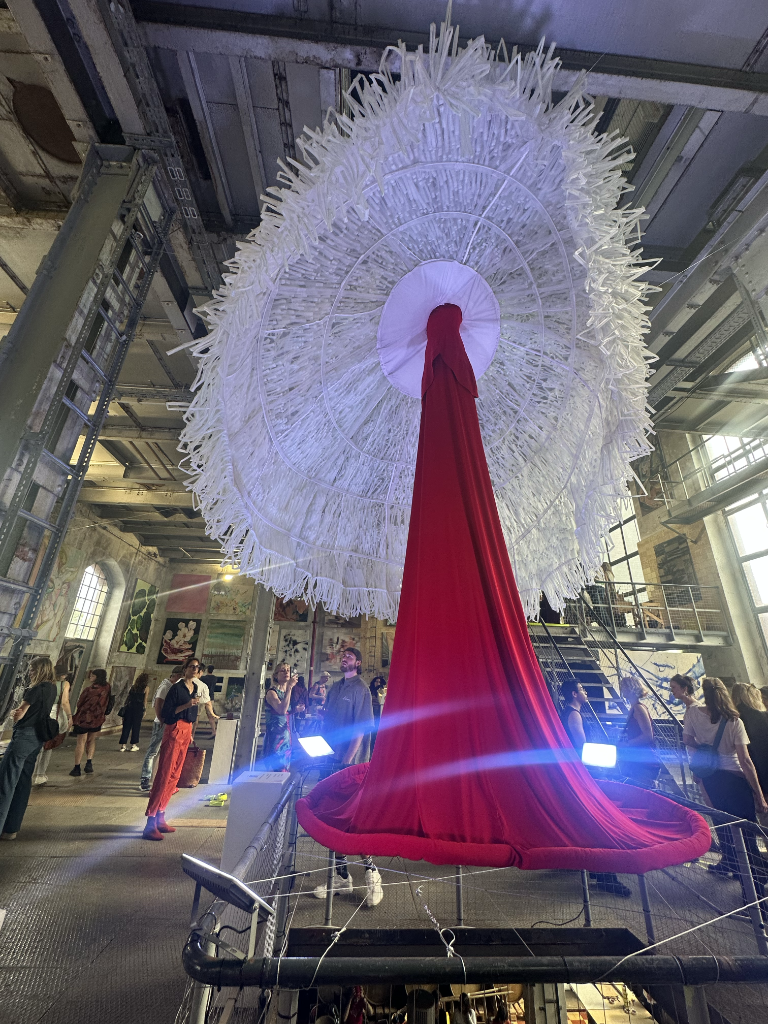
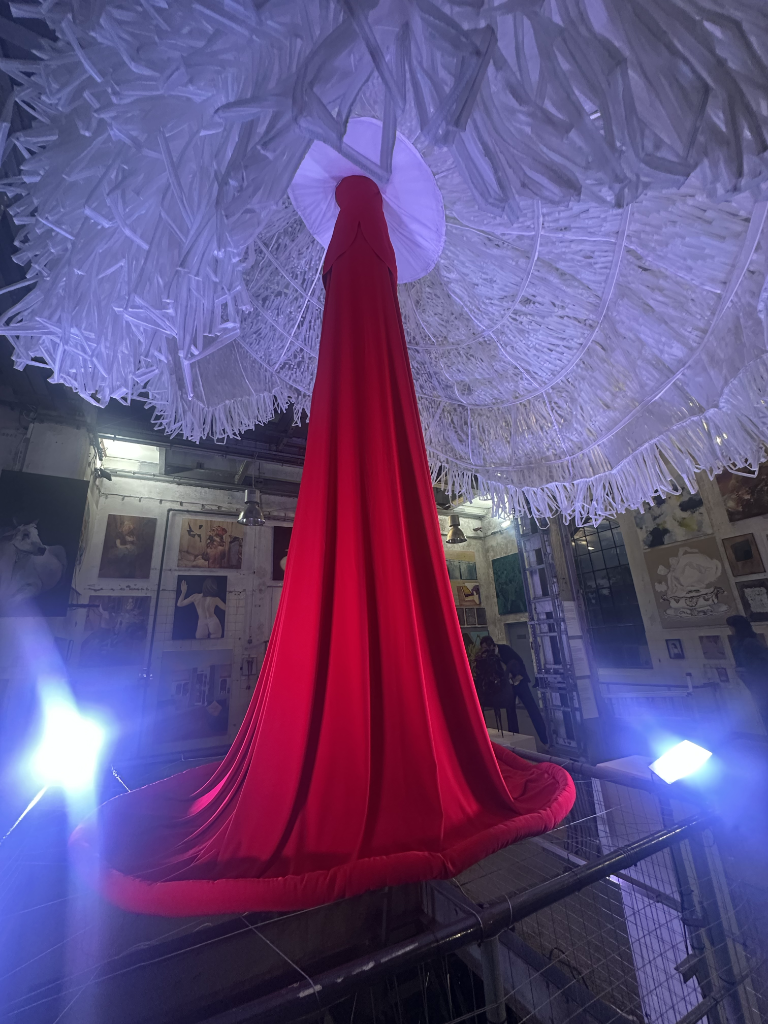
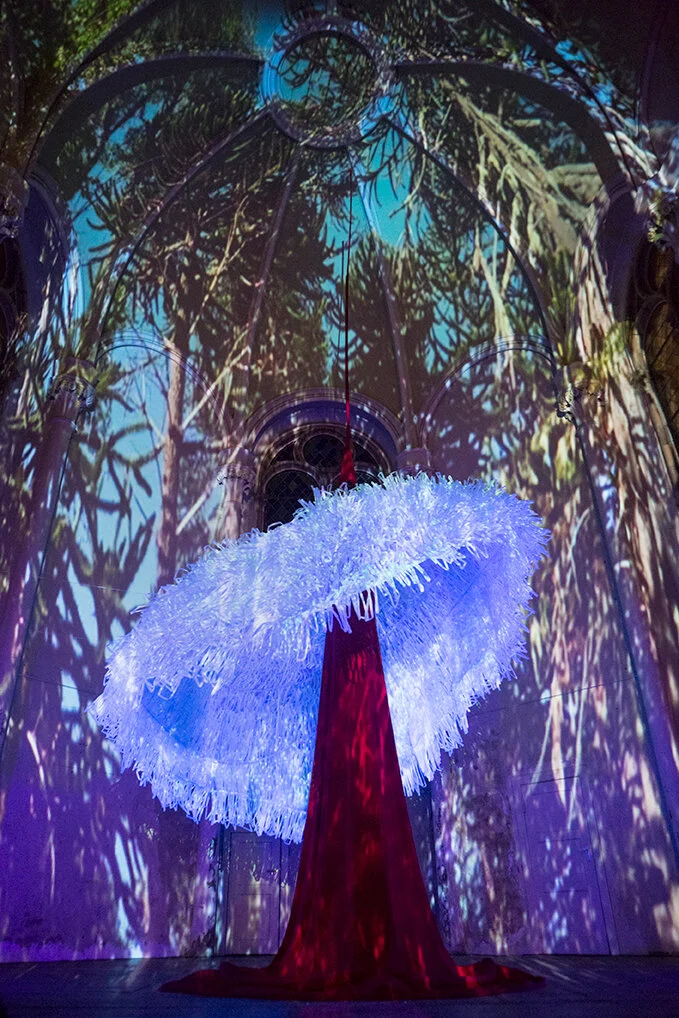
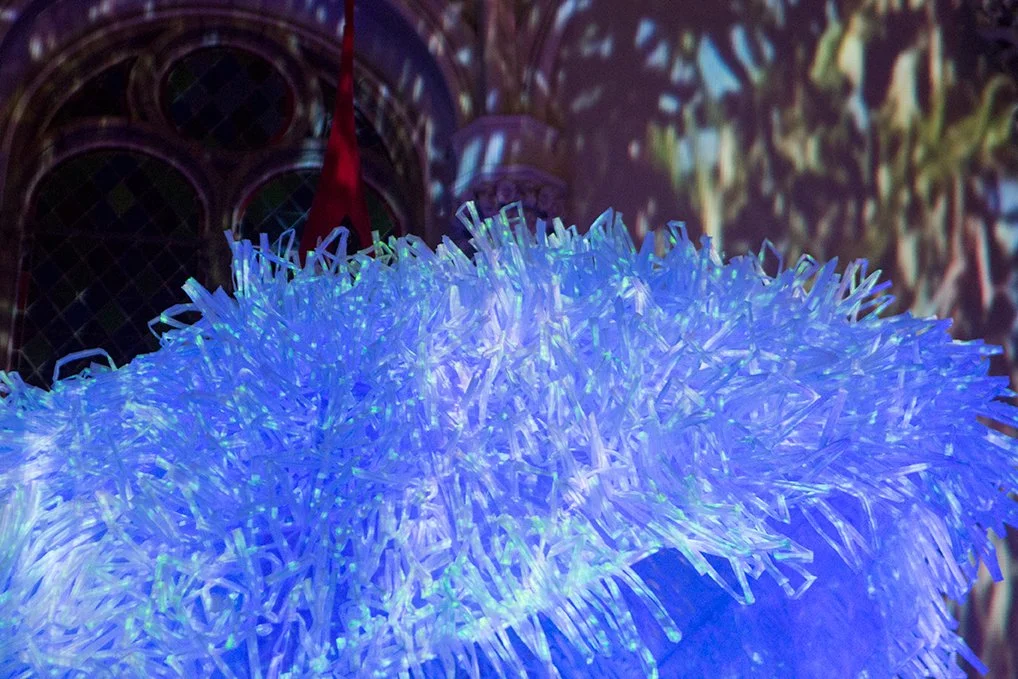
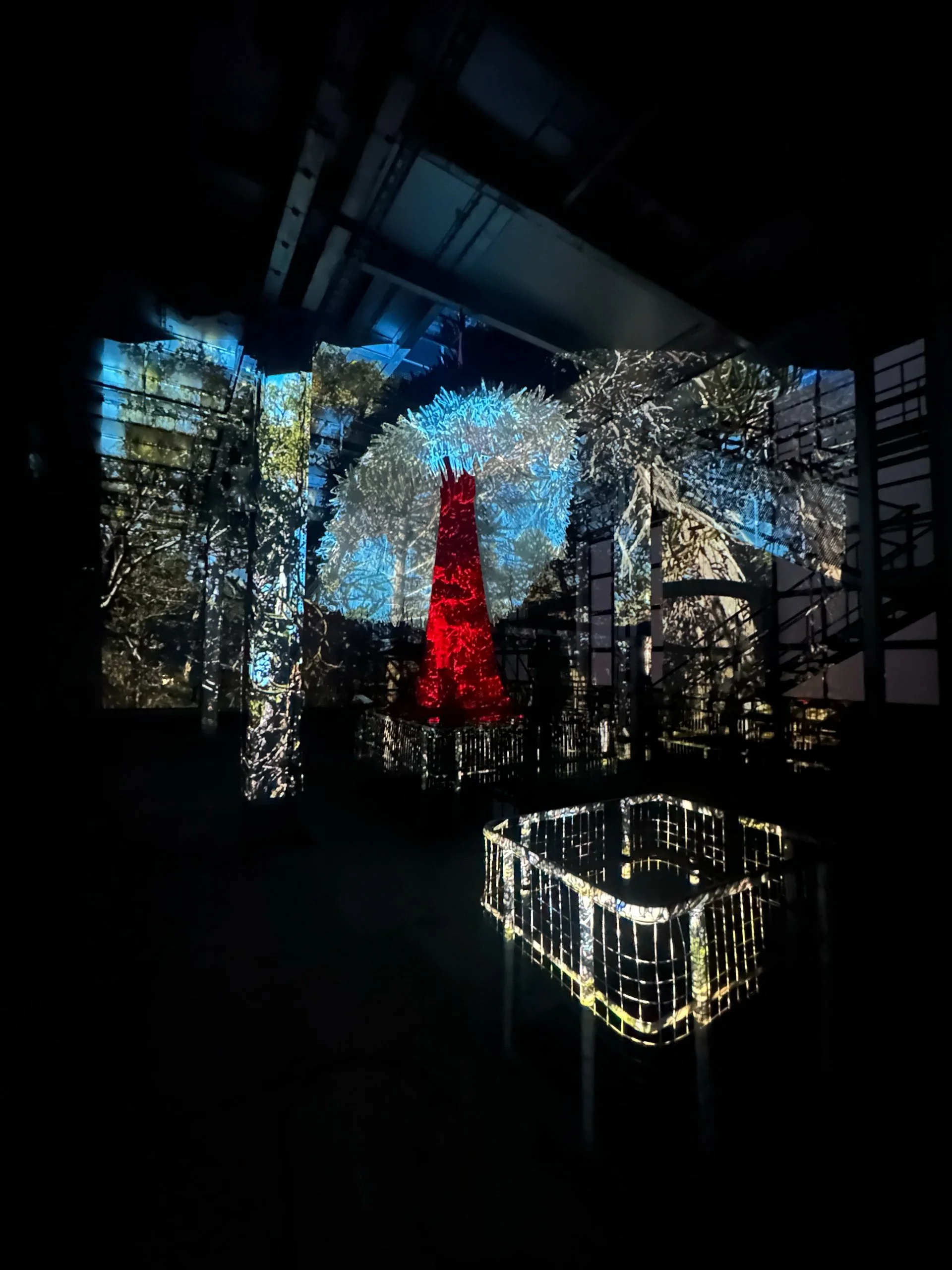
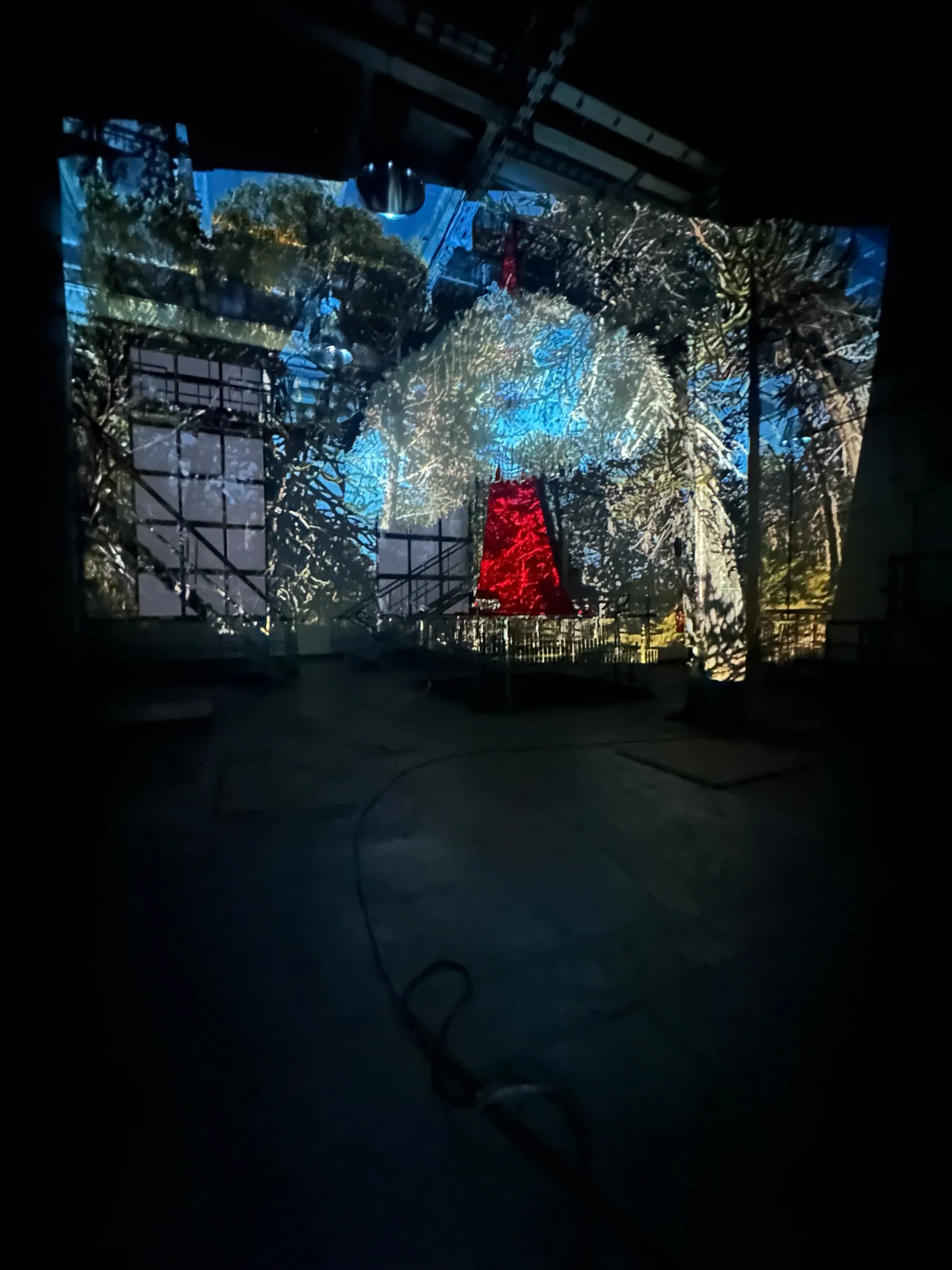
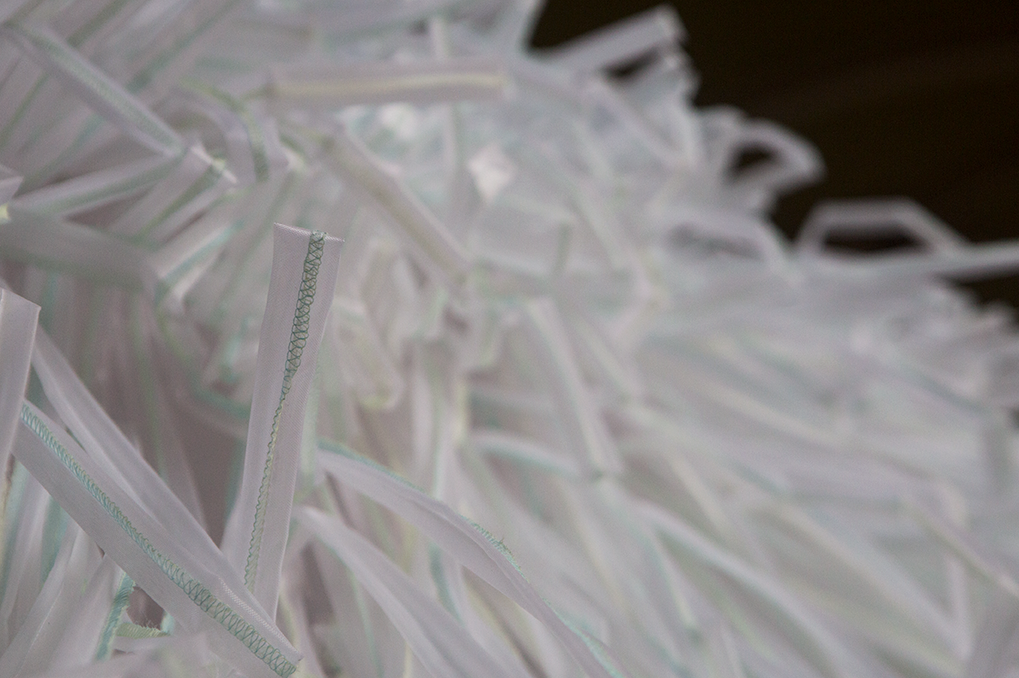
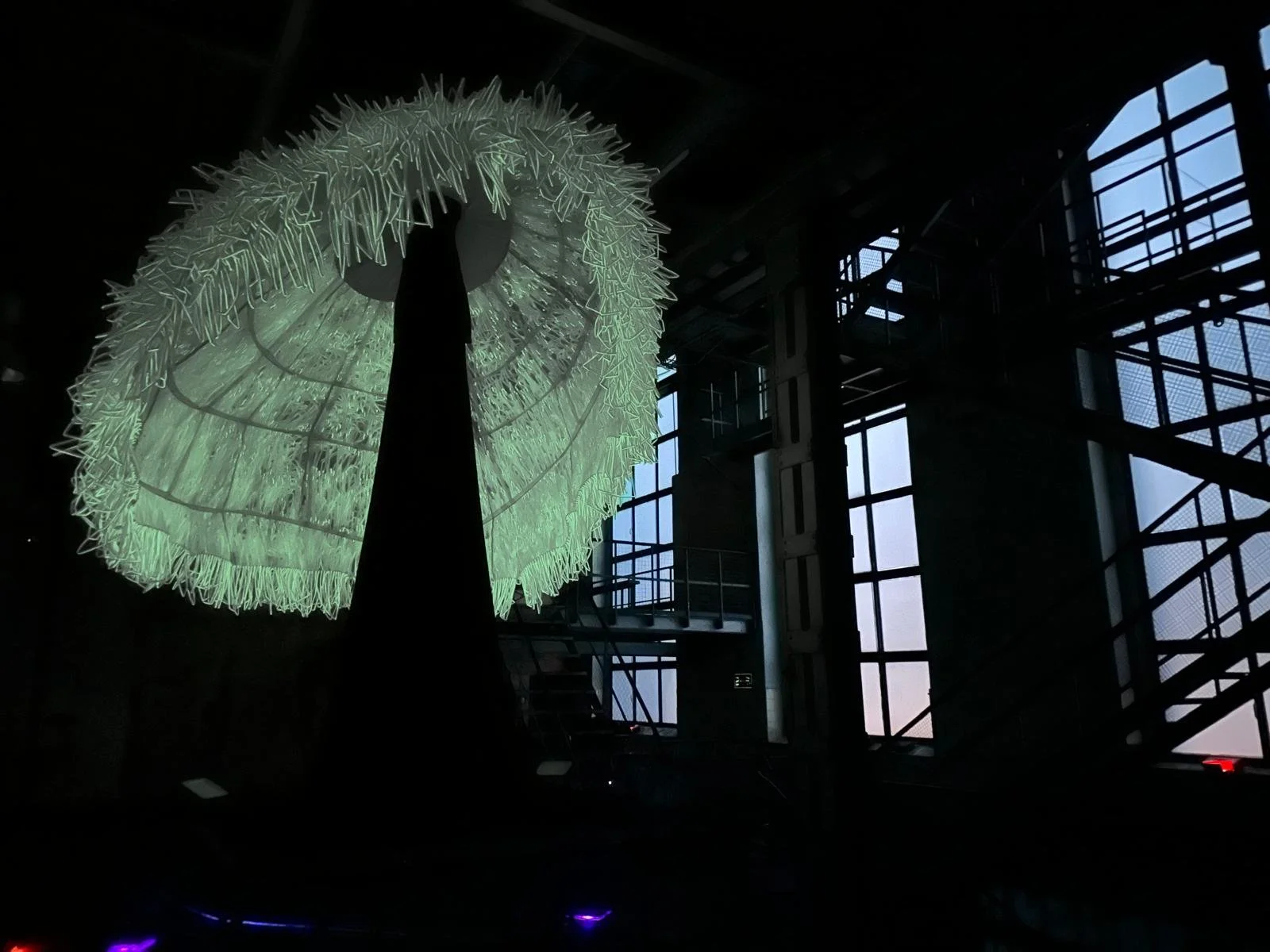
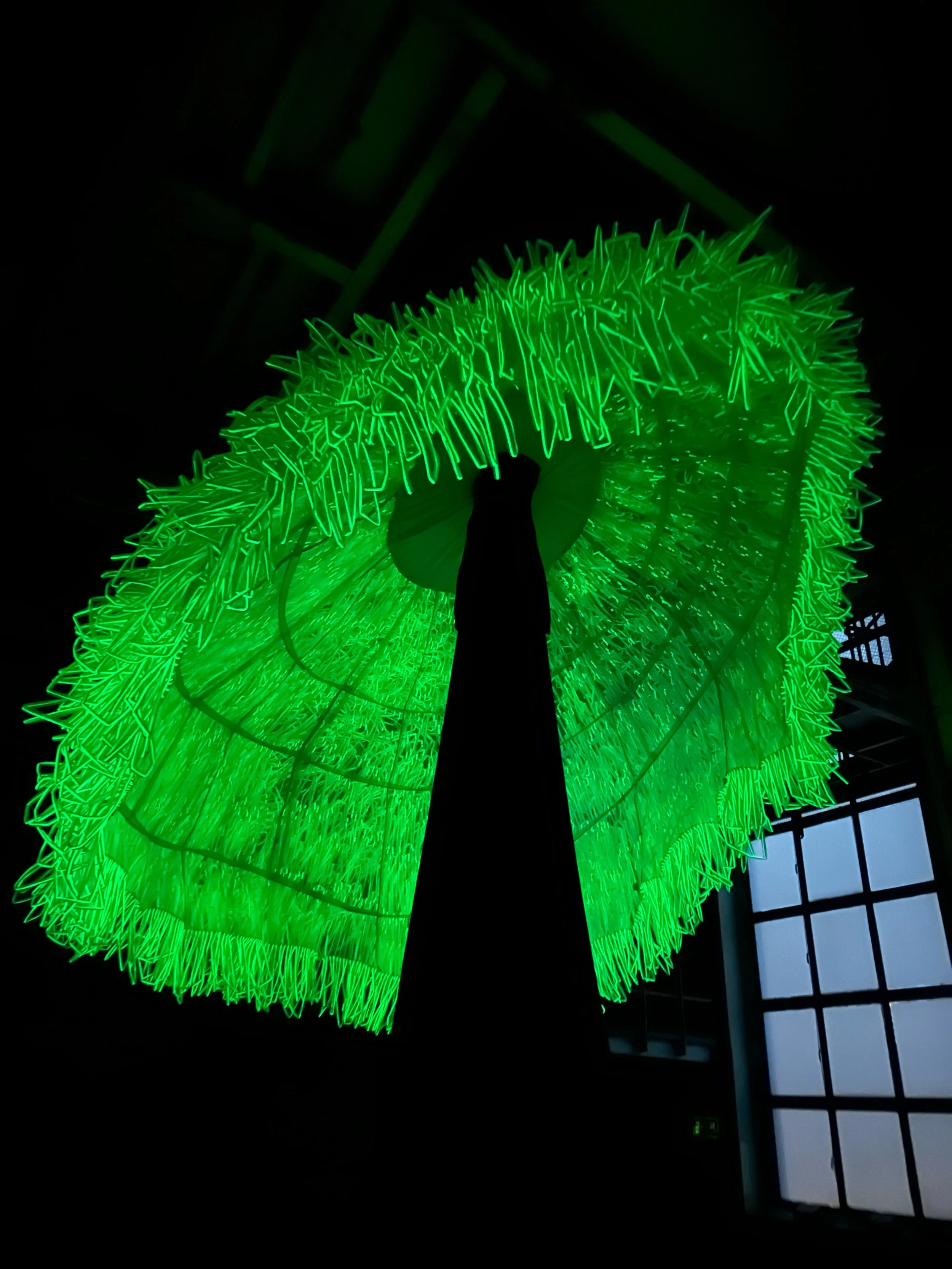
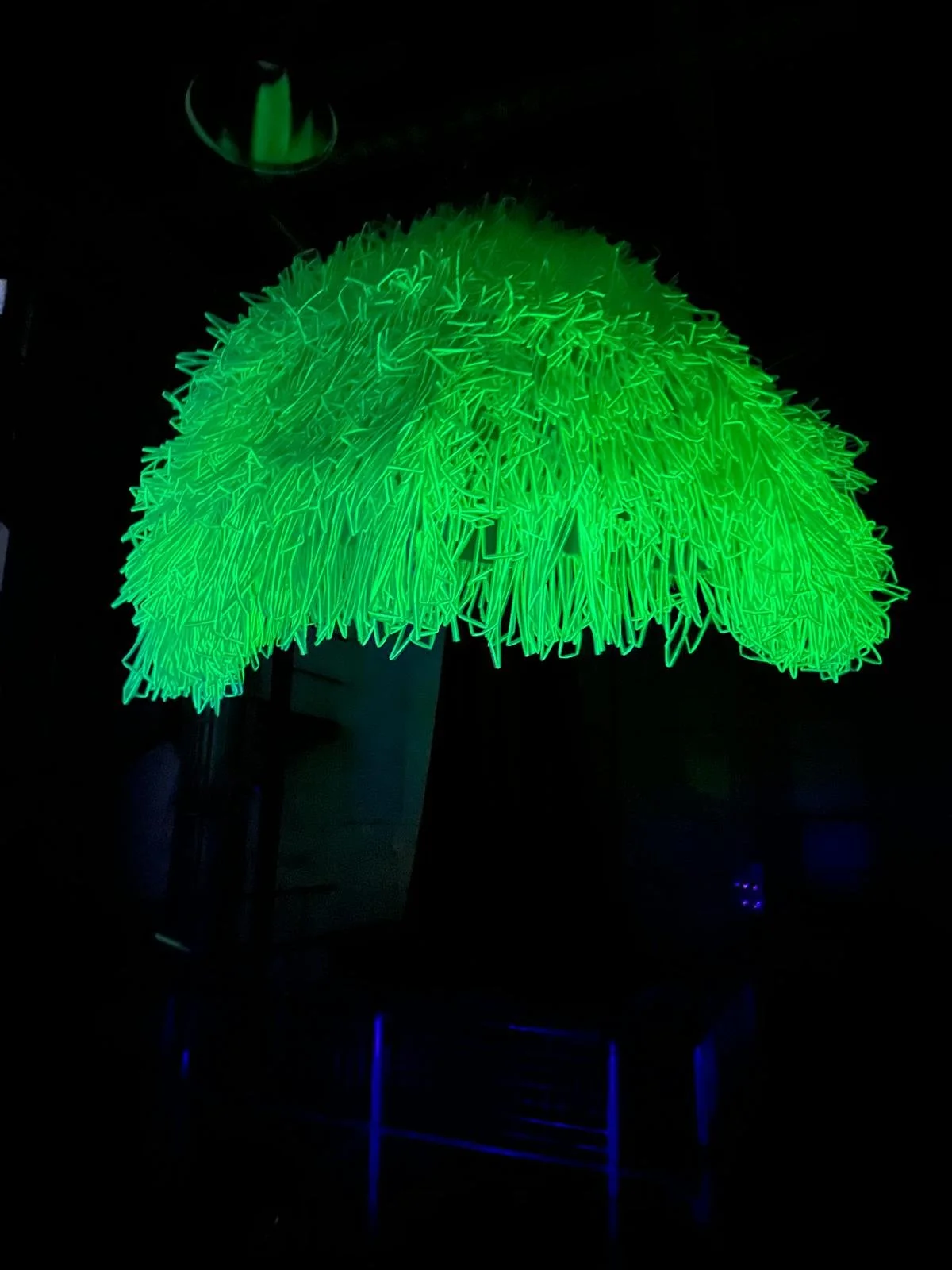
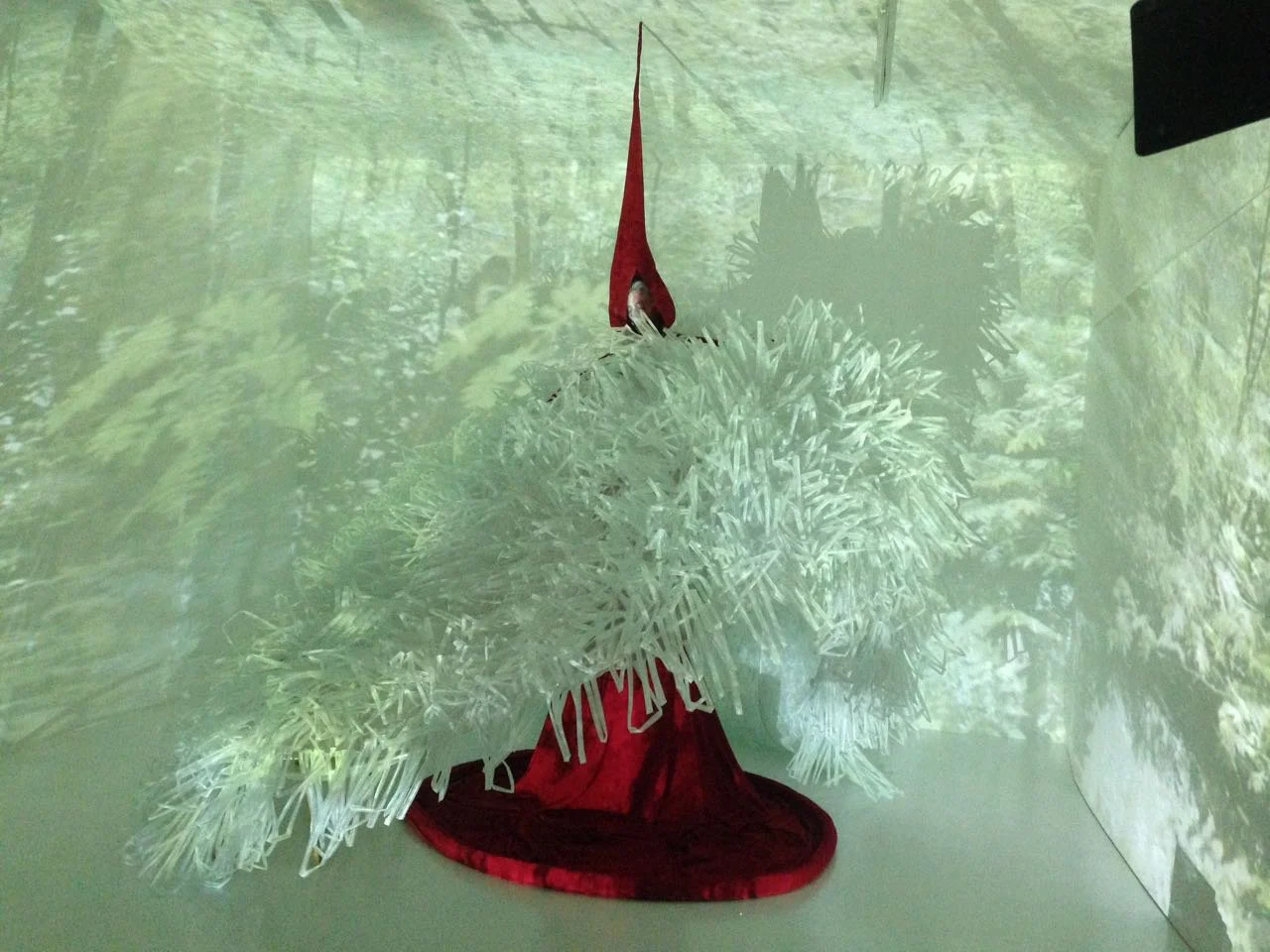
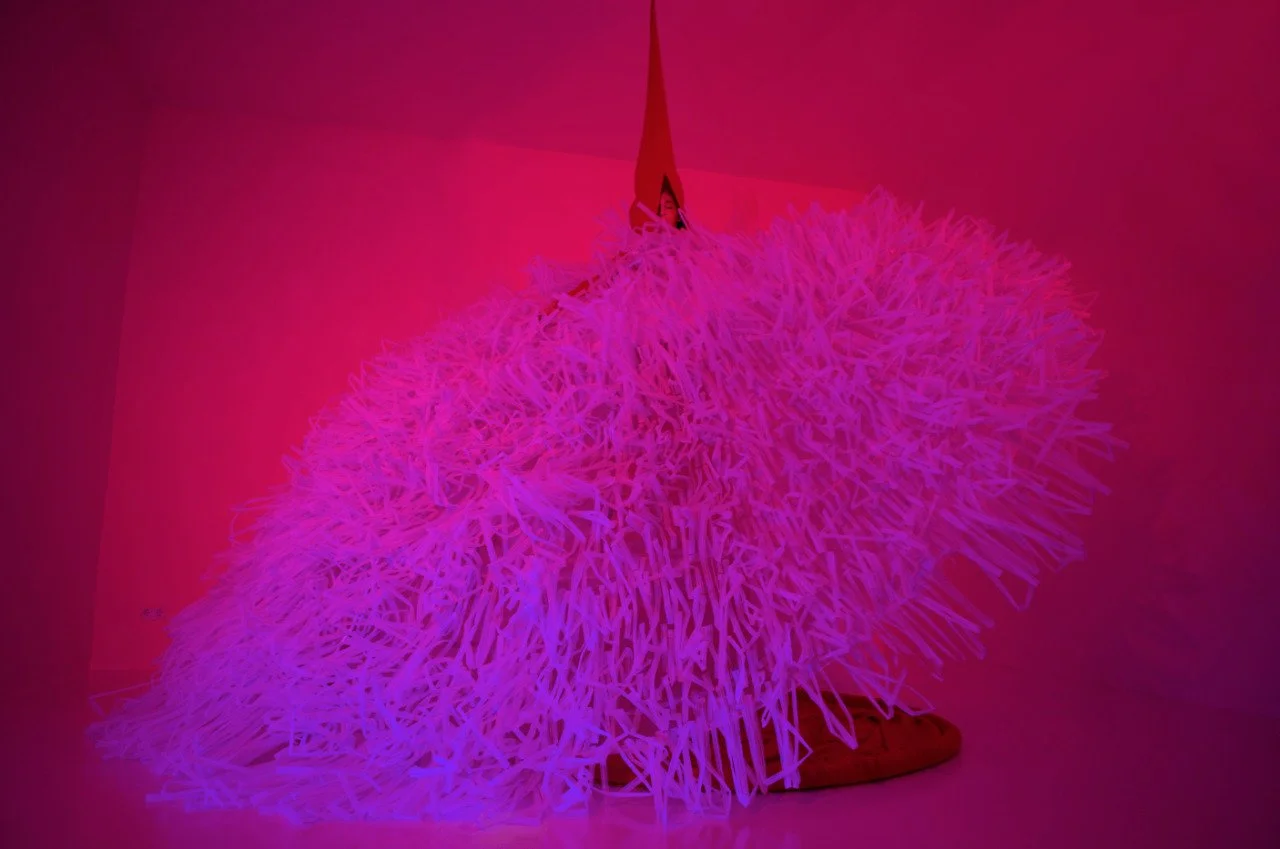
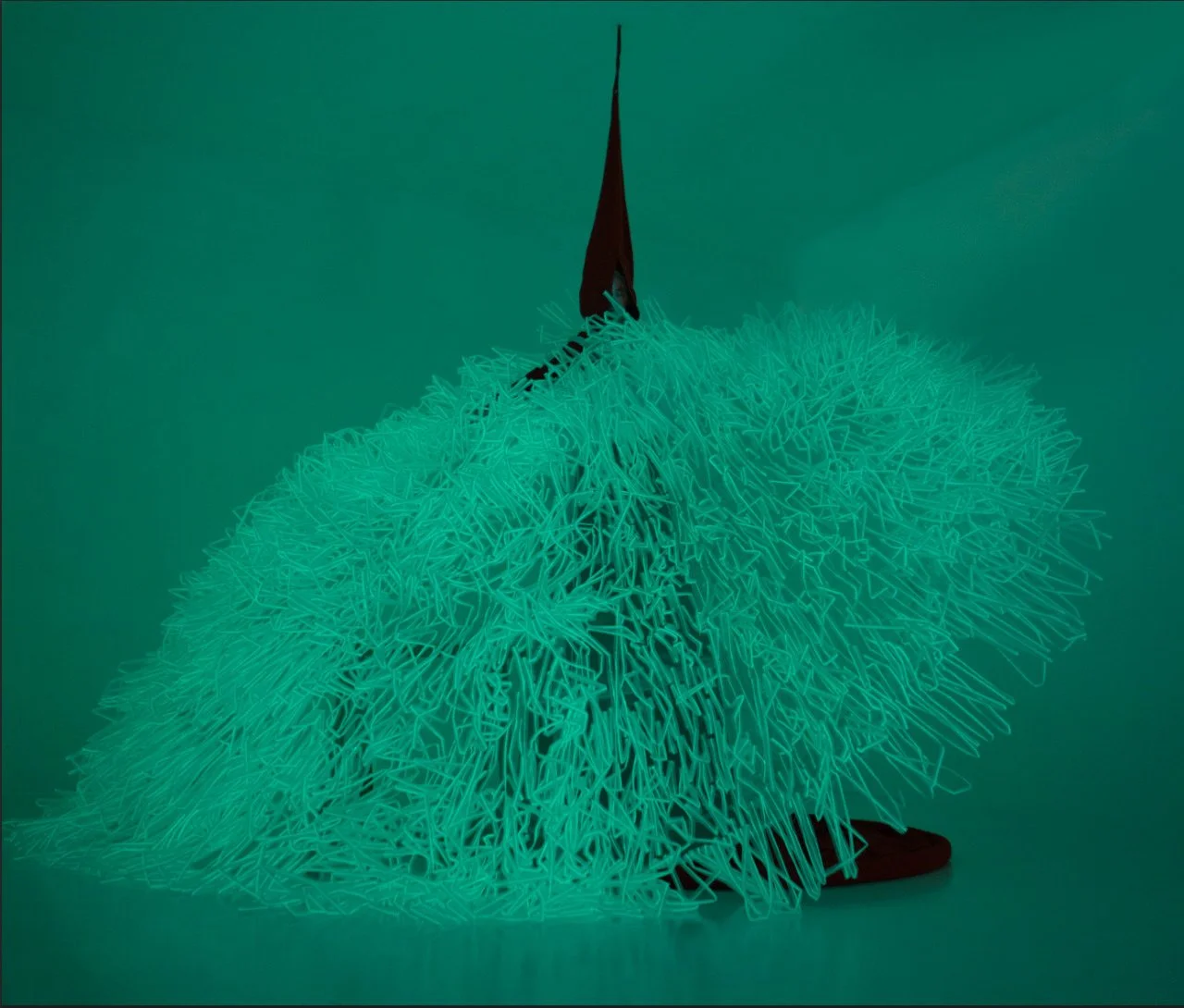
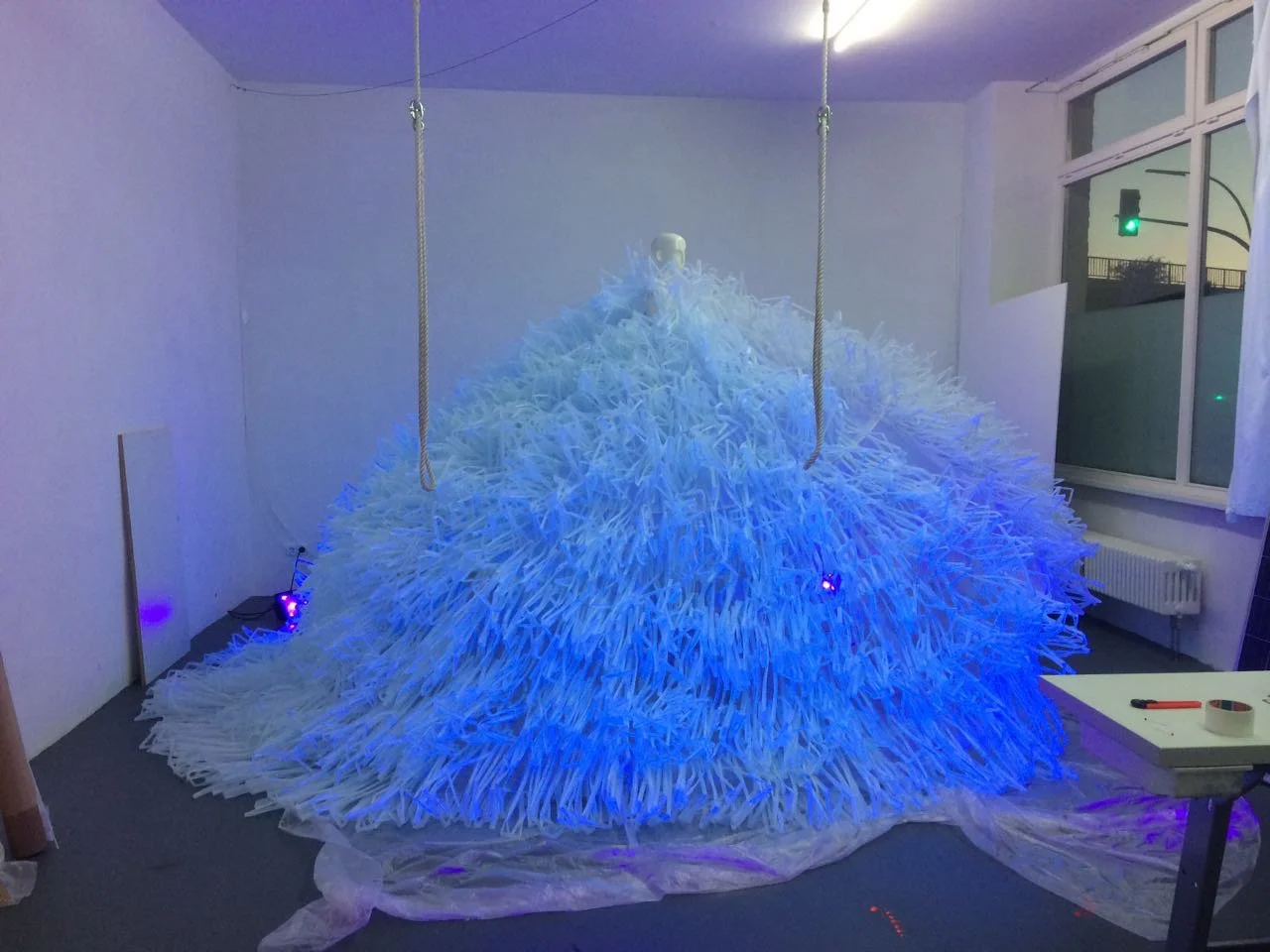
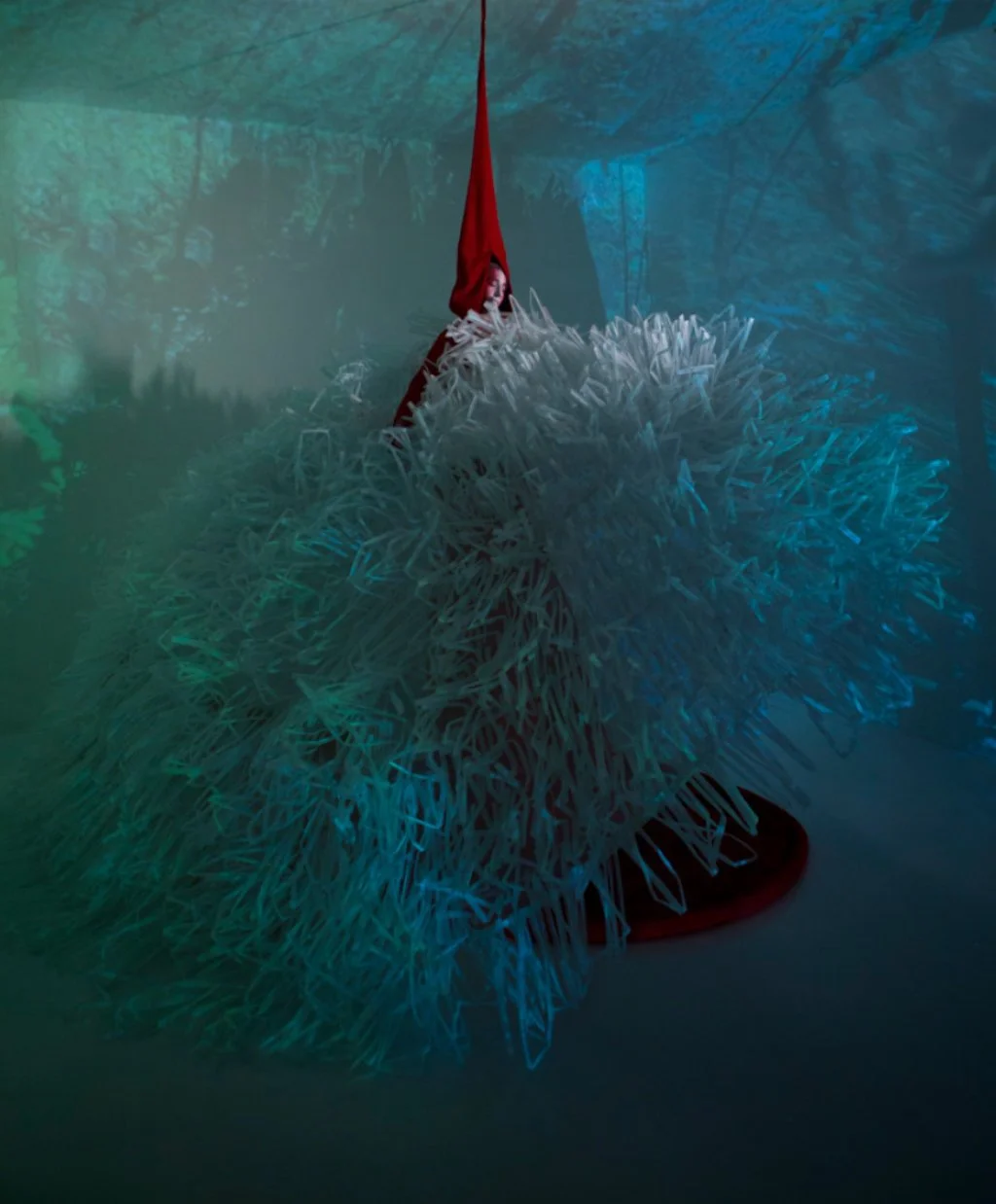
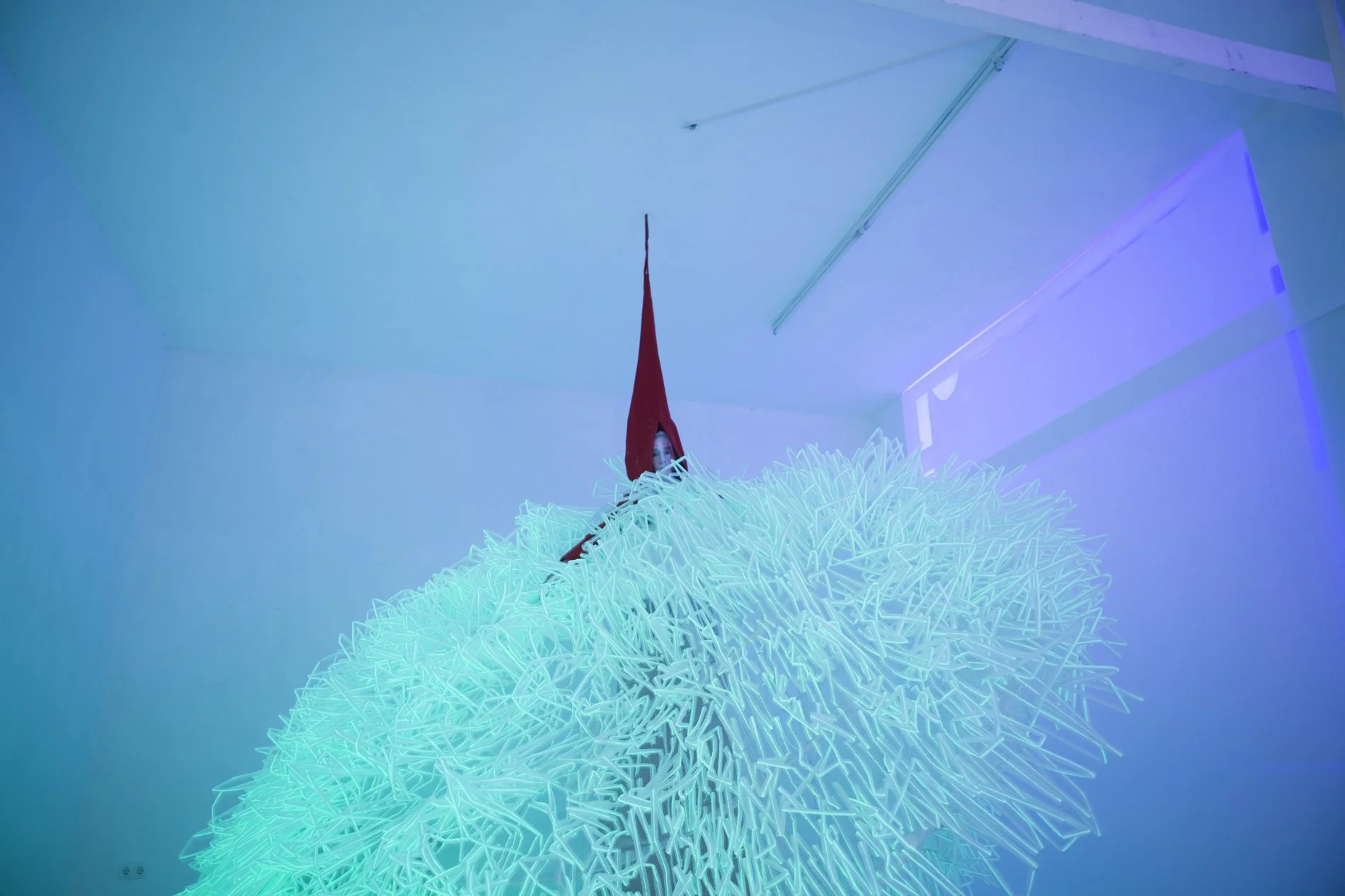
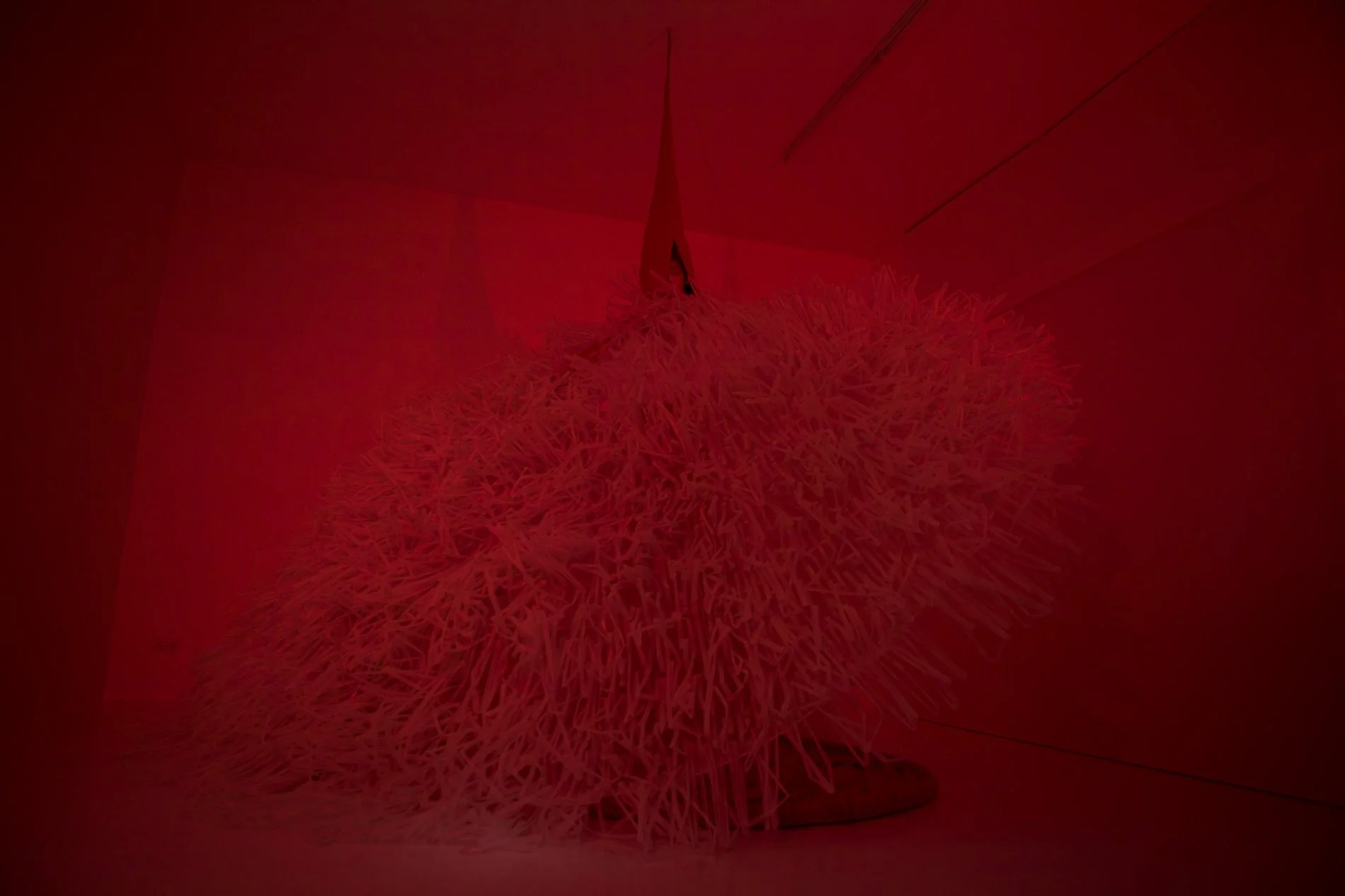
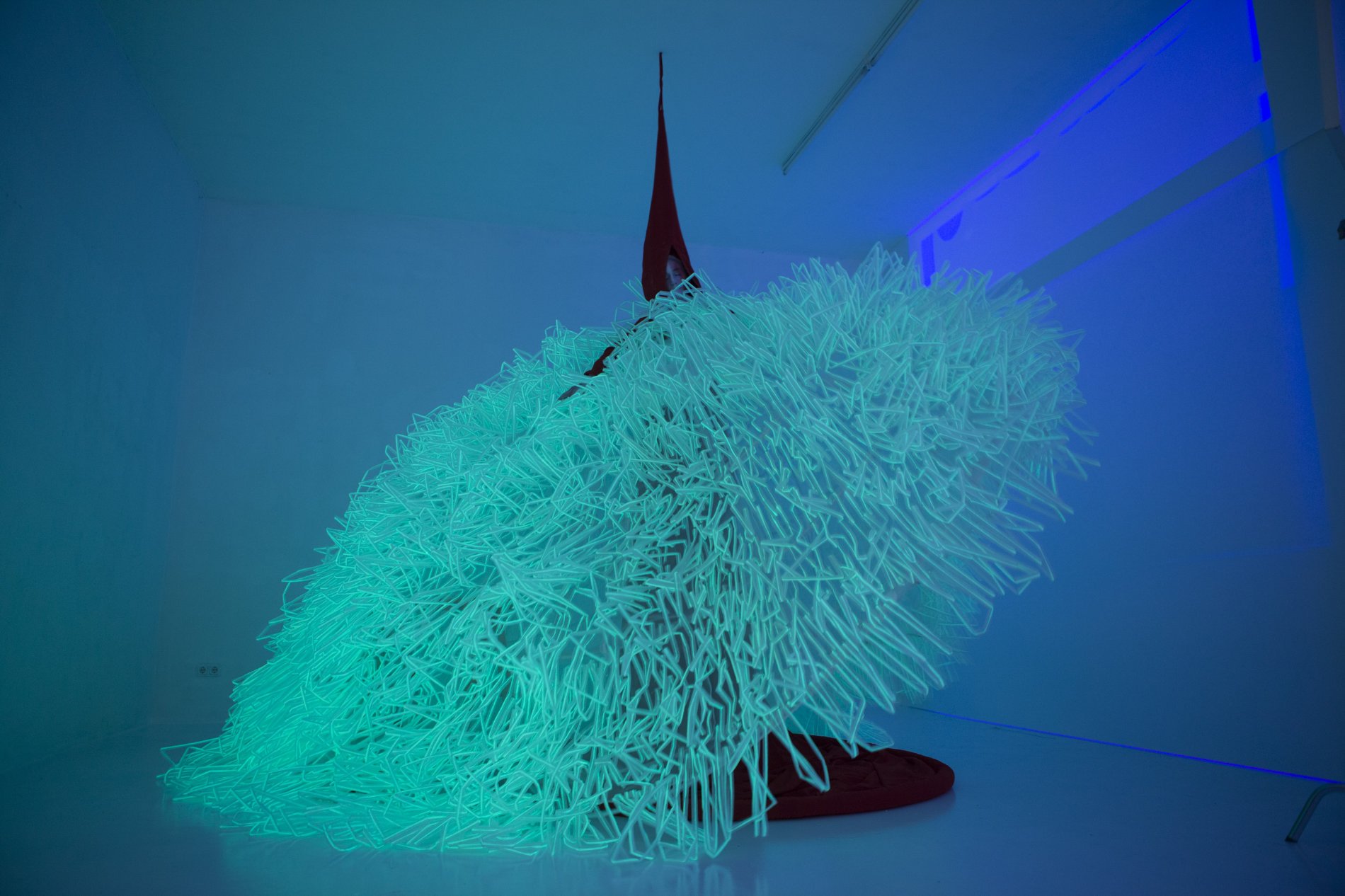
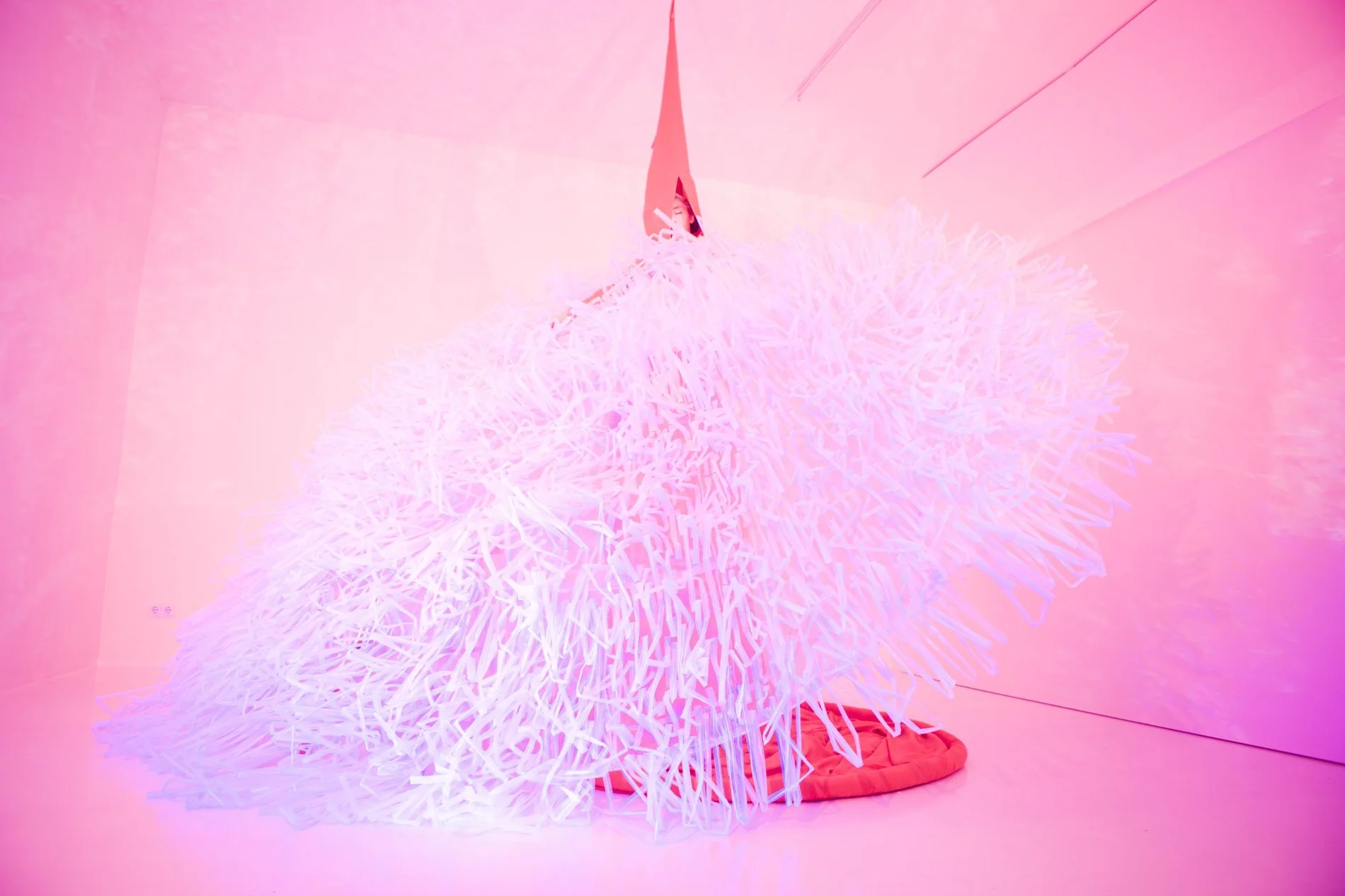
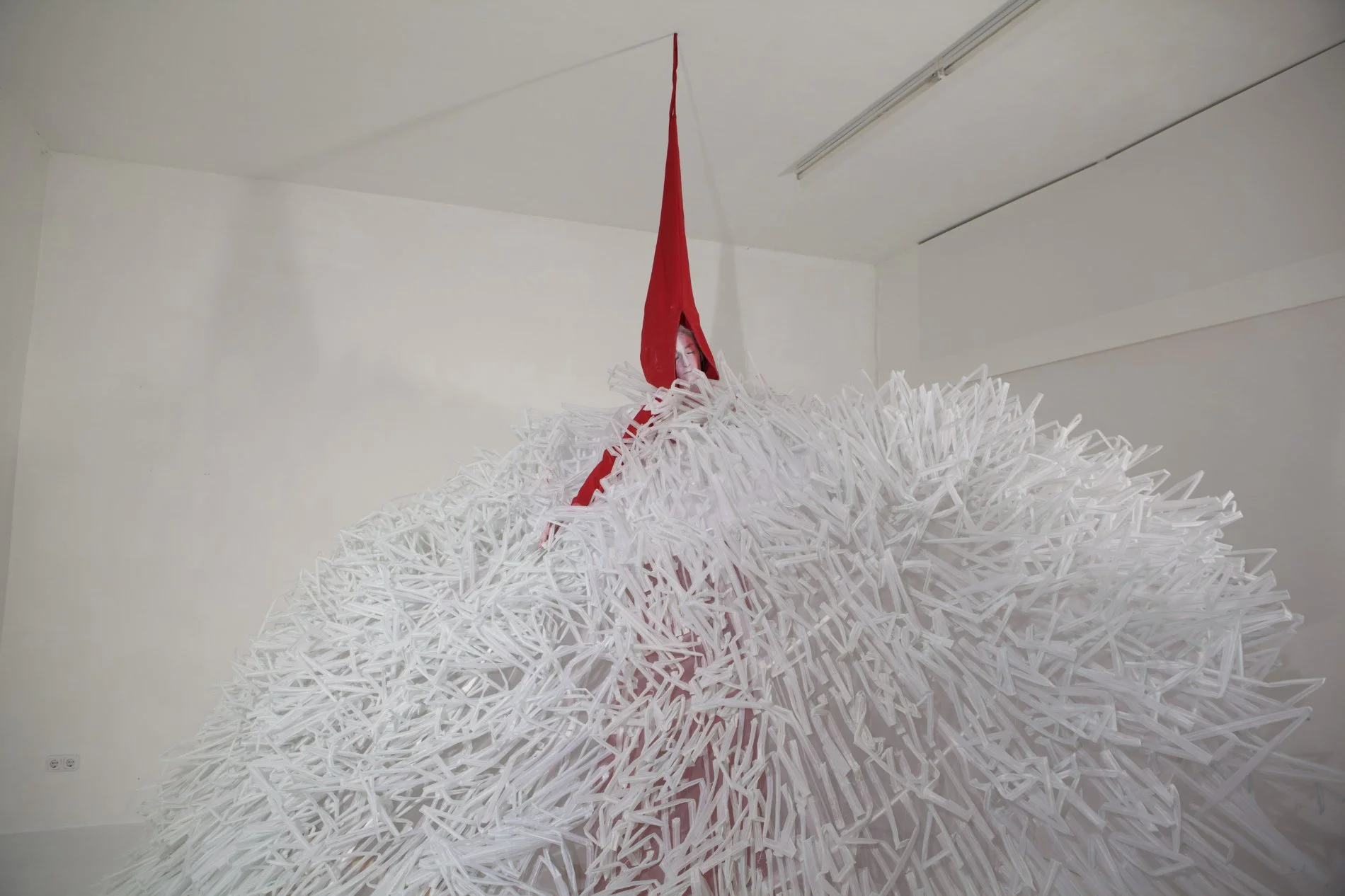
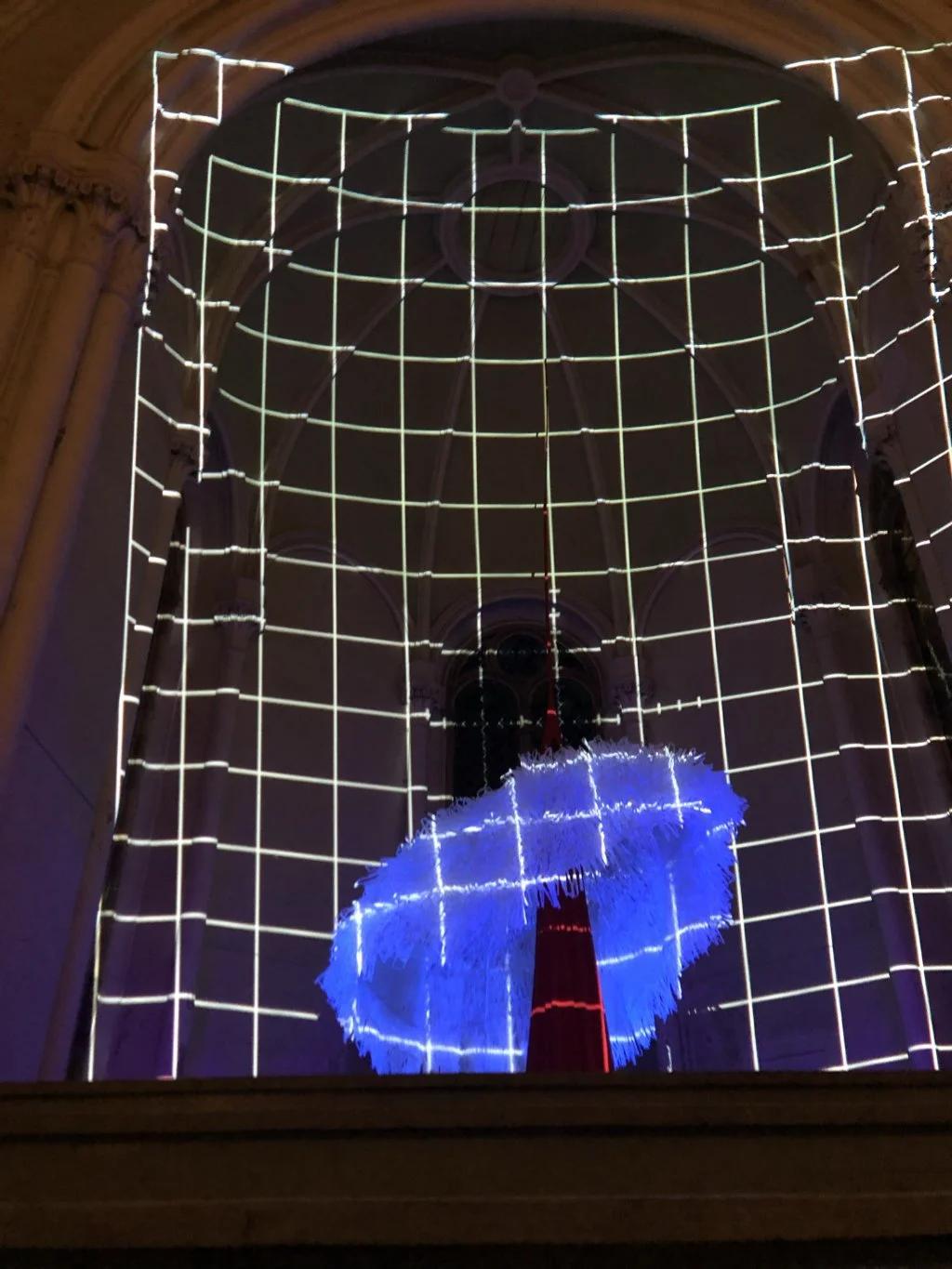
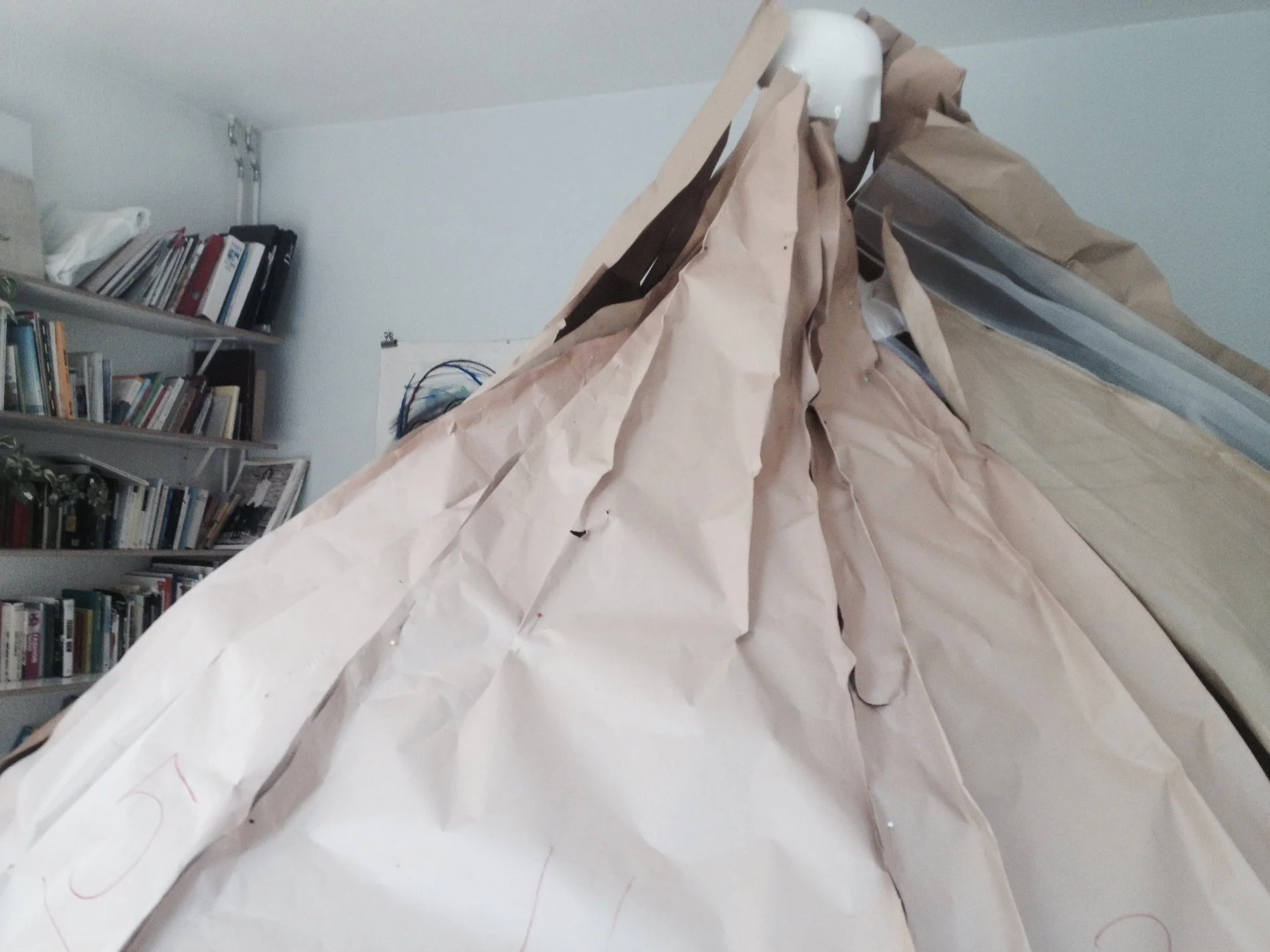
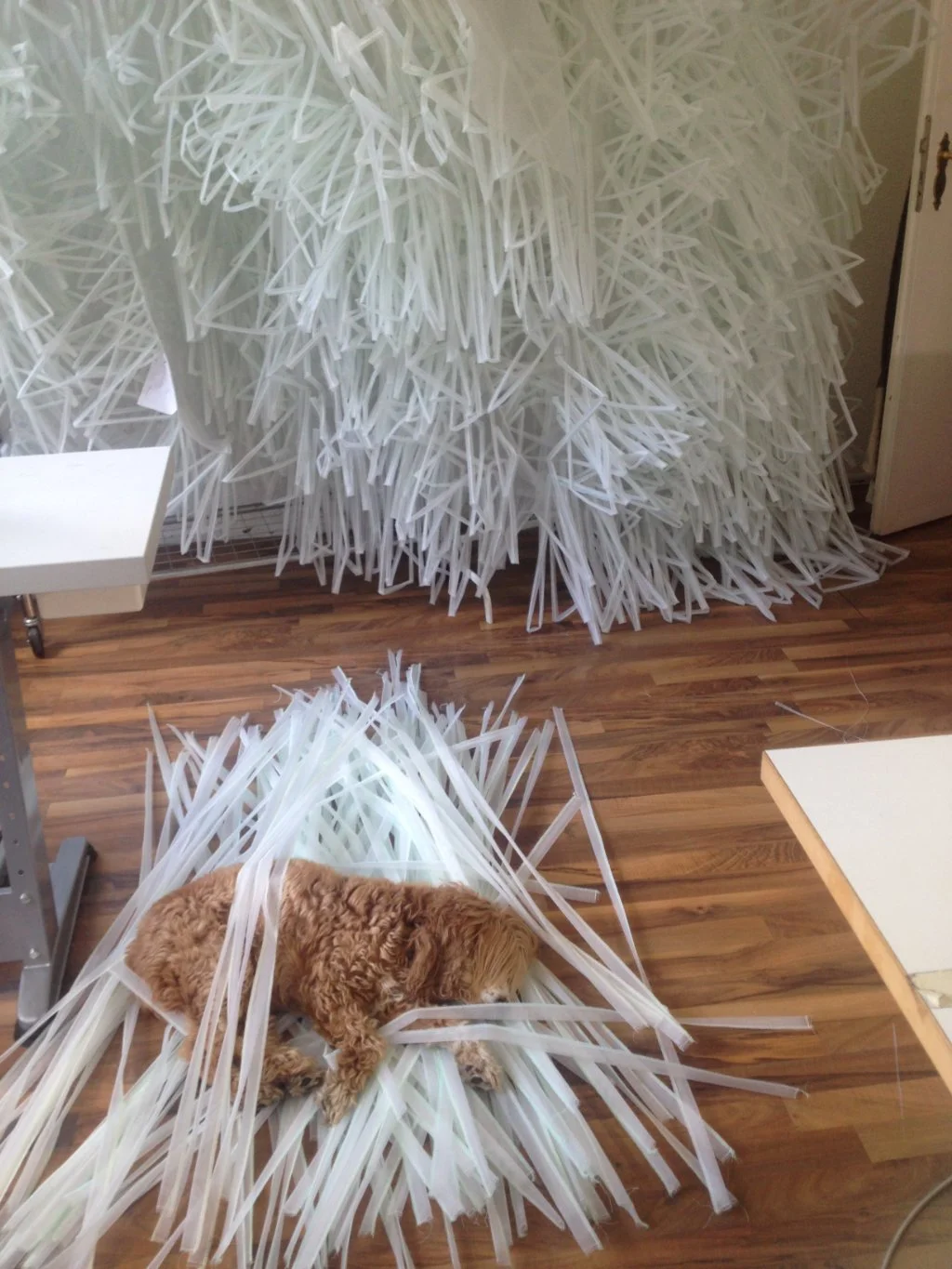
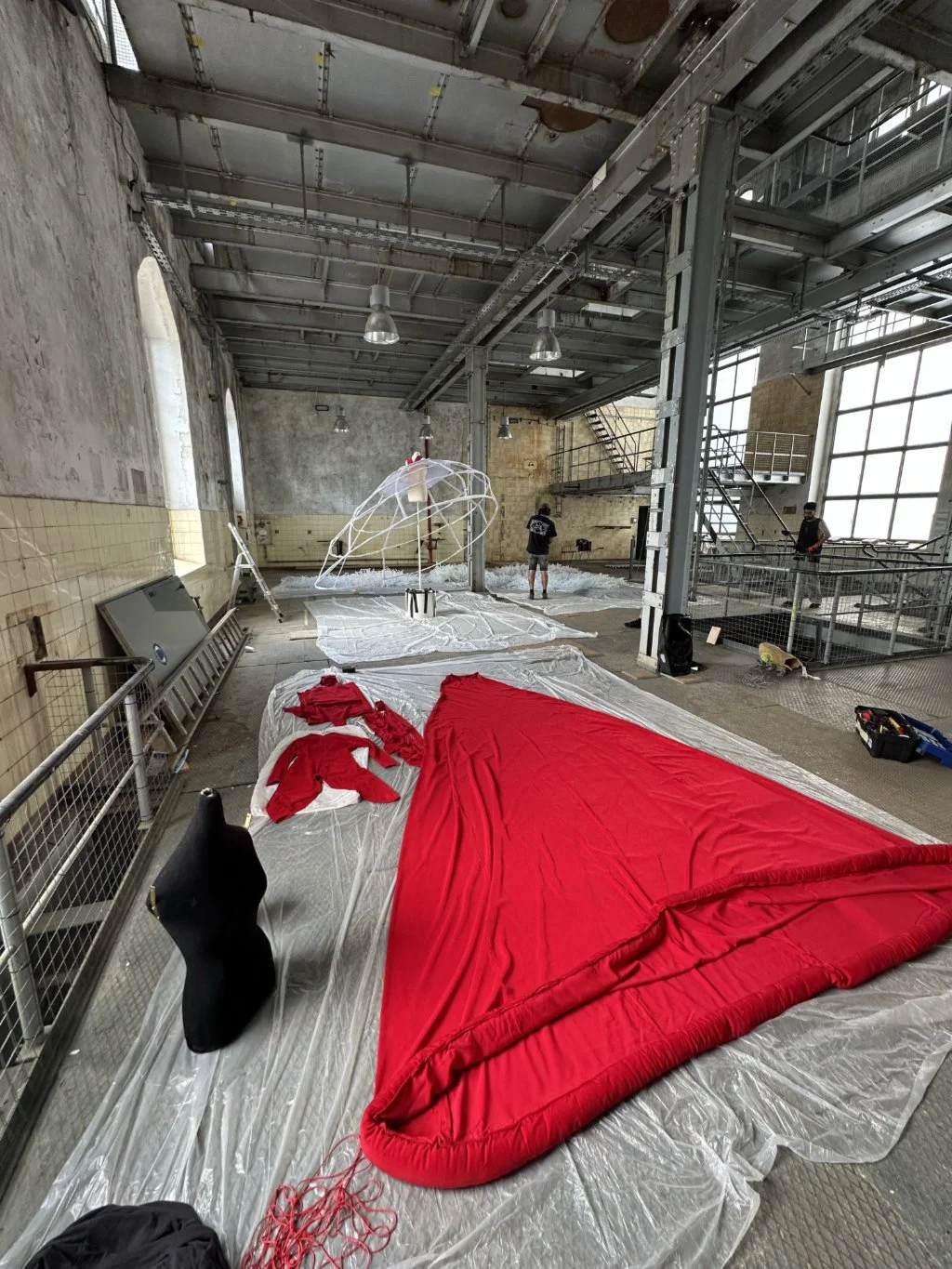
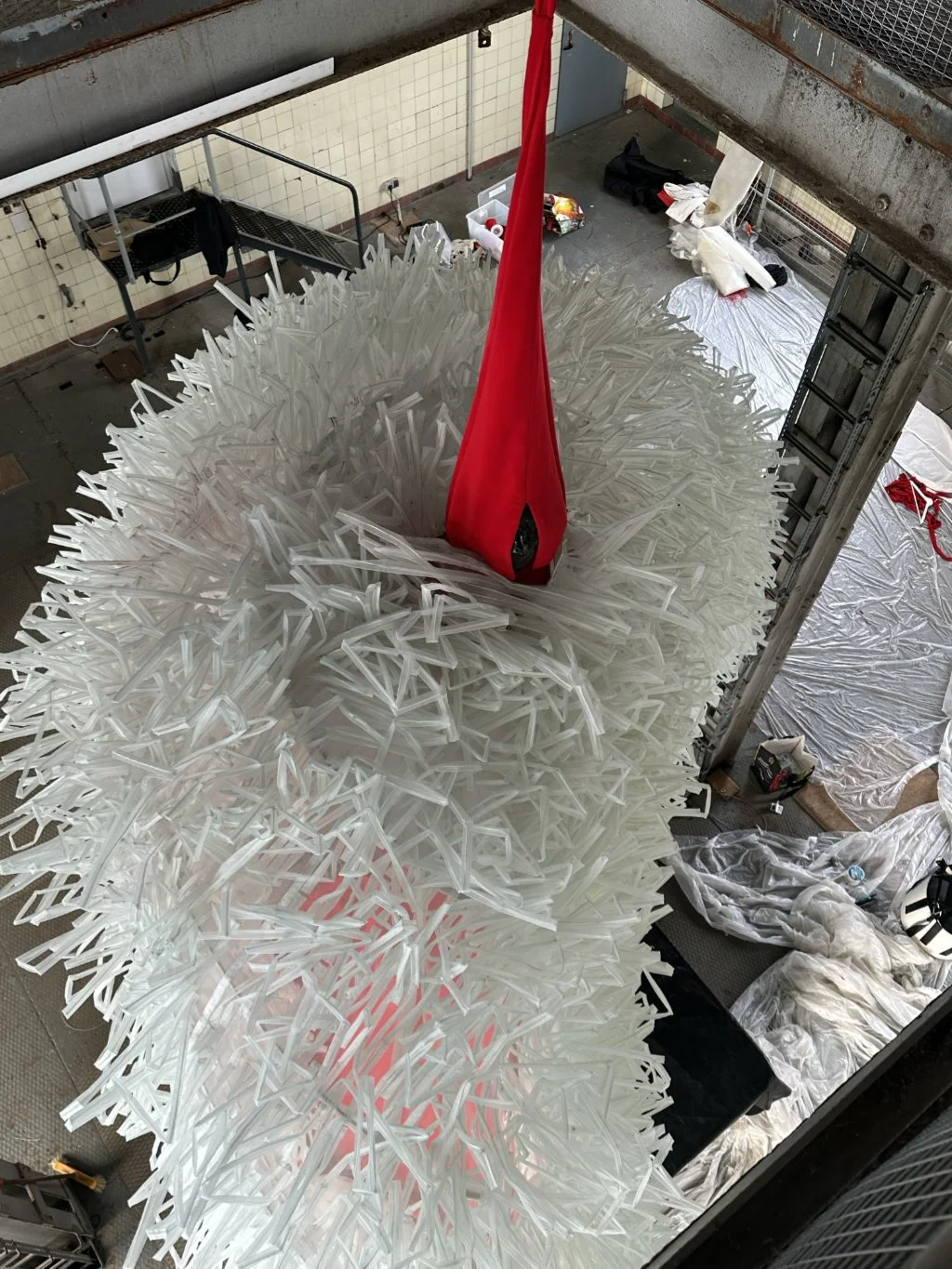
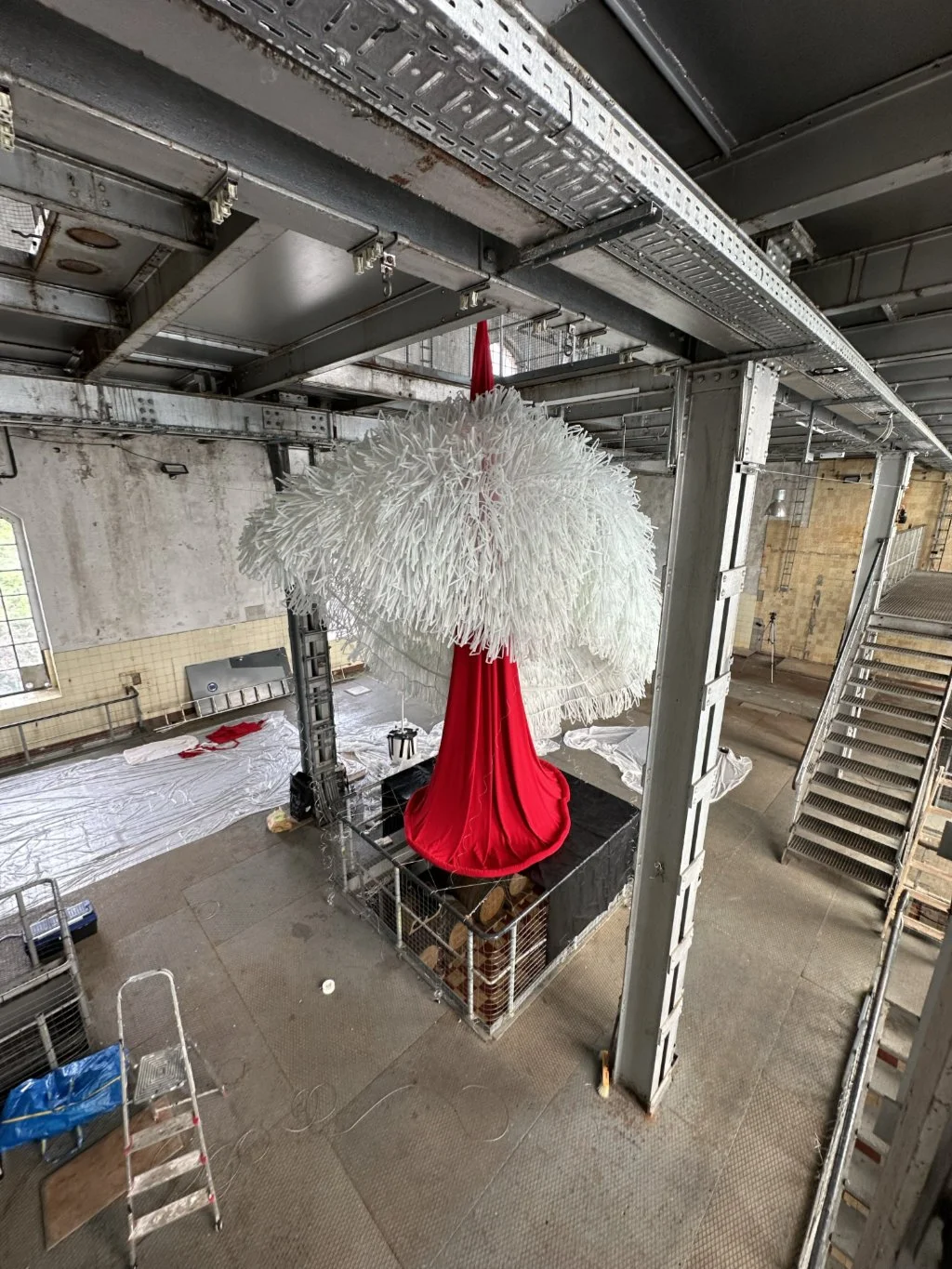
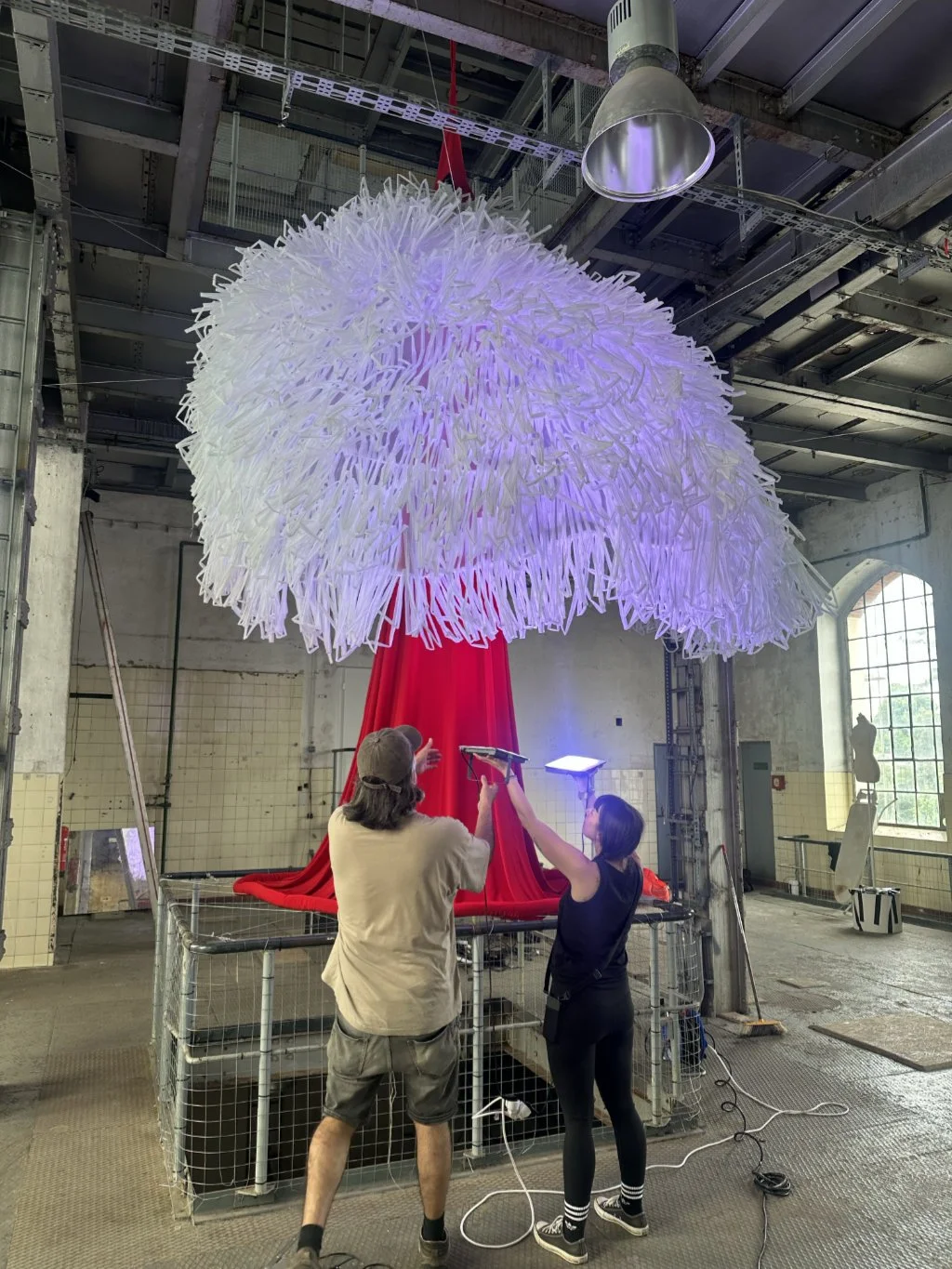
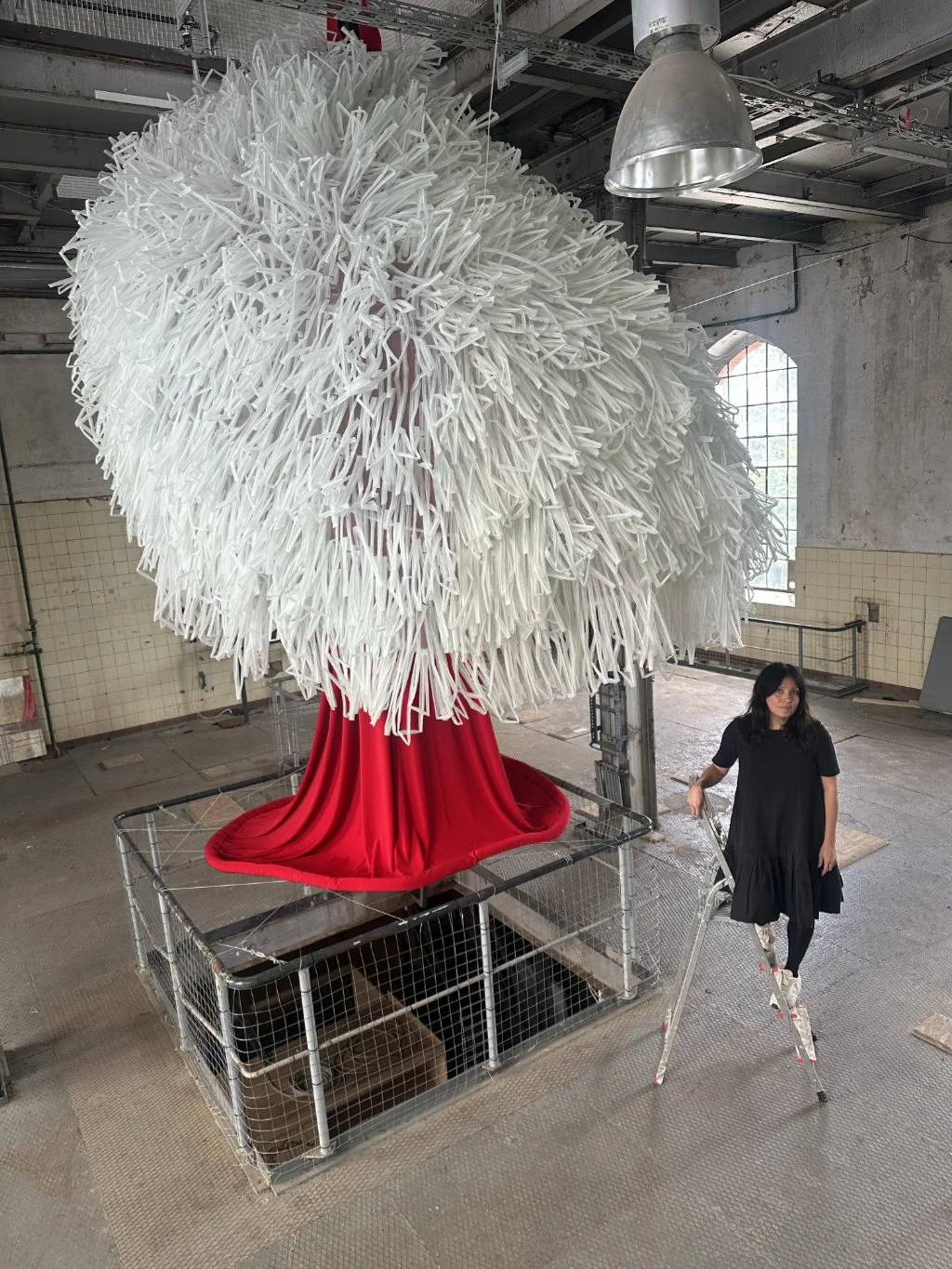
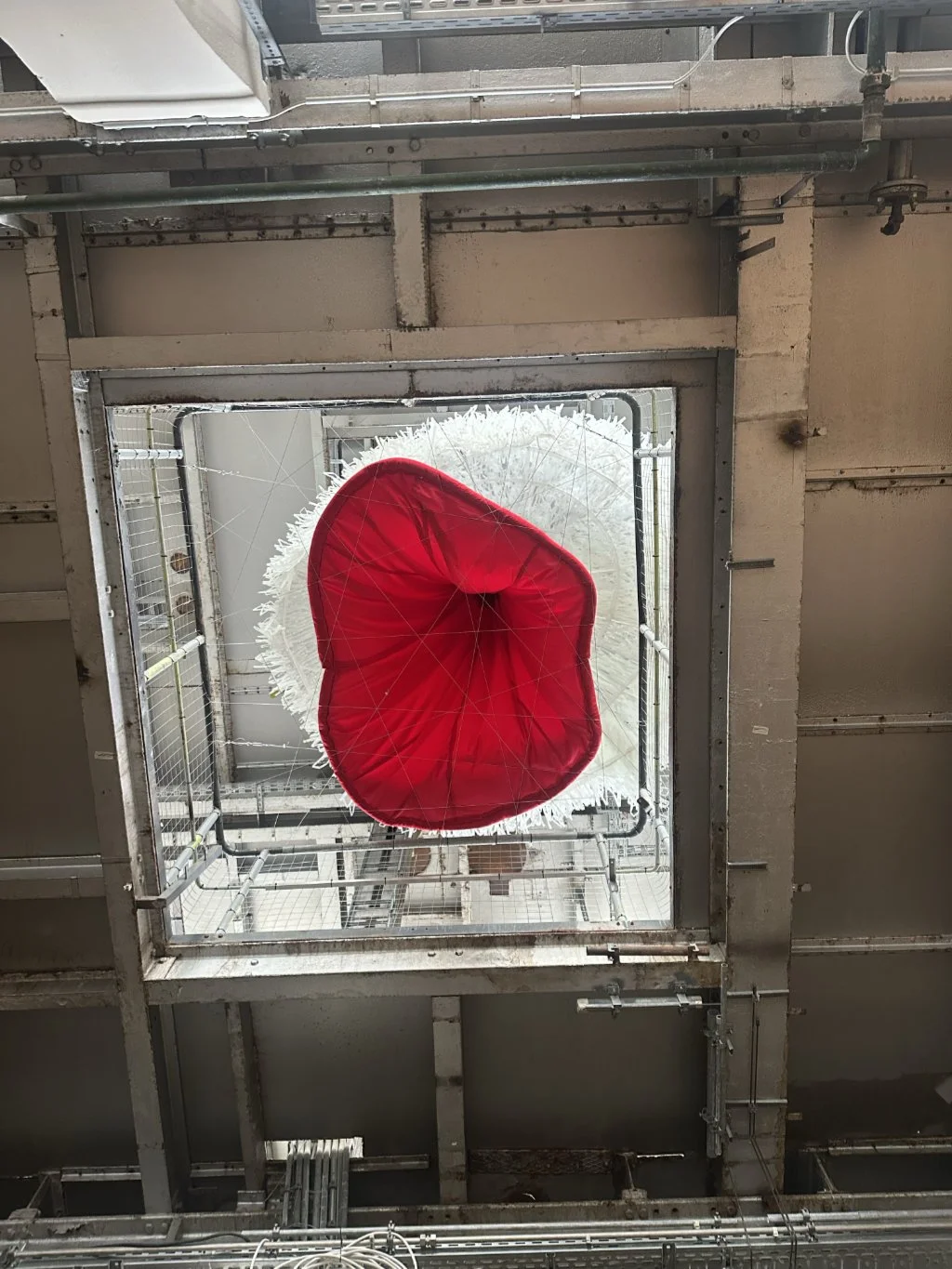
The work is centred around a large suspended textile structure composed of more than 3,000 individually sewn elements, a gesture of contemplation that makes time tangible while paying tribute to the extraordinary longevity of these ancient forests. Descending through its centre is a red dress that evokes both the blood of the forest and the wounds left by human intervention.
The soundscape was recorded within the Araucaria forests themselves, bringing together the wind and birdsong. The large-scale projection was filmed by the artist in the same location, from dawn until dusk, carrying the forest's shifting atmosphere and quiet rhythm into the exhibition space.
Seven years after its creation, Alma revealed a new interpretation. What originally emerged as a reflection on the forest gradually began to appear as a female body as well, both vulnerable and resilient, carrying memory, transformation and endurance. Blood no longer referred only to the landscape, but also became a metaphor for the wounds inscribed upon human bodies.
Rather than offering answers, Alma invites visitors to pause, breathe and contemplate. Between nature and the body, between time and memory, the work remains open as a question.
| Year | 2018 – ongoing |
|---|---|
| Format | Site-responsive immersive installation |
| Media | Textile sculpture, suspended textile structure composed of more than 3,000 individual elements, haute couture textile garment, video projection, sound and light |
| Dimensions | Variable, adapted to the exhibition space |
| Duration | Continuous installation | Location | Adaptable to institutional, gallery, festival and site-responsive contexts |
| Availability | Available for exhibitions, festivals and commissions, subject to confirmation |
| Credits |
Installation:
Marjorie Chau
Textile assistant:
Daniela Paz Mertens
Cinematography:
Malte Kebbel & Marjorie Chau
Video editing:
Nicolas Spencer
Video mapping & projection:
Juan Saez
Installation support:
Nele Probst & José Zenteno
Curator:
Tania Neira Gerber
|
-
What Has a Soul?
Alma emerged from Marjorie Chau's experience in the ancient Araucaria forests of southern Chile. Standing before this ancestral landscape, a question arose that became the starting point for the entire research process: What does it mean to be alive, and which beings possess a soul?
Araucarias belong to one of the oldest tree species on Earth. Their extraordinary longevity and survival across millions of years evoke the sense of a life that exists on a different temporal scale, reminding us that existence may unfold far beyond the limits of human experience.
The work does not attempt to answer whether the soul exists. Instead, it invites us to ask whether the soul belongs exclusively to human beings, or whether it also resides within trees, animals and all the living forms that sustain the world.
Time Made Material
The installation transforms this experience into a physical presence.
The suspended structure is composed of more than 3,000 individually sewn elements. Repetition ceases to be a formal device and becomes instead an act of contemplation and respect for the extraordinary longevity of the ancient Araucaria forests. Each element contributes to a larger whole, making visible a sense of time that extends beyond the human scale.
The red dress introduces a reference to the blood of the forest and the wounds caused by human intervention. The sound, recorded within the forest itself, together with the projection filmed from dawn until dusk, extends the experience of the landscape into the exhibition space, inviting visitors to slow down and experience a different relationship with time.
A Work in Transformation
Seven years after its creation, Alma began to reveal a new interpretation. What initially emerged as a reflection on ancient forests also began to manifest itself as a female body.
Nature and the body therefore appear as expressions of the same condition: both can be wounded, both preserve memory, and both possess the capacity to transform and continue to exist.
Between the forest and the body, between life and memory, Alma remains open as a question:
What remains alive after the wound?