Dulce Amor
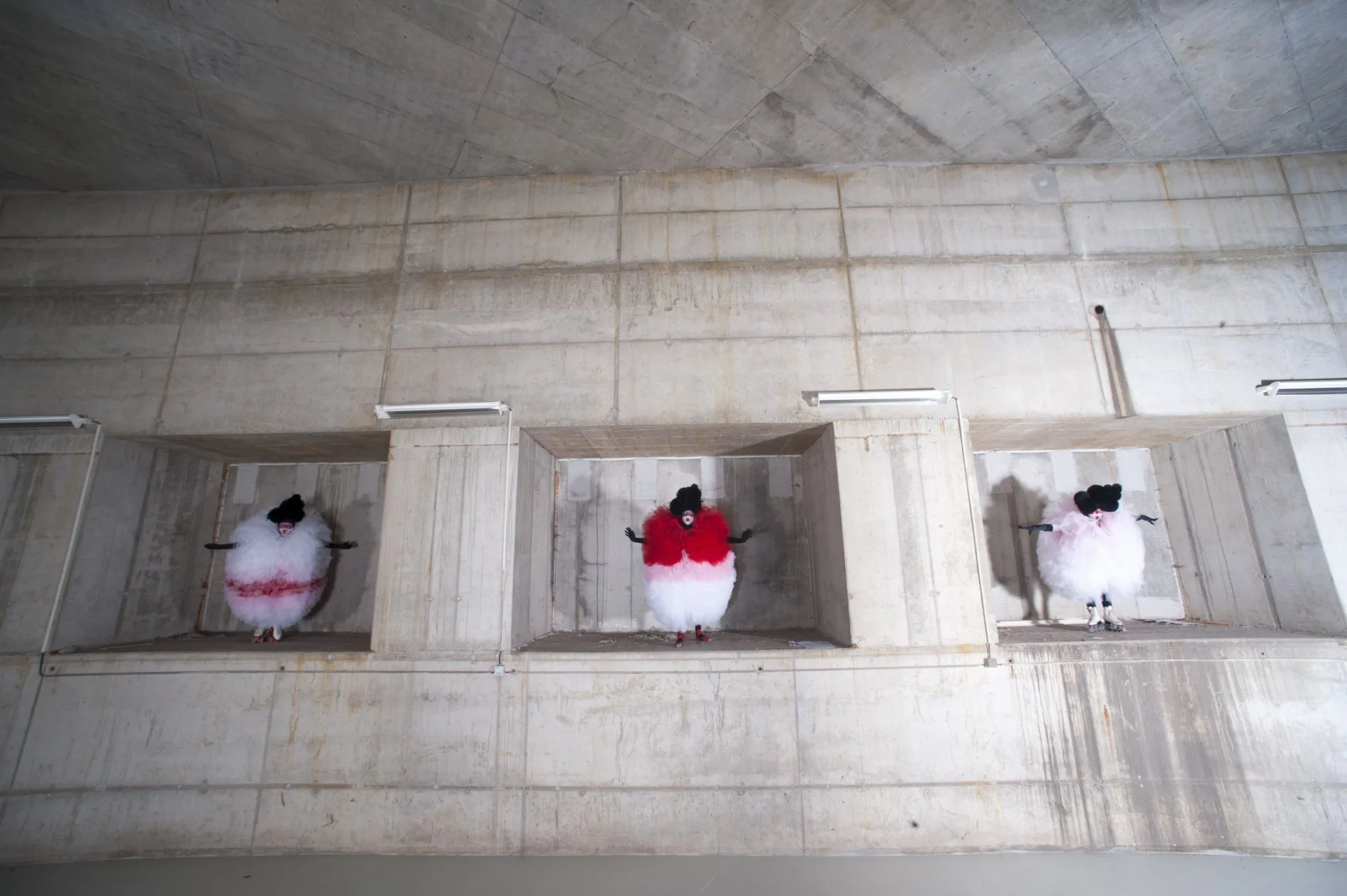
A performance in which large textile characters move through the space, awakening the possibility of experiencing love as a force capable of transforming perception, opening us to trust, and creating unexpected encounters. Inspired by the ability of affection to transform both our emotions and our own bodies, the work celebrates the joy of opening ourselves to others.



Details
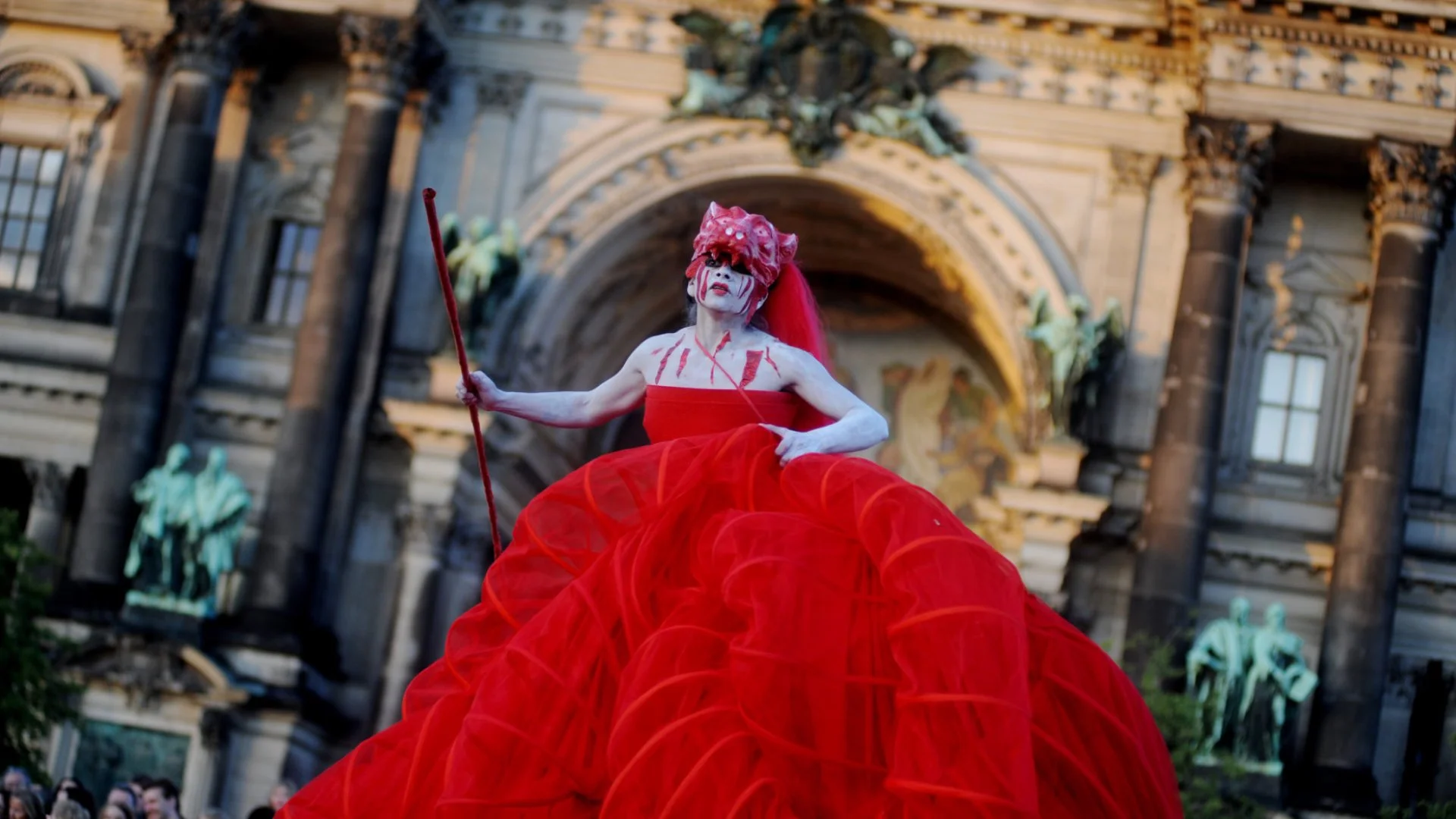
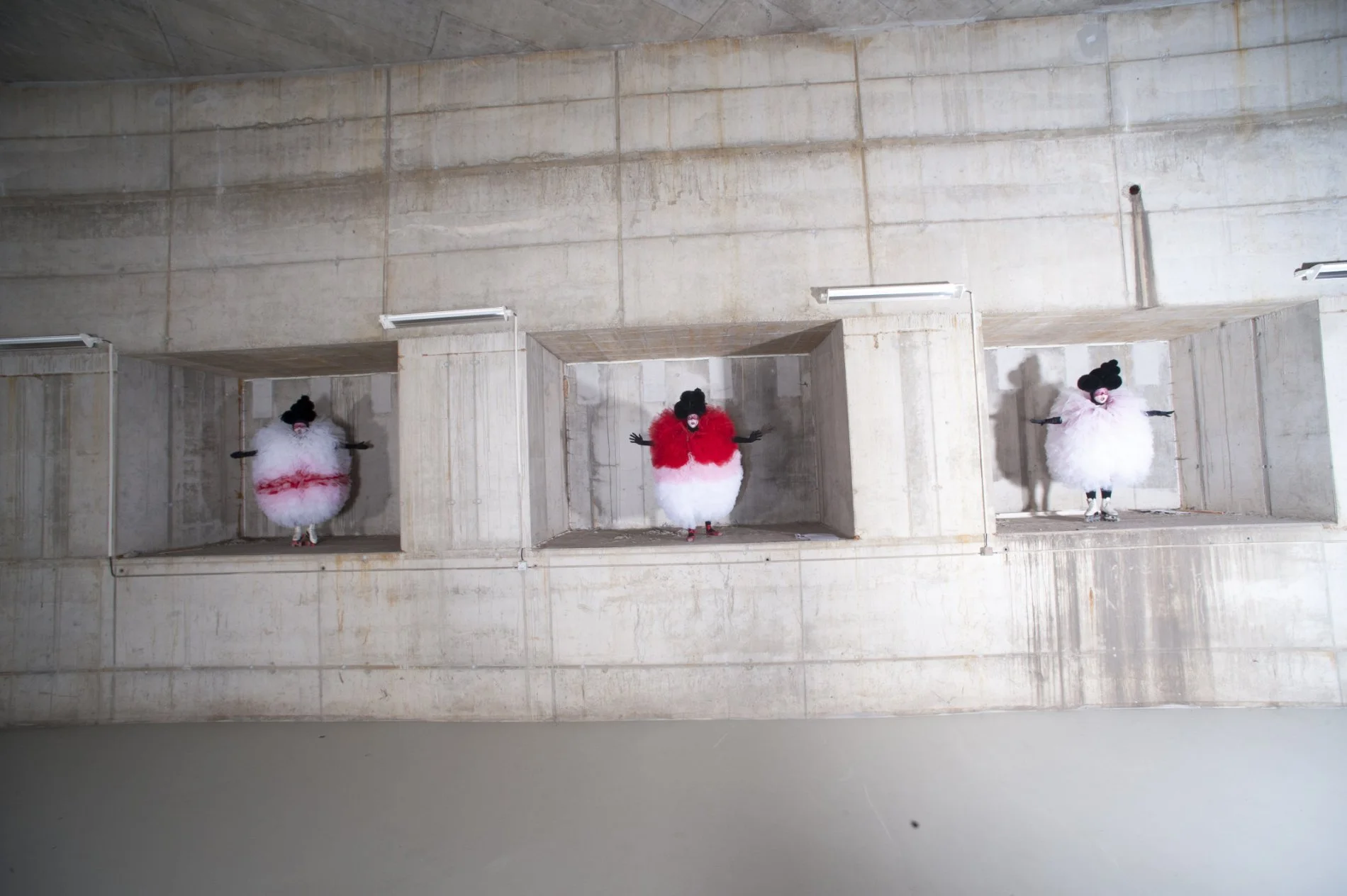
Dulce Amor presents large textile characters constructed from thousands of fabric fragments that, repeated again and again, give rise to soft, rounded, enveloping forms. Like enormous pompoms in motion, they move through the space with a playful and light presence that transforms the environment through closeness and play. Their voluminous headdresses extend this sense of lightness, turning the body into an almost floating figure.
Inside each character, a luminous heart remains hidden and, when opened, reveals a warm light offered to the audience as a gesture of trust and openness.
Rather than representing romantic love, the work explores the state of joy, vulnerability, and well-being that love can awaken. That moment when the world seems to become brighter, people feel closer, and the entire body responds to an energy that is difficult to explain.
The characters invite play, encounter, and smiles, reminding us that tenderness can also be shared as a collective experience.
| Year | 2013 |
|---|---|
| Format | Site-responsive performance |
| Media | Sculptural textile costumes, illuminated hearts, performance, and movement |
| Dimensions | Variable |
| Duration | Variable | Location | Public spaces, festivals, museums, and galleries |
| Availability | Available for festivals, urban interventions, and commissioned projects |
| Credits |
Concept & Artistic Direction:
Marjorie Chau
|
-
The Energy of Love
Beyond its symbolic dimension, love produces real transformations in the human body. During falling in love, hormones and neurotransmitters such as oxytocin and dopamine alter our perception, strengthen trust, intensify bonds, and generate a profound sense of well-being.
Dulce Amor translates this invisible process into the language of performance. The repetition of thousands of textile pieces constructs soft, welcoming bodies that seem to materialize an emotion. The characters do not represent specific individuals, but rather emotional states that circulate between people like a shared energy.
Sharing Joy
In a world where distance, mistrust, and isolation are part of everyday experience, Dulce Amor proposes pausing for a moment to remember that joy can also be an act of generosity.
The work understands love as a practice of openness: trusting, drawing closer, playing, allowing ourselves to be surprised, and accepting the vulnerability involved in encountering another person.
The characters appear as small poetic presences that do not offer love as if it were an object. They awaken the possibility of feeling it. Their luminous hearts symbolize that invisible energy that can arise between people when there is trust, affection, and openness.
Dulce Amor does not speak of love as an idealized promise, but as a deeply human force capable of transforming our perception of the world. Just as falling in love changes our chemistry, our emotions, and the way we look at others, the work invites us to remember that love can also change the way we inhabit space and relate to those around us.