Constellation of Voices
Constellation of Voices is a participatory, immersive installation exploring how children and young people experience their own rights. Through artistic creation, individual reflections become intimate worlds that come together as a collective constellation of voices. Read more
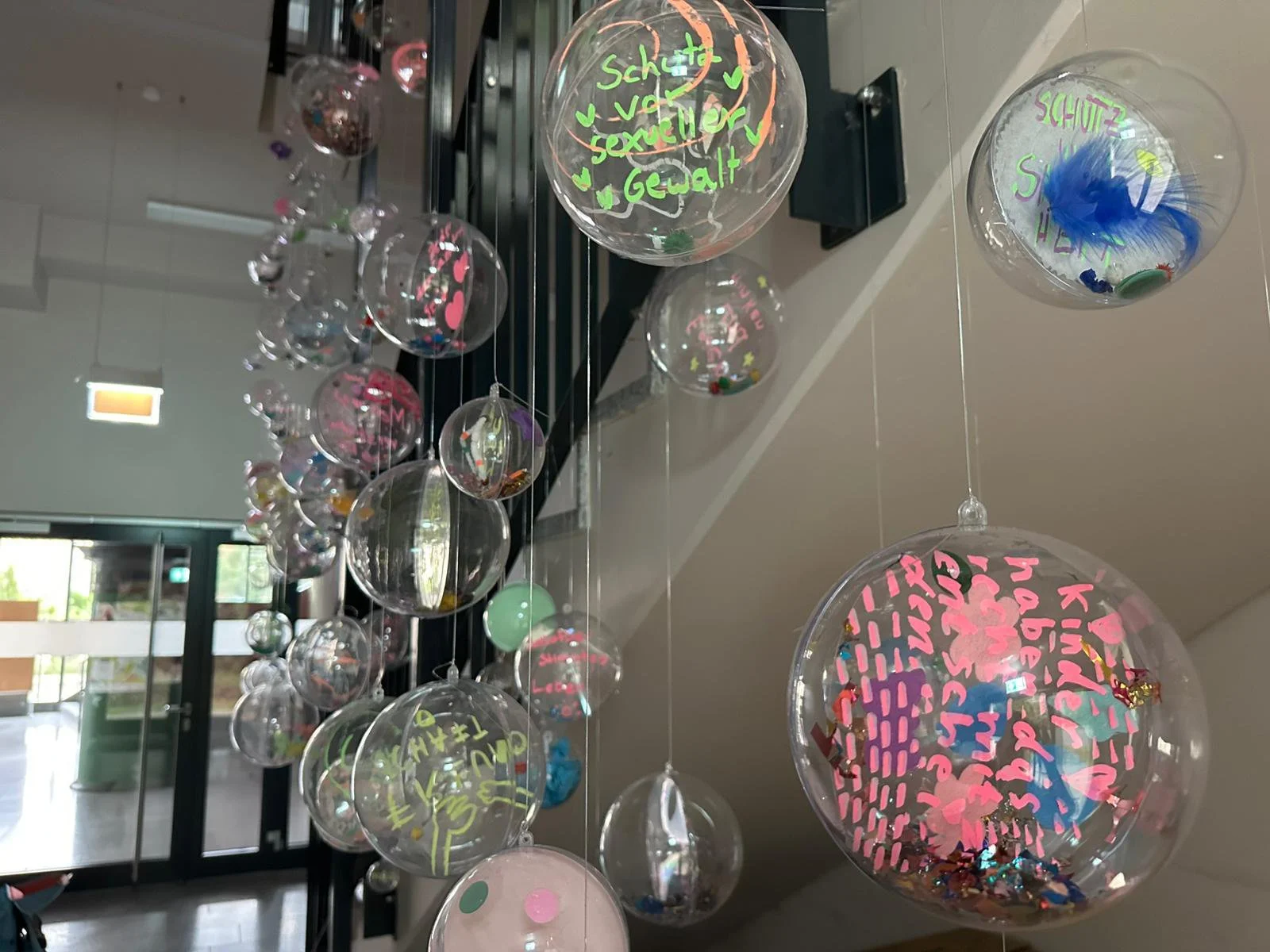
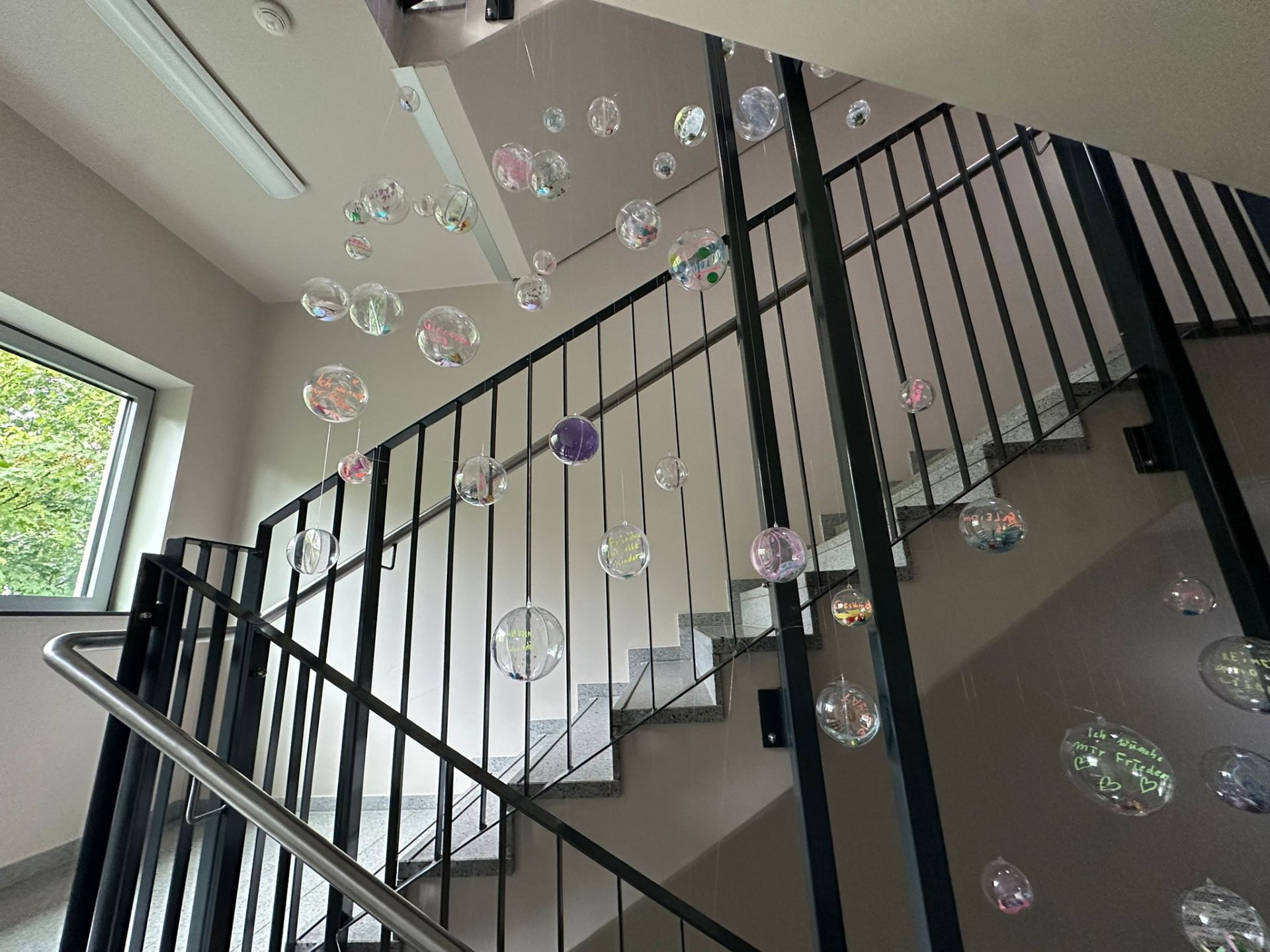
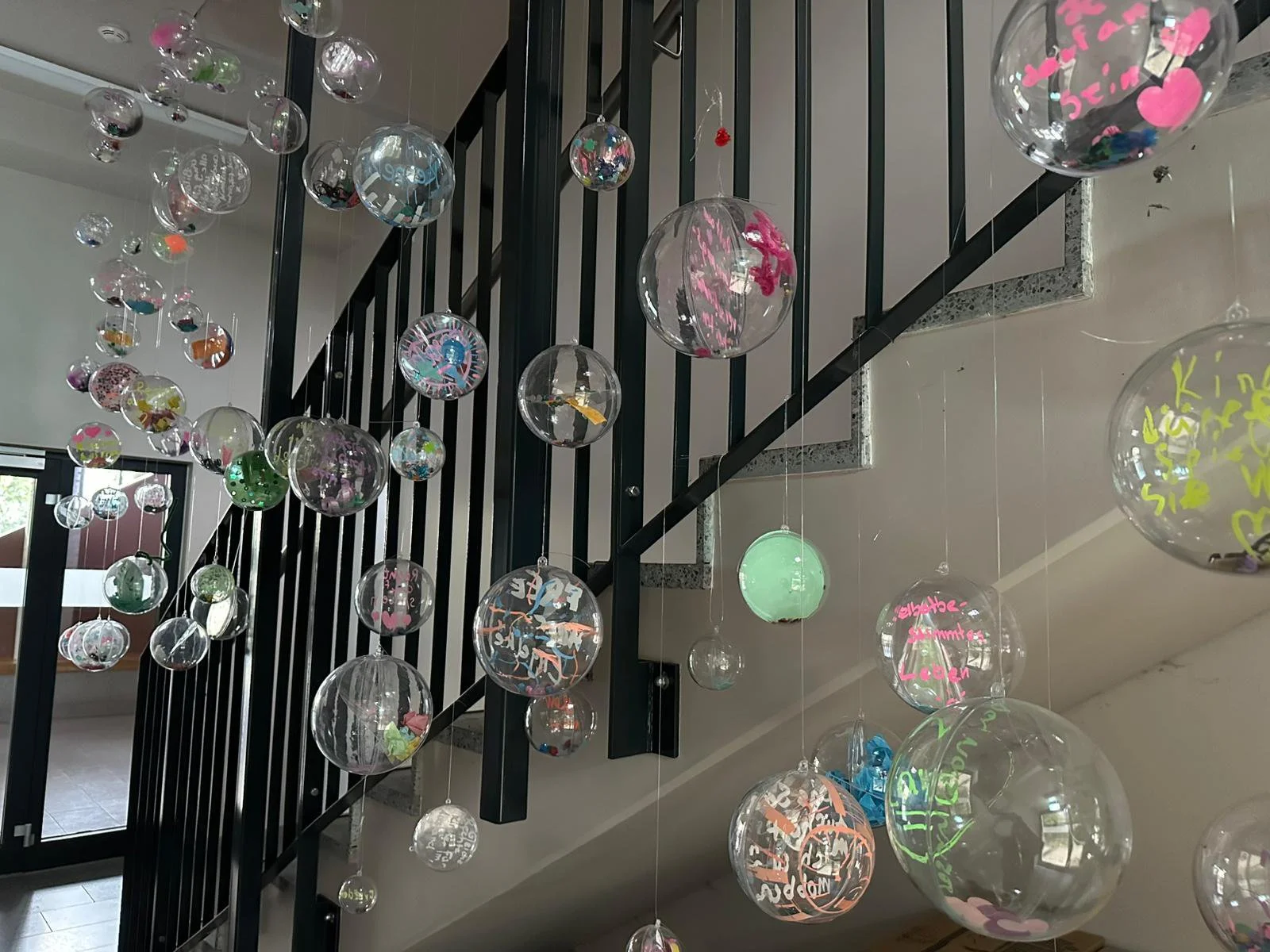
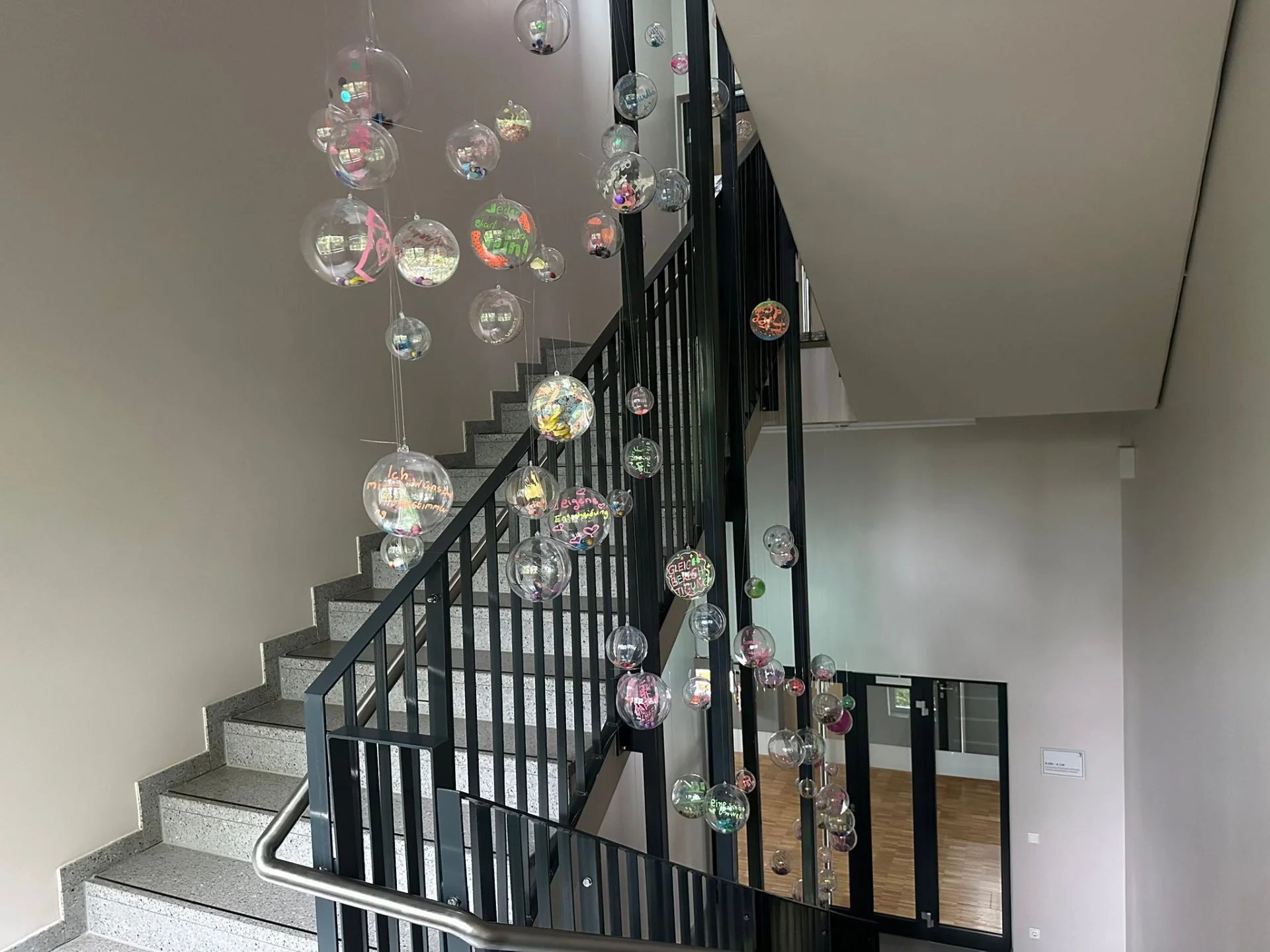
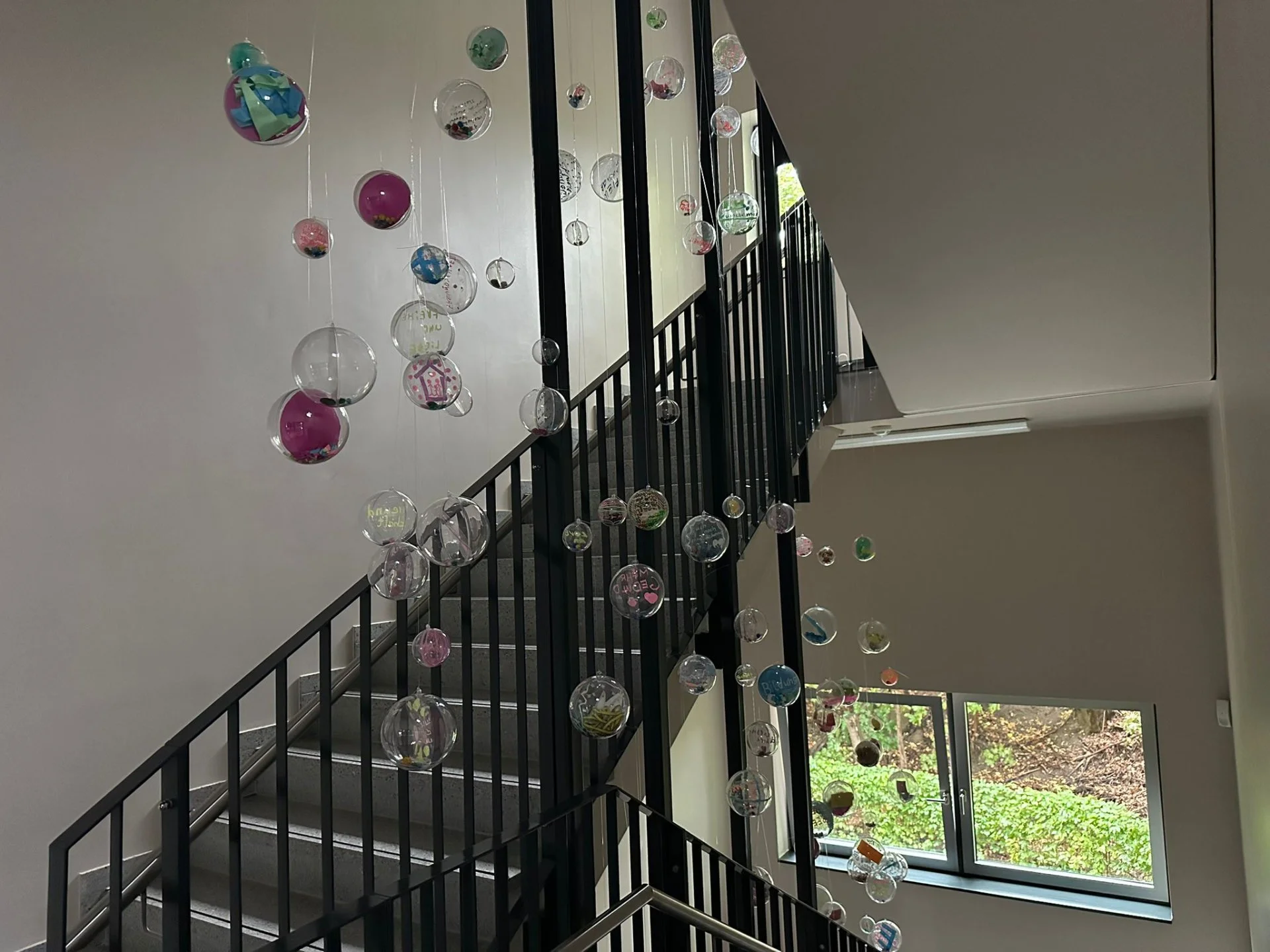
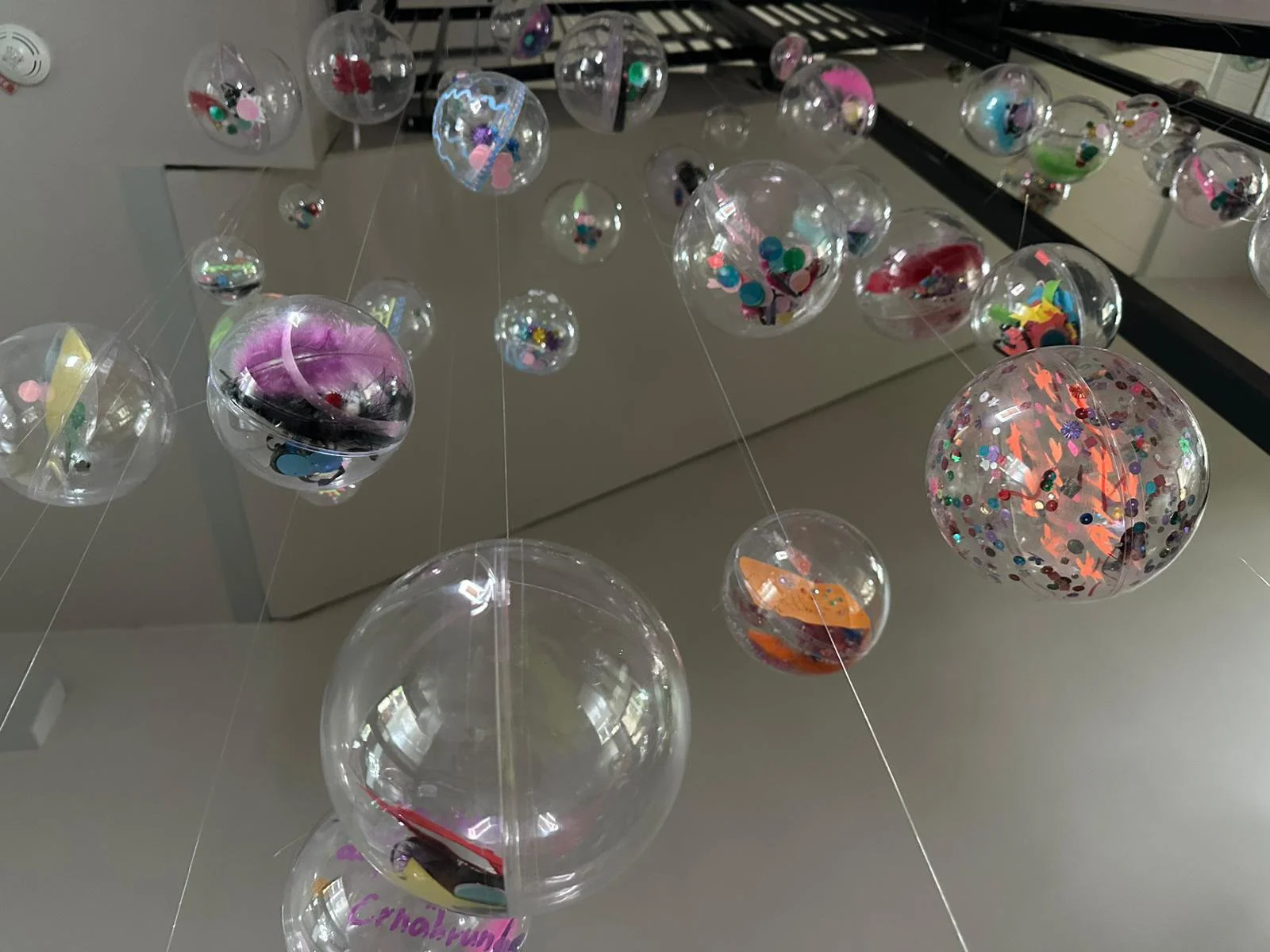
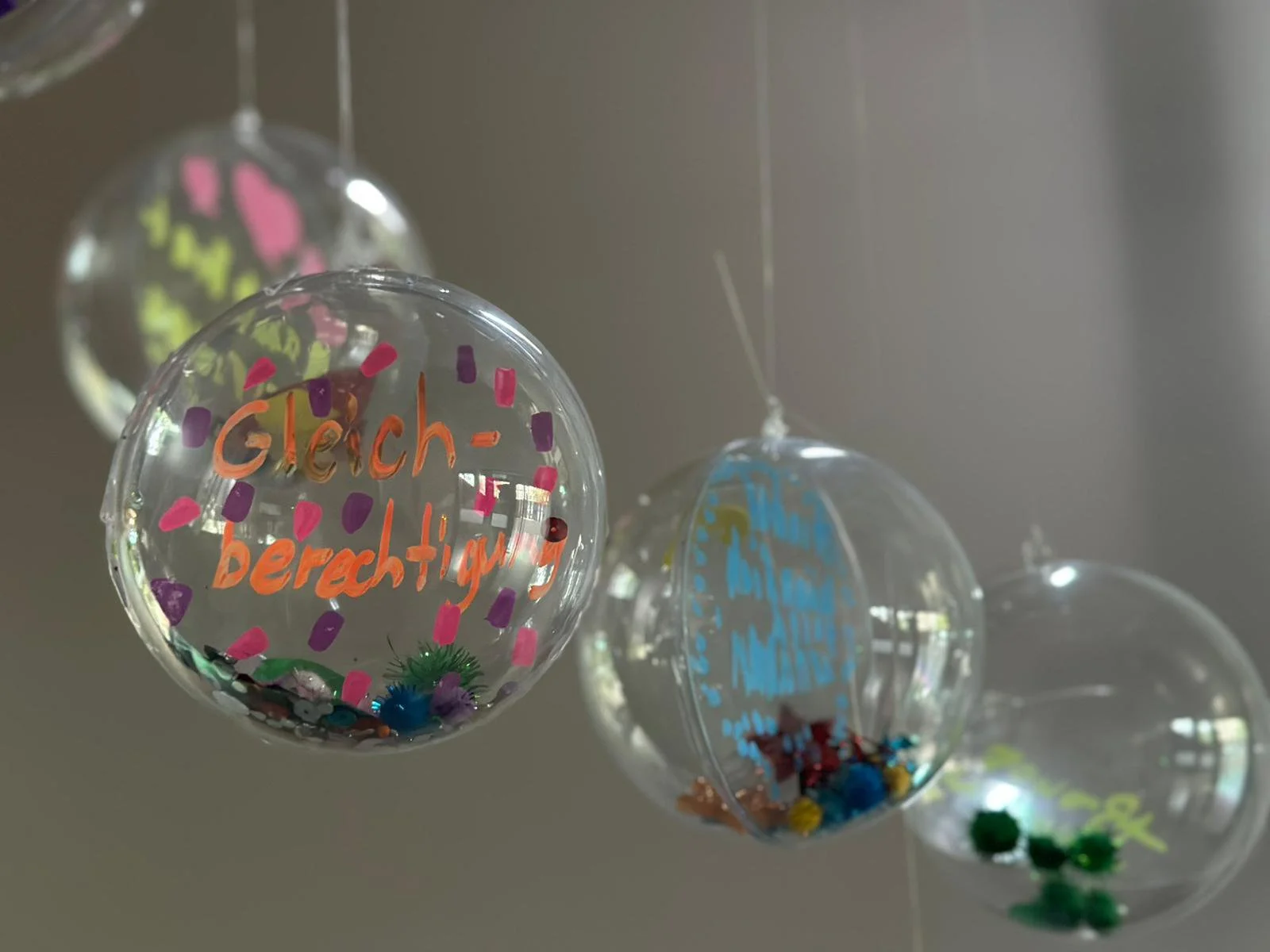
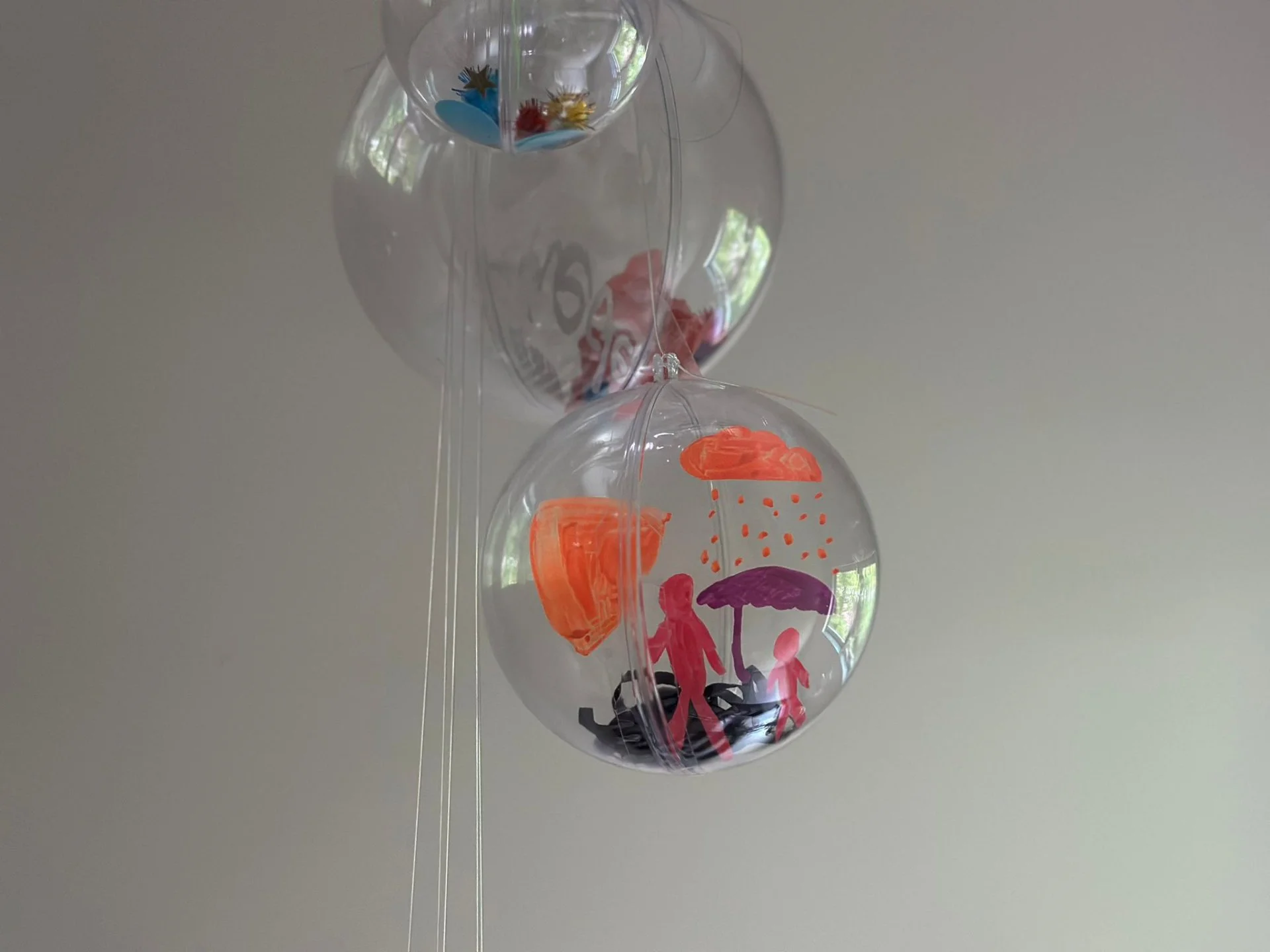
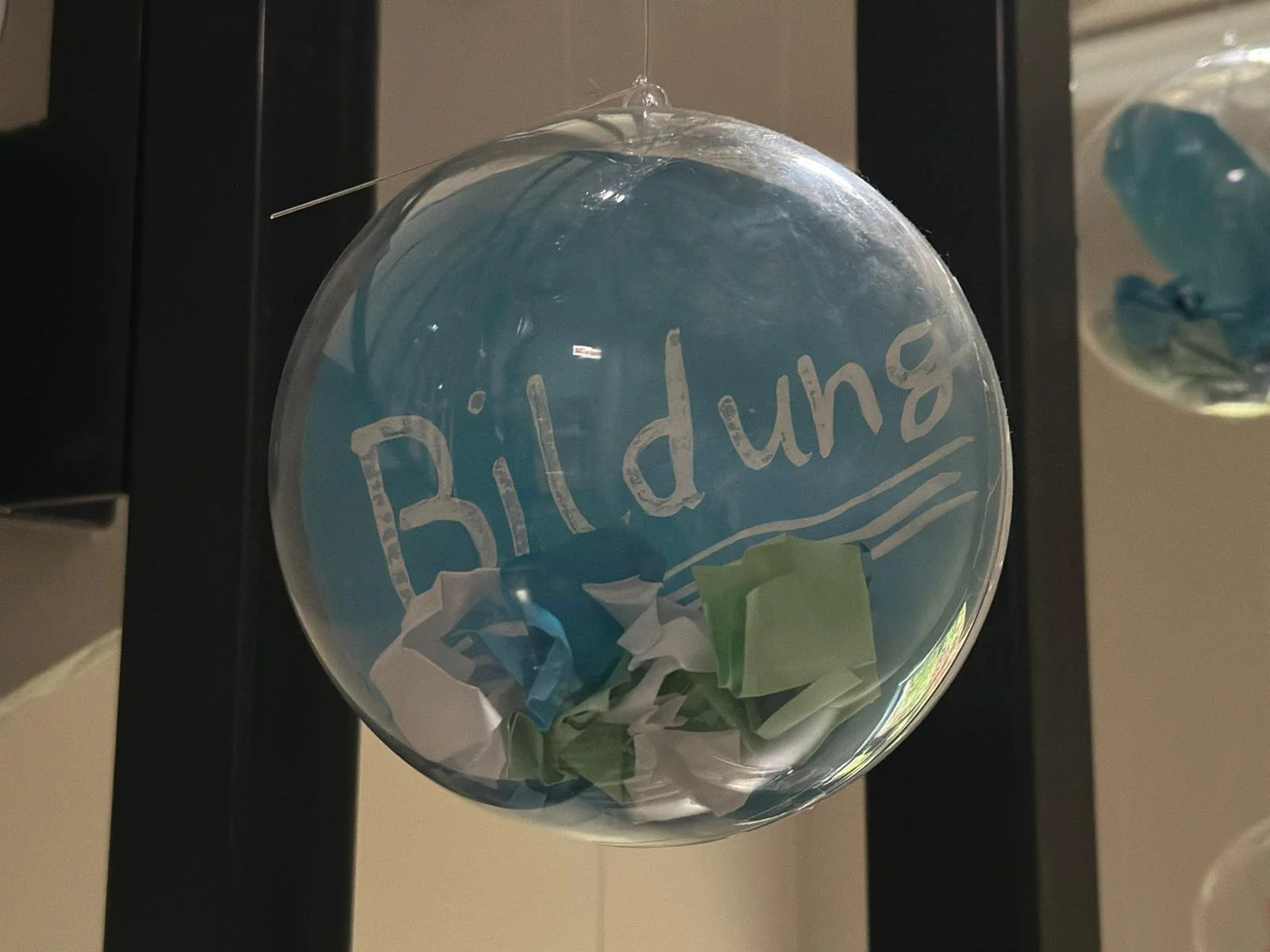
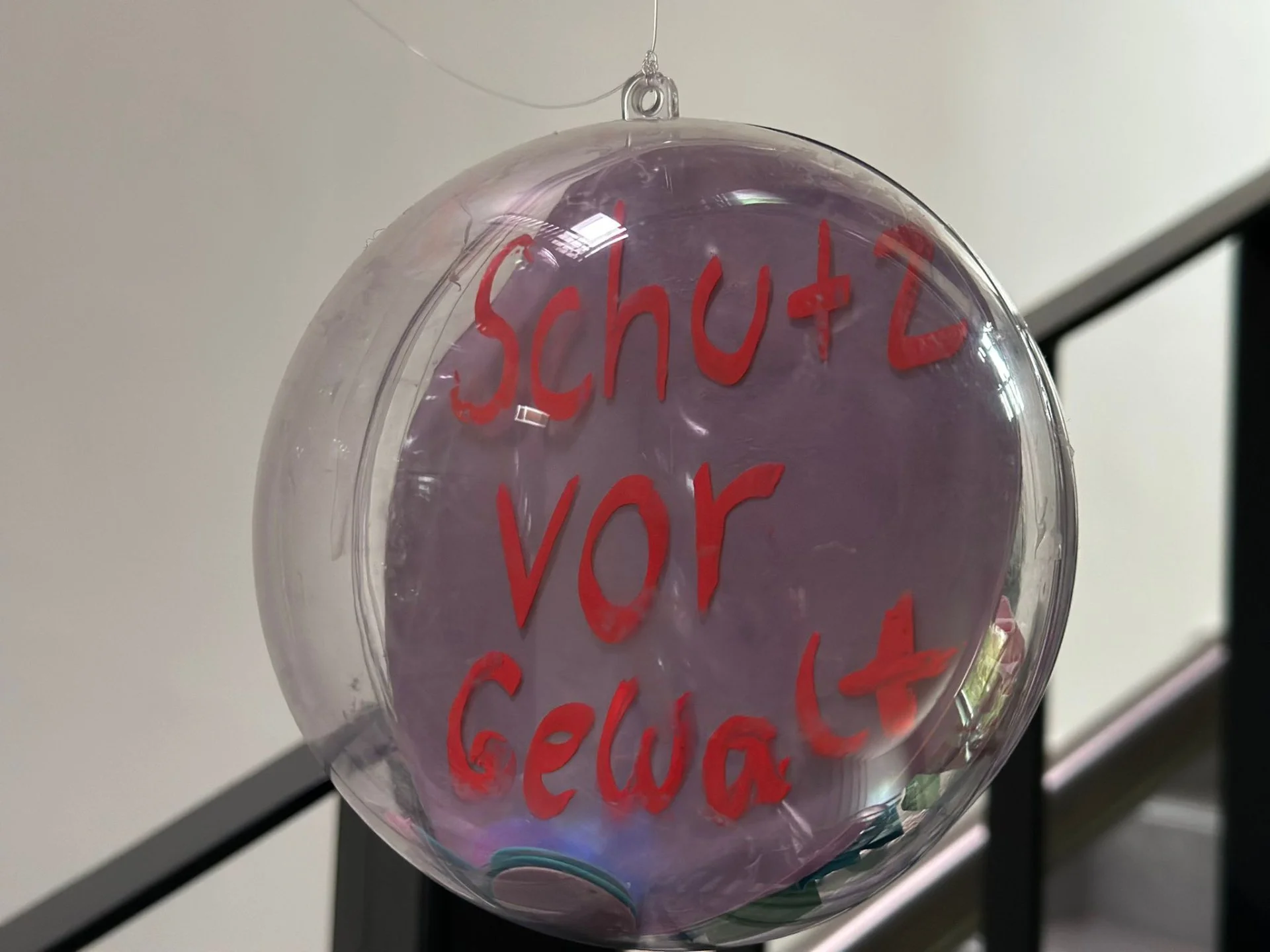
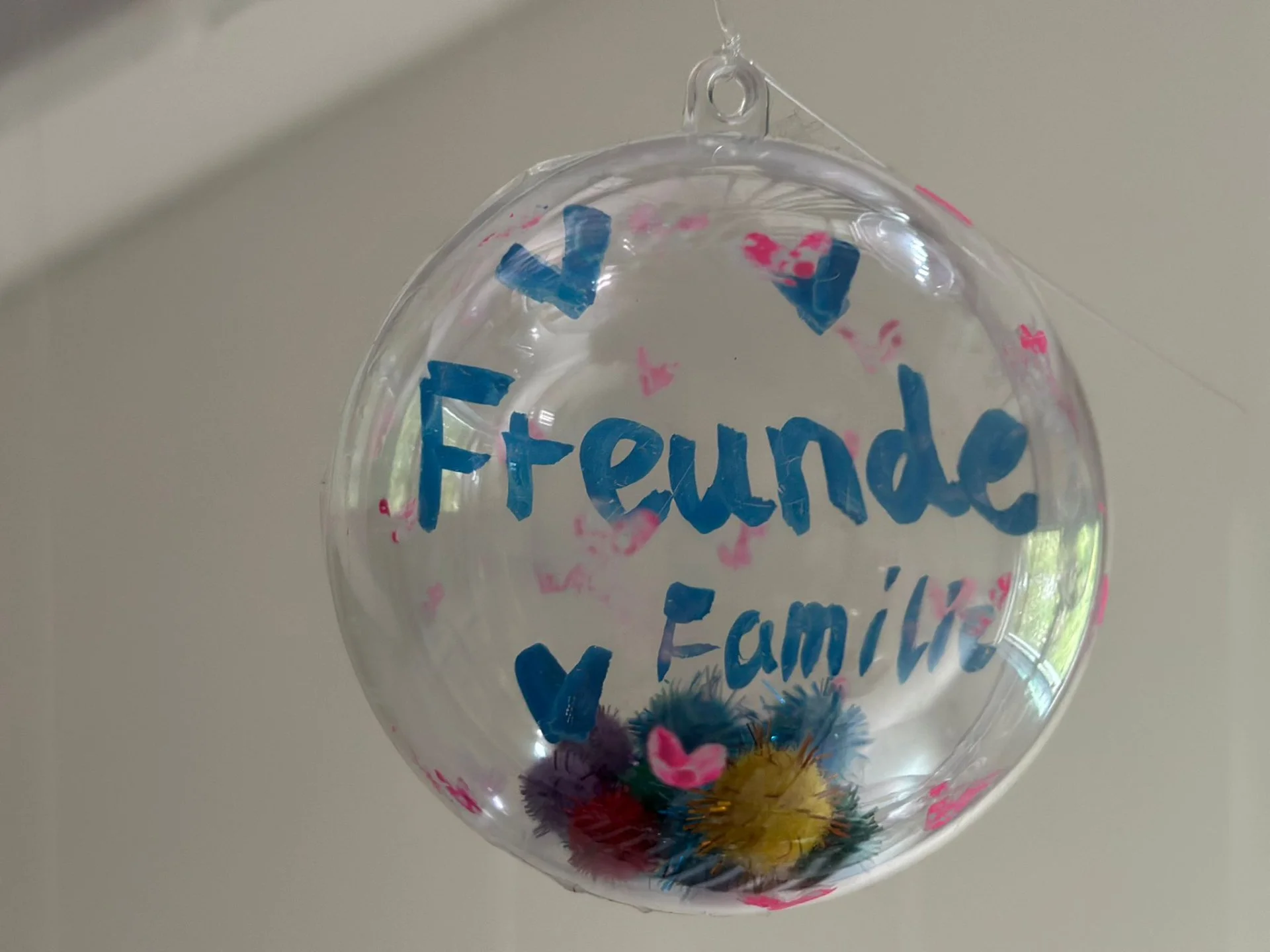
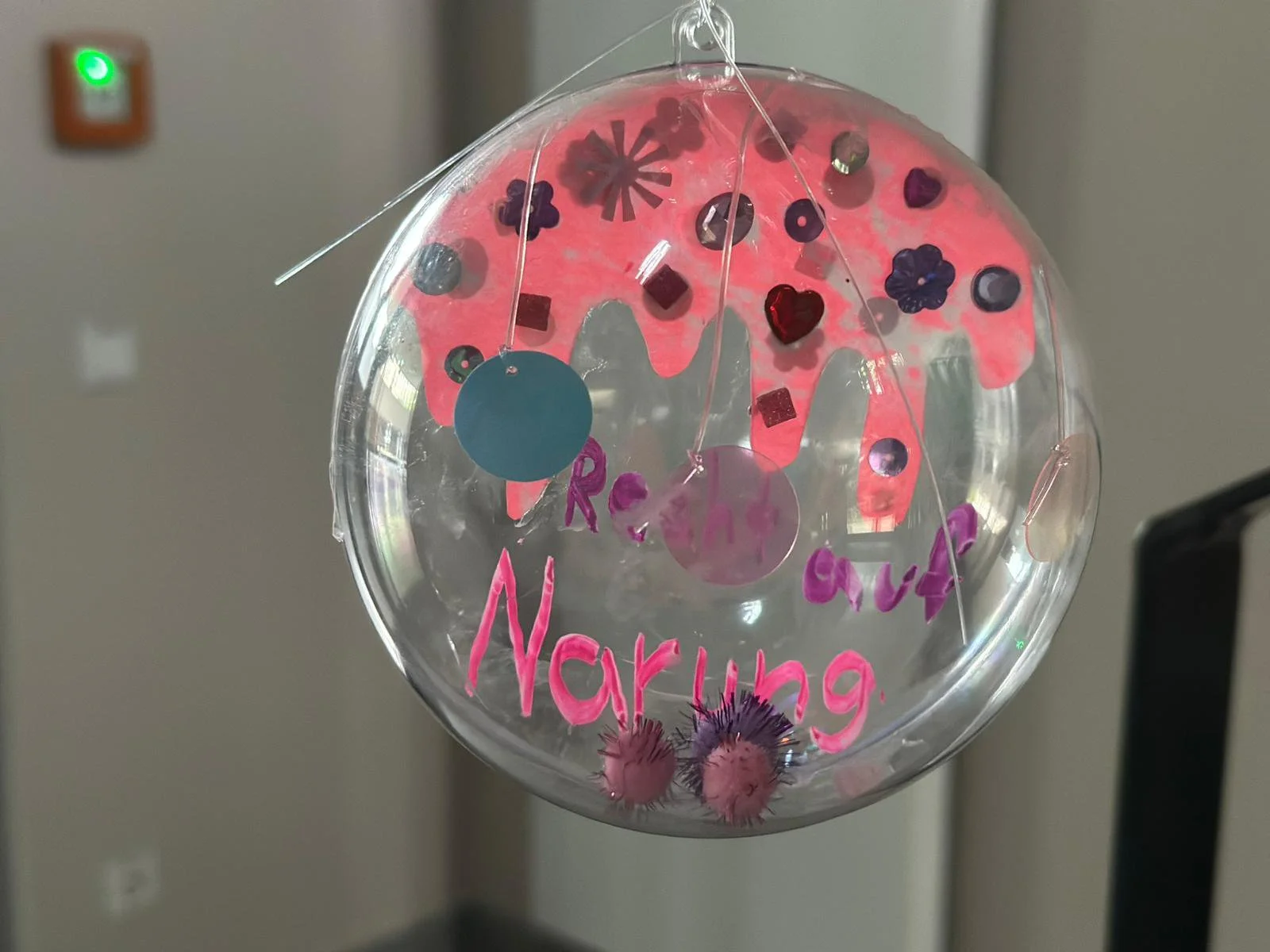
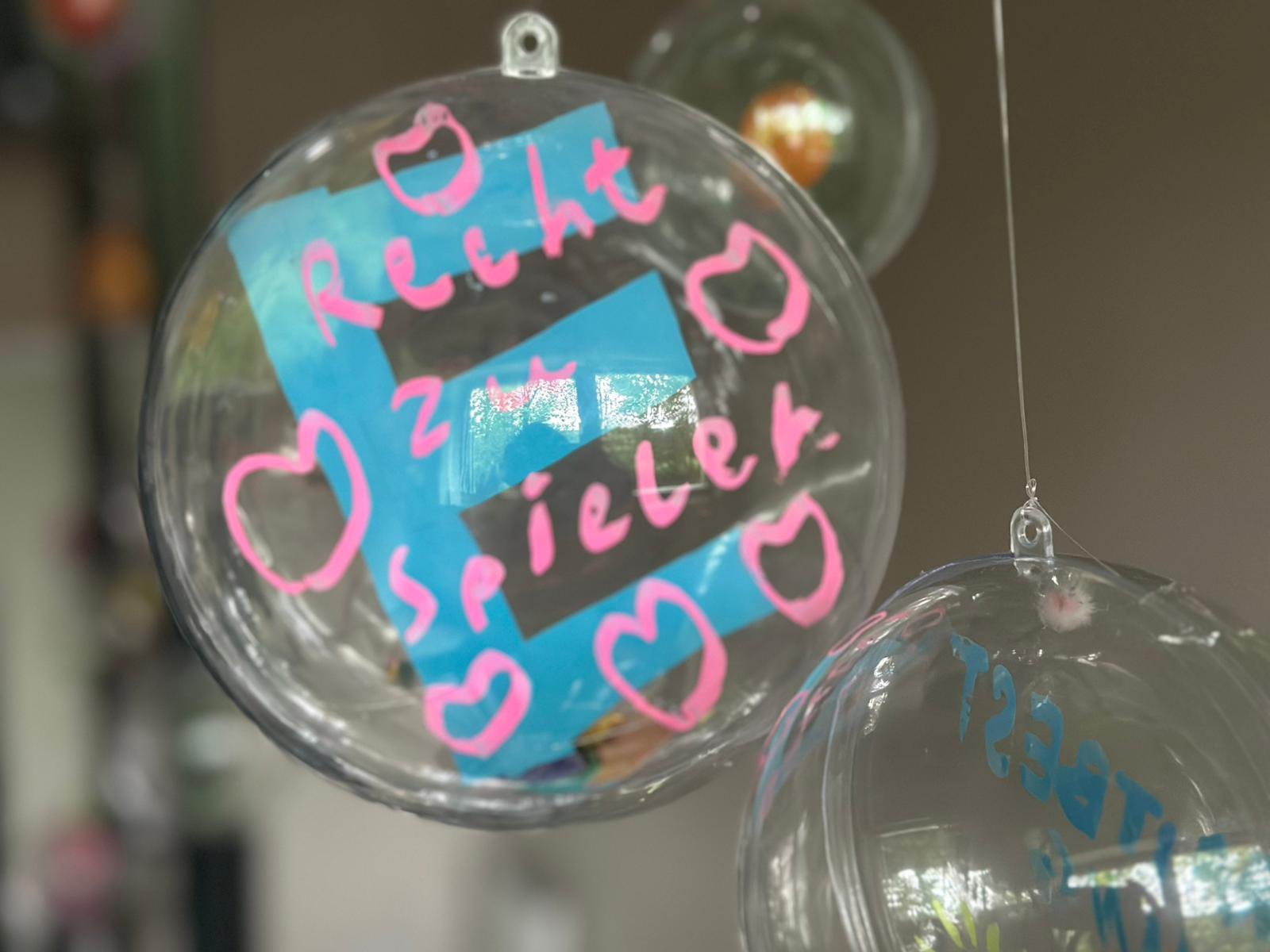
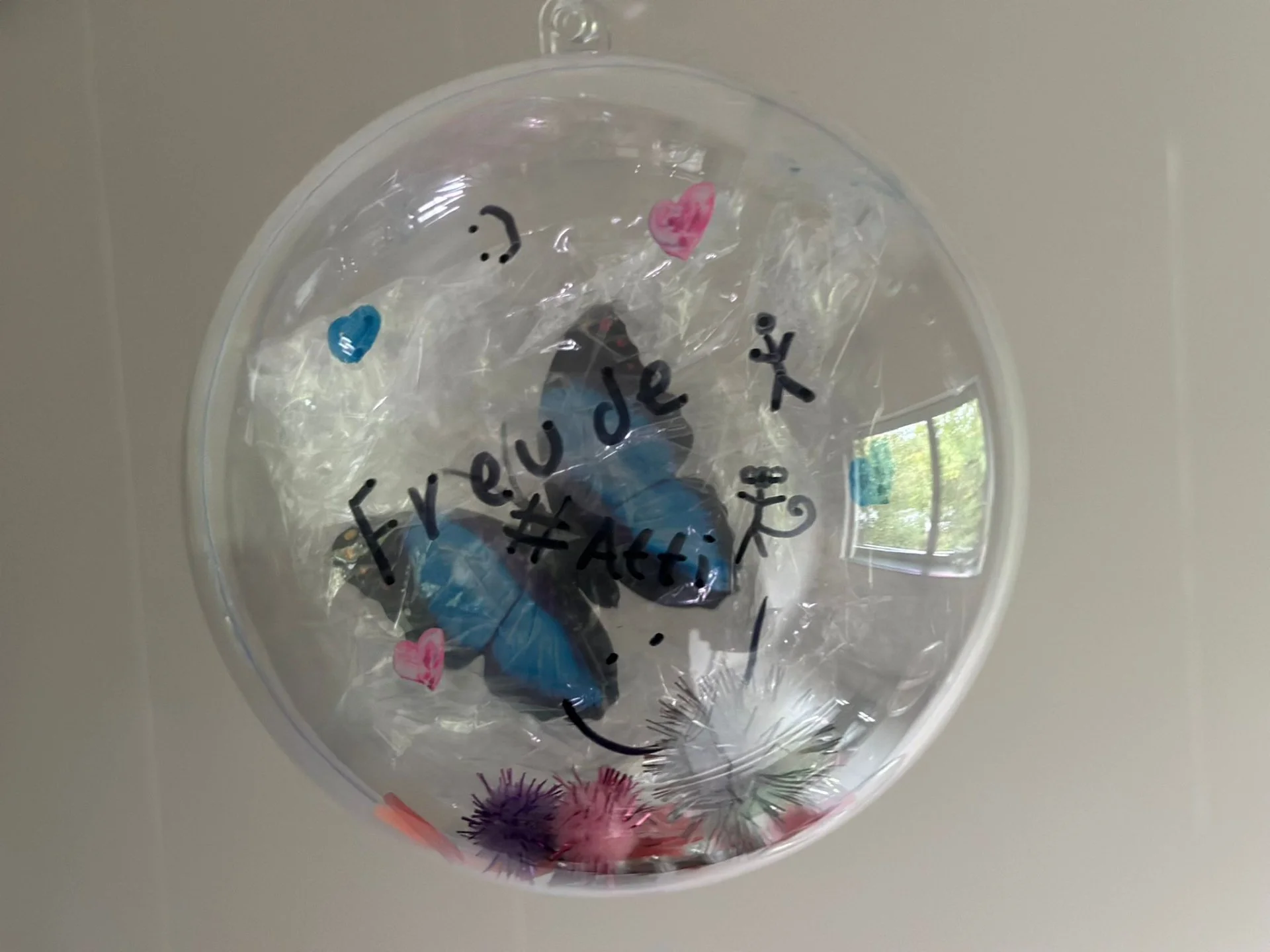
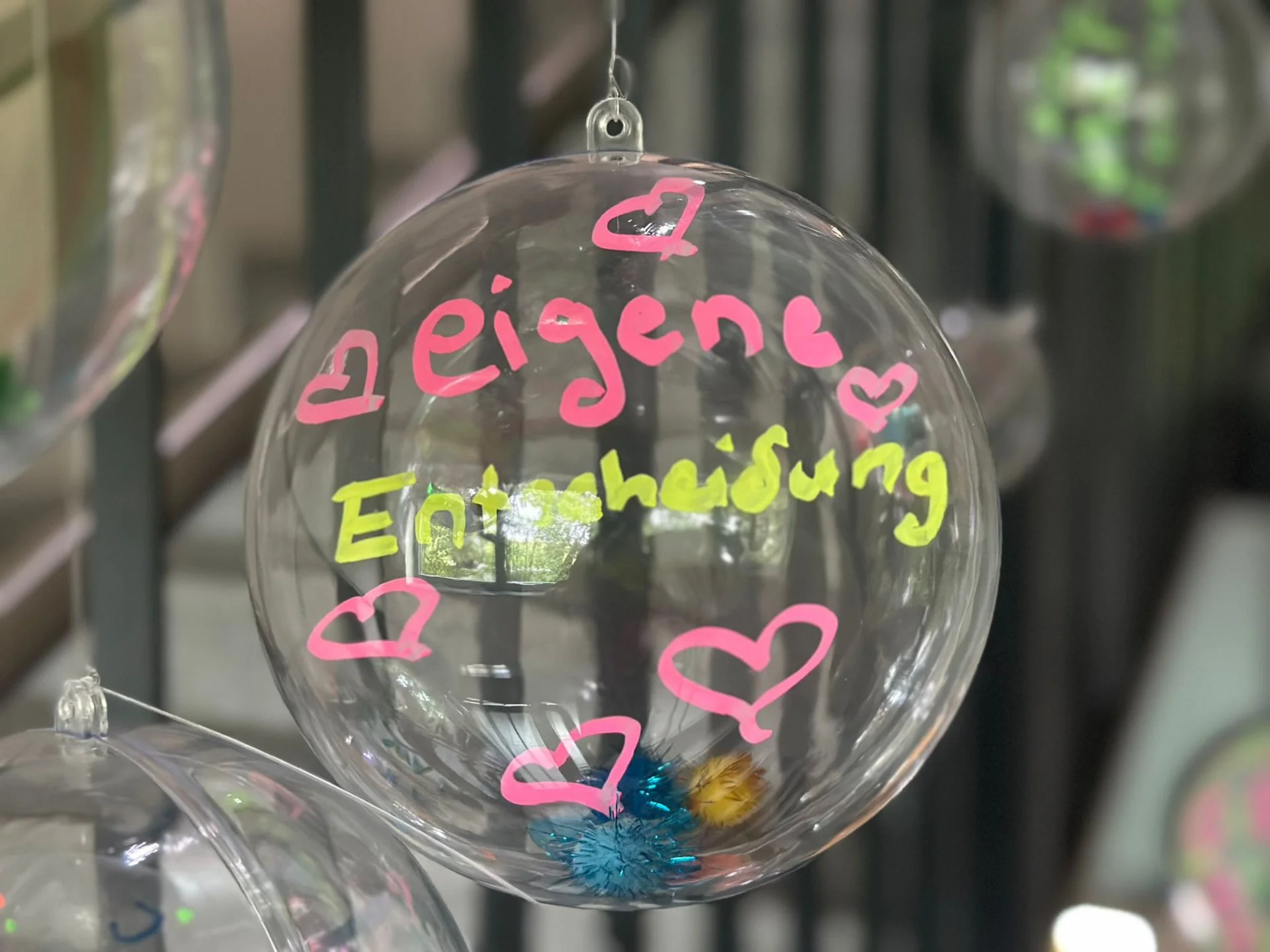
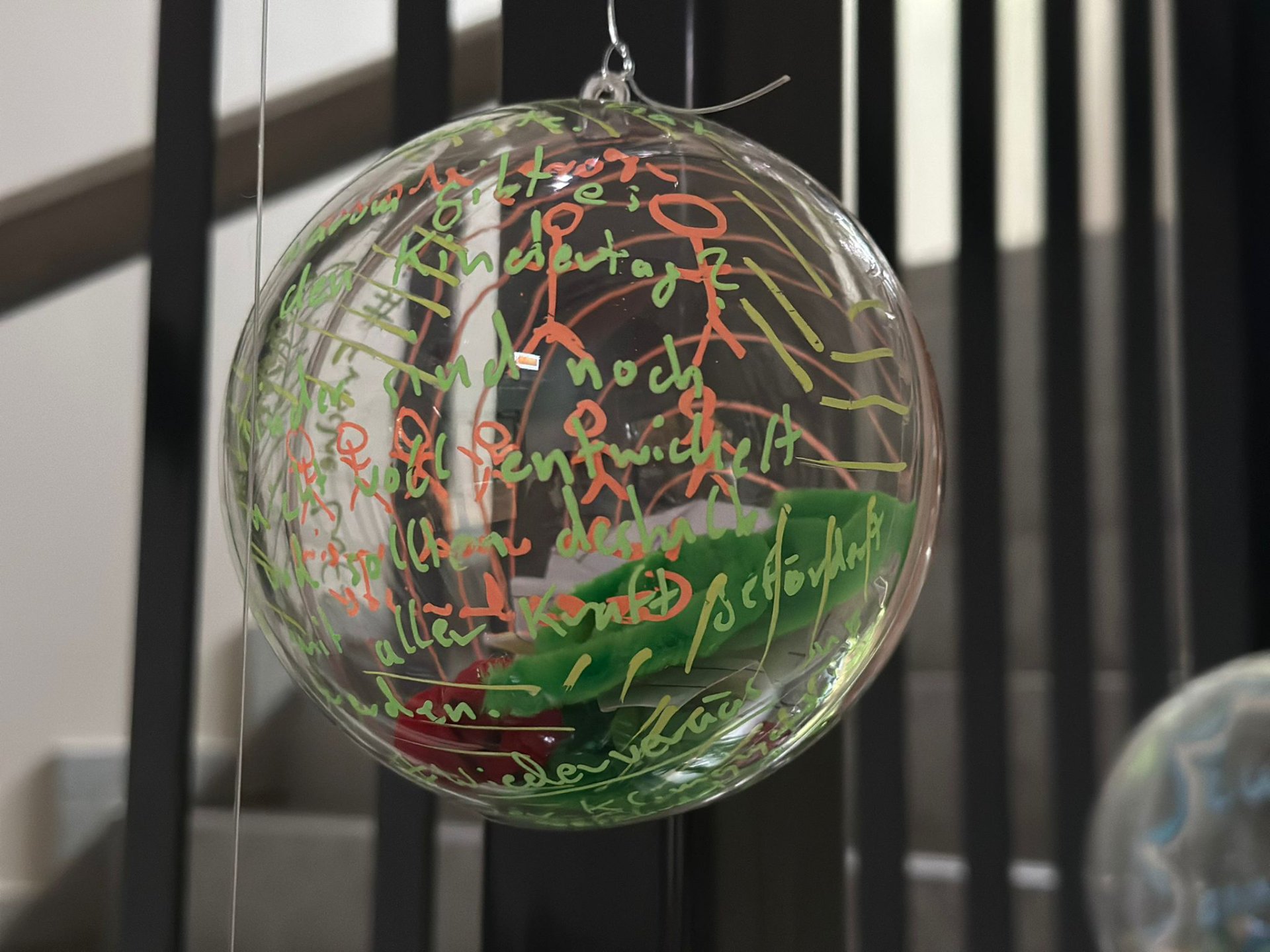
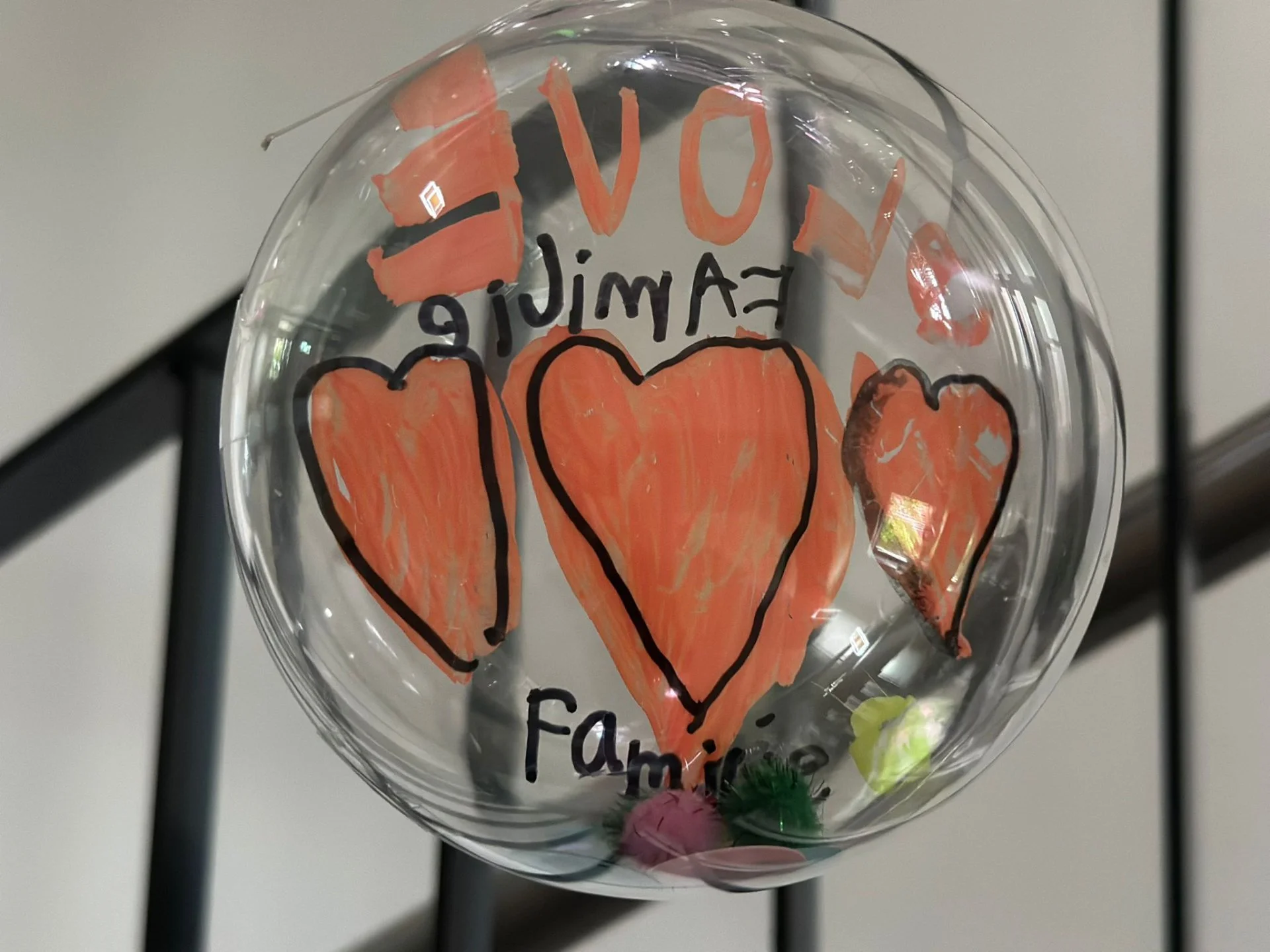
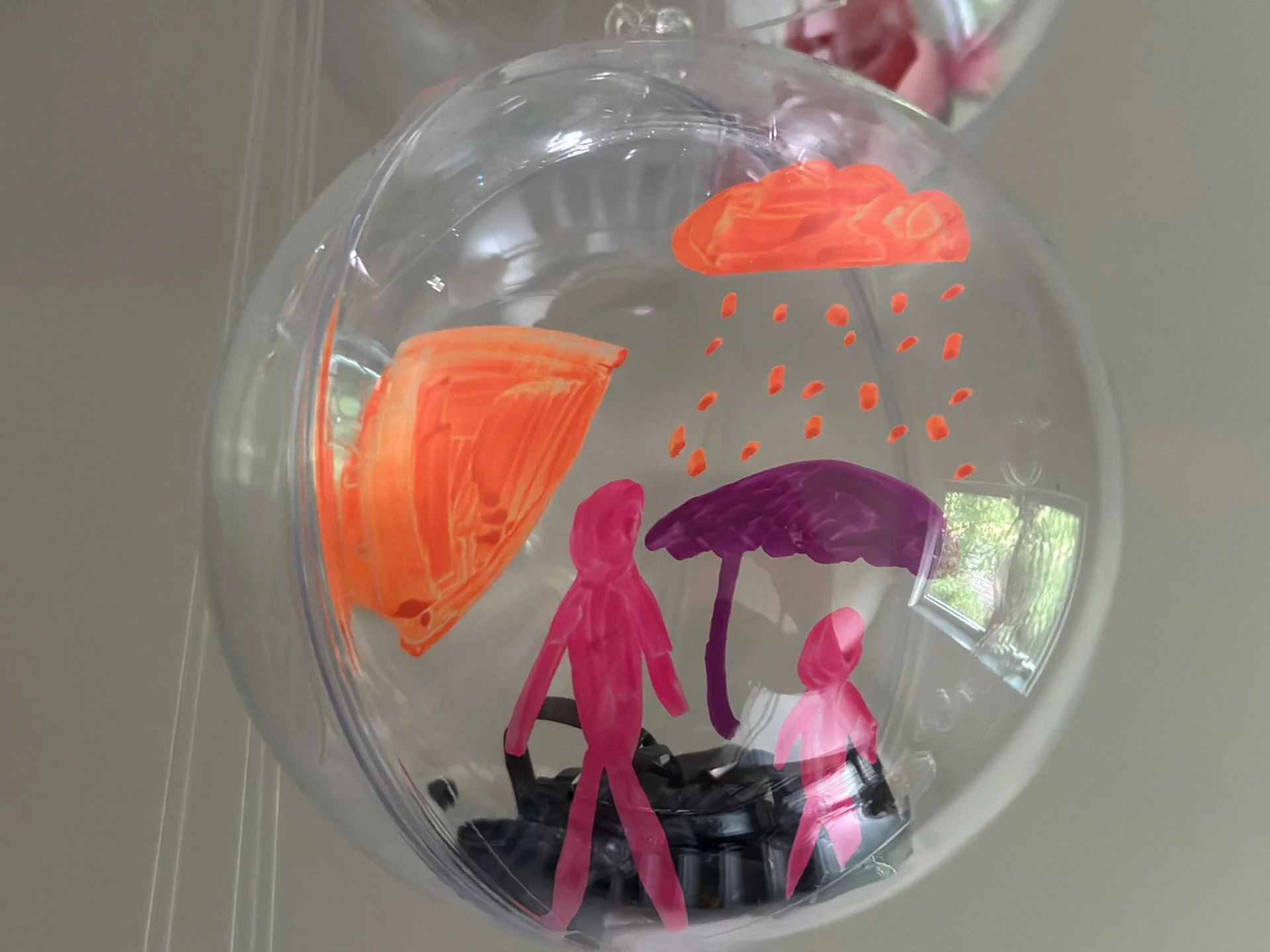
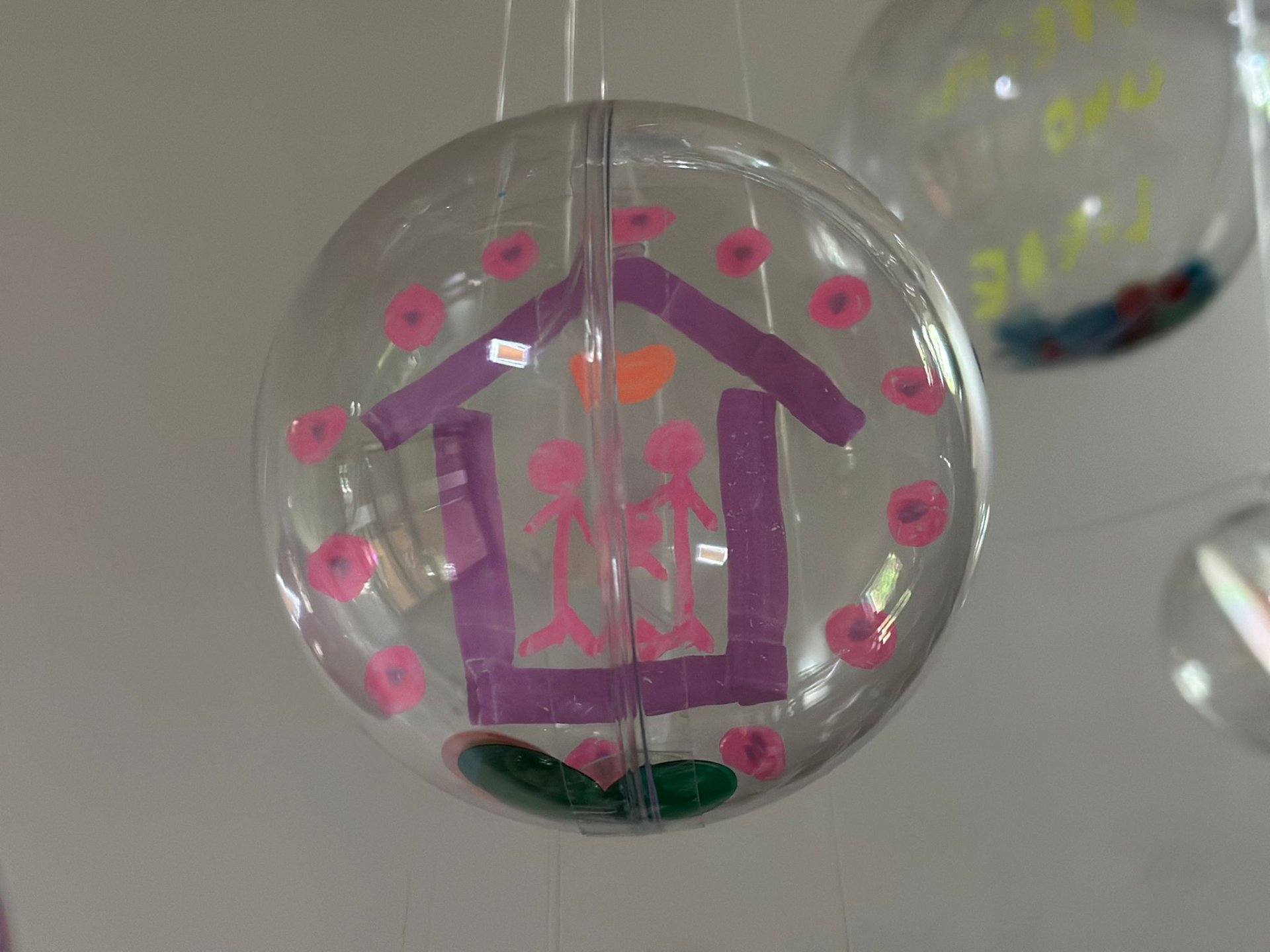
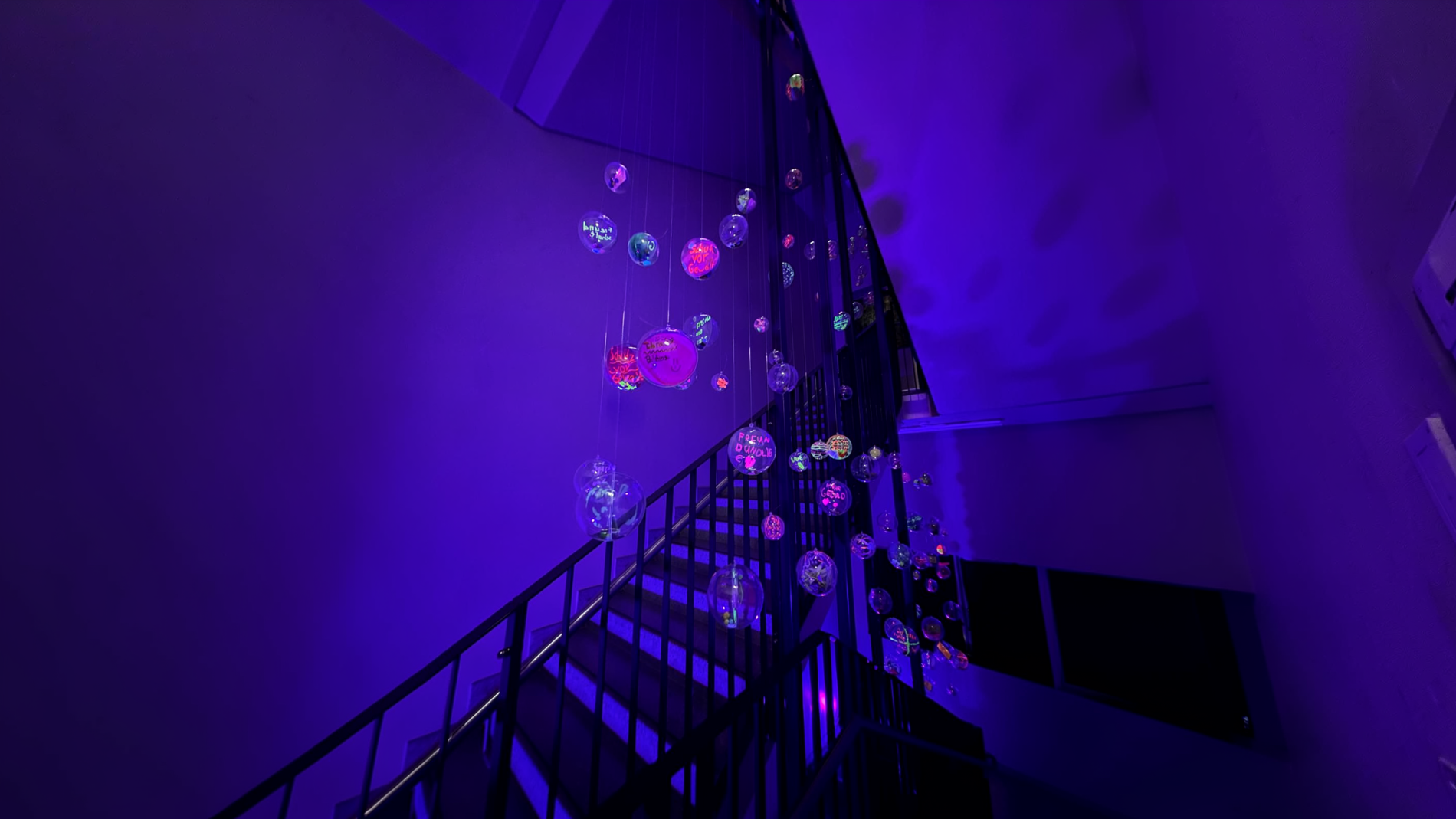
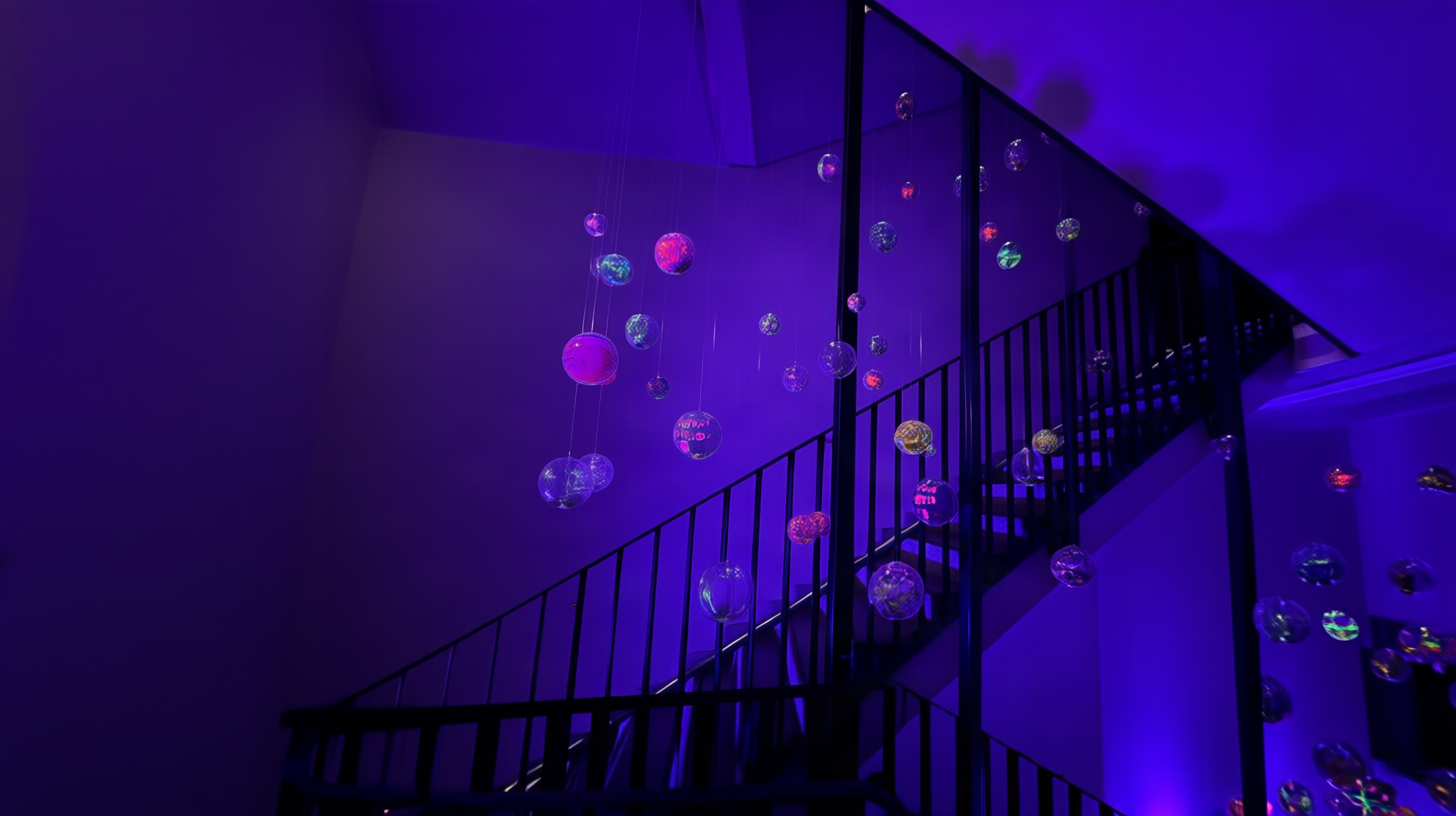
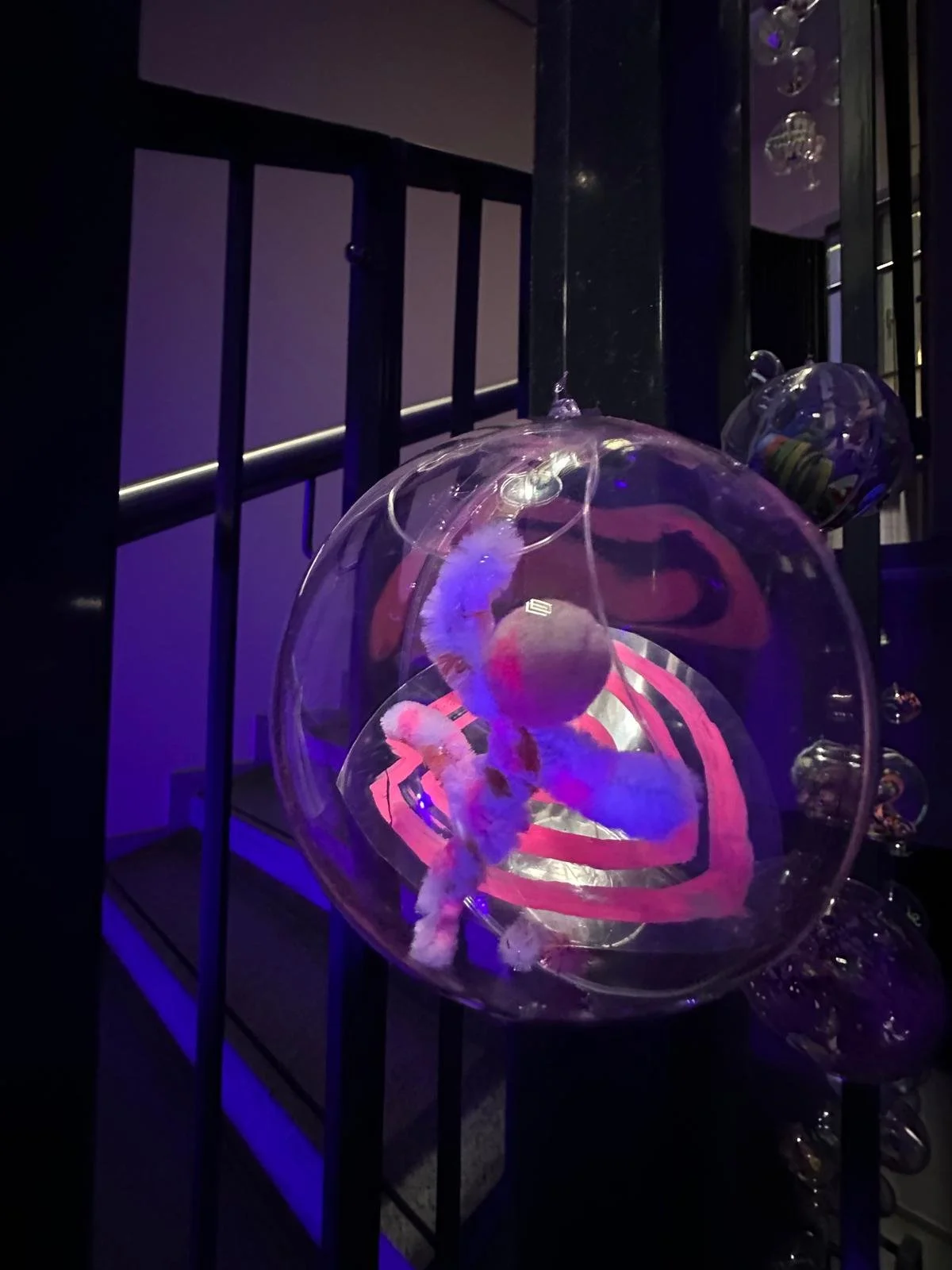
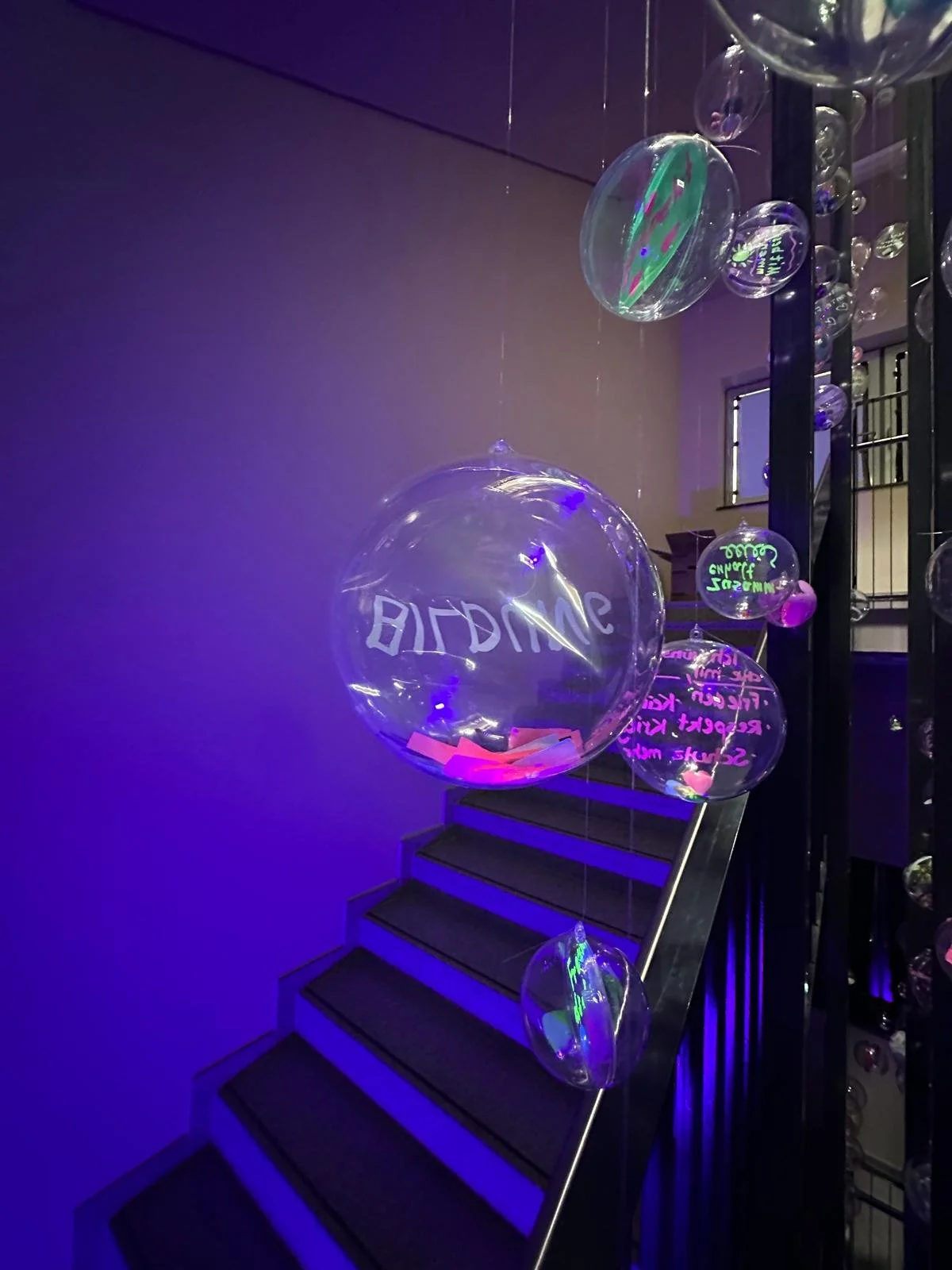
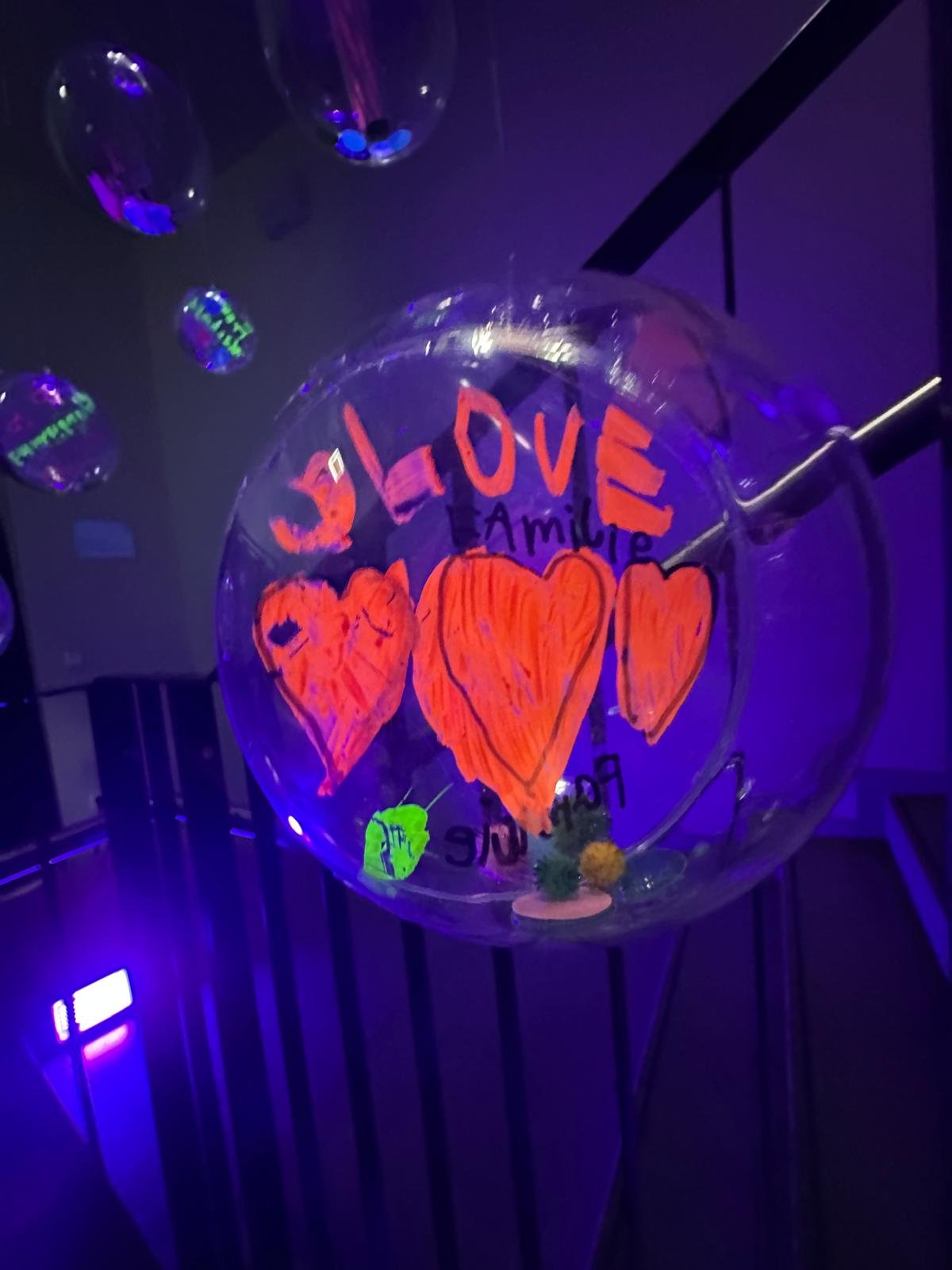
Constellation of Voices is a participatory, immersive and sound-based artistic system that explores how children and young people can understand, express and make their own rights visible through artistic creation. Its first implementation took place at Schule Eins in Berlin in 2026, as part of a day dedicated to children’s rights and democracy. Around 600 students from grades 1 to 12 participated.
Ideas such as protection, freedom, equality, participation, respect, belonging, boundaries and the right to be heard are fundamental, but they can feel abstract, especially for younger children. The project invites participants to approach these ideas not only through language, but also through their hands, drawing, colour, materials and imagination.
Each participant transforms this reflection into a transparent sphere: a small, intimate and anonymous world containing words, drawings, colours and materials. Each sphere is a unique expression of what a child understood, felt or chose to make visible while thinking about their rights.
As the individual process moves into a shared space, this intimacy opens a dialogue with families, classmates, teachers and the public. At the same time, hundreds of these small worlds come together without losing their individuality, forming a collective constellation.
Suspended at different heights, activated by black light and surrounded by a cosmic soundscape, the spheres transform everyday architecture into an immersive, dreamlike space: a universe made up of many individual presences.
Up close, an intimate world. From a distance, a community.
| Year | 2026 – ongoing |
|---|---|
| Format | A participatory, immersive sound art installation / a collective artistic process |
| Media | Transparent spheres, drawing, writing, mixed and fluorescent materials, black light, sound and spatial installation |
| Location | First implementation: Schule Eins, Berlin, Germany |
| Participants | Approximately 600 students, grades 1–12 |
| Context | School-wide participatory project |
| Artistic concept & direction | Marjorie Chau |
| Developed in collaboration with | AG Schutzkonzept, teachers, socio-educational team, students and the wider school community |
Concept & Research
Giving Shape to a Right
Constellation of Voices begins with a question:
How can children and young people understand, express and give shape to the way they experience their own rights?
Children’s rights, such as protection, freedom, equality, participation, respect, belonging and the right to be heard, are universal. However, understanding what they mean in one’s own life, recognising the boundaries that protect each person, and knowing that one’s own voice can be expressed and heard is not always simple. The project brings this conversation into the artistic process. Instead of asking only for a verbal explanation, it invites children and young people to think with their hands as well: to write, draw, choose colours, combine materials and build. Artistic creation becomes another language through which they can approach complex ideas and connect them with their own experience.
Each transparent sphere functions as a small, intimate and protected space. Inside it, each participant gives physical form to what became important during the process. The sphere contains that experience and gives it a form. The spheres do not carry names. This anonymity protects the individuality of each expression while allowing it to be seen as part of a larger experience. We do not necessarily know who is behind each world, but we know that behind each one is a child or young person who made decisions about what they wanted to express. When these small worlds come together, their intimacy does not disappear. Each sphere keeps its individuality while becoming part of something larger: a constellation of voices.
Universal Rights, Individual Experiences
Children’s rights are universal, but the way each child experiences them is individual. Age, family, social and cultural environment, relationships, a sense of belonging, experiences of protection, boundaries and the possibility of being heard all influence the way each child relates to these rights. For this reason, Constellation of Voices does not seek to create a single, homogeneous image of childhood.
One sphere may speak about freedom, another about family, another about friendship, equality, safety, protection, respect or participation. Some contain many words, drawings and materials. Others contain only a word, an image or a gesture. These differences are not meant to be corrected, they are precisely what builds the work. Each sphere can be understood as a small reflection of a moment, of what a child understood, felt, imagined or wanted to communicate when thinking about their rights.
The project therefore shifts the question: What are children’s rights? towards a more intimate and political one: How do children themselves experience these rights in the specific place where they live?
From Intimacy to Dialogue
Creating the sphere begins as an individual experience, but it does not end there. When a child shares what they have created with their mother, father, siblings, friends, teachers or other members of the community, what was contained inside the sphere can become the beginning of a conversation. A word, a drawing, a choice of colour or a material can allow someone close to them to discover something about the way that child related to ideas such as protection, freedom, family, friendship, equality, respect or the right to be heard. The work opens a space to observe them, listen to them and begin a dialogue through them.
There is also an important tension between intimacy and anonymity. The spheres are not publicly identified by name. For visitors, they are anonymous voices within a multitude. But for a child who recognises their own sphere, or for someone close to them with whom they choose to share it, that same piece can have a deeply personal meaning. In this way, an intimate expression can enter into a relationship with others while still belonging to the person who created it.
The dialogue gradually moves, from the child towards themselves, from the child towards those around them and from many individual experiences towards a community.
Participation as Artistic Material
Participation is not an activity that happens alongside the artwork, it is one of the materials from which the work itself is created. The artist creates the system, the spatial installation, the materials and the conditions for participation, but she does not determine the content of each sphere. The children and young people themselves produce the expressions that form the installation.
For the first implementation, each class received a prepared box containing spheres of different sizes, materials, instructions and examples. This allowed teachers and educational teams to work simultaneously with students on children’s rights, democracy, living together, protection, boundaries and participation. The children transformed these conversations into their own expressions. Afterwards, the spheres returned to the shared space and were suspended together within the architecture of the school. The work is therefore built through a constant movement between the individual and the collective, between intimacy and dialogue.
The artist initiates and creates the conditions, the participants generate the content. The installation does not speak for children from the outside, it creates a space where what they choose to express can become present and enter into a relationship with other voices.
Each sphere can be observed individually, but no single sphere needs to represent the whole. Up close an intimate world, from a distance a community.
From One Constellation to Many
Constellation of Voices is not conceived as a closed installation or as a project limited to a single school. The experience in Berlin is its first full-scale constellation and demonstrates that the methodology can be distributed and activated collectively without the artist having to personally guide every participant. The system can be adapted to other schools, communities, cities and social and cultural contexts.
Each new activation would necessarily create a different constellation because, although rights are universal, children’s experiences of those rights are unique. New constellations would allow other intimate worlds, other questions and other ways of understanding abstract ideas to become visible.
In future stages, different constellations could meet, connect and share educational, cultural, public or civic spaces. In this way, the project can gradually grow into a sensitive and changing map of childhood, not built from statistics or from adults speaking on behalf of children, but from the forms children themselves give to what they experience or consider important. The first constellation brings together approximately 600 participants. The system, however, is not defined by that number, each new constellation can open a new dialogue between individual and collective experiences.
Light, Space and Perception
The transparent spheres function as small architectures of intimacy. Each one contains words, drawings, colours, materials and fragments of an individual world. Their transparency allows us to come closer and observe what they contain, while their anonymity maintains a certain distance: we see an expression without necessarily knowing the identity of the person who created it.
Suspended at different heights, the spheres begin to move beyond their condition as isolated objects. They float, visually overlap and form relationships with one another and with the architecture around them. Black light activates the fluorescent materials inside them. Words, drawings and forms that may go unnoticed under everyday lighting appear with a different intensity. The light reveals and draws attention to what each sphere contains.
As visitors move through the installation, their perception constantly changes in scale. They can approach a sphere and visually enter a small world, then look up and discover that this intimacy is part of a multitude of different worlds. The work does not turn the individual into a homogeneous mass, it makes it possible to perceive the intimacy of one and the presence of many at the same time.
Sound and Immersion
Sound has been part of Constellation of Voices since its first presentation. A soundscape of cosmic music and sounds combines with darkness, black light and the suspended spheres to transform everyday architecture into an immersive space. Upon entering, visitors temporarily leave behind their usual perception of the staircase. The spheres seem to float, their fluorescent interiors appear and disappear depending on distance and perspective, while sound fills the space and connects these small worlds visually.
The result is a dreamlike atmosphere, as if entering another universe for a moment, but what holds this universe together is not imaginary. At its centre are very concrete questions: protection, boundaries, freedom, equality, belonging, family, friendship, participation and children’s right to be heard. This tension is fundamental to the installation, a concrete social and political subject is experienced through a poetic, sensory and immersive environment. Light brings the individual expressions forward. Sound holds them within a shared atmosphere. Space allows visitors to move between them. The visitor enters a community that is present. Many intimate worlds coexisting within the same constellation.
A System That Can Travel
The first implementation of Constellation of Voices demonstrated that the project can work on a large scale through a distributed methodology. Boxes containing spheres, materials, examples and instructions allow teachers, educators and facilitators to activate the process with their own groups. In this way, participation does not depend on the artist personally leading every encounter. This structure allows the project to function as a transferable and adaptable artistic system, capable of travelling and changing according to the place where it is activated. What is transferred is a process, a conversation about rights, an intimate reflection, an artistic expression, a dialogue, a collective constellation.
Each new community can create its own constellation and reveal other ways of experiencing rights that are universal but lived differently, and different constellations may eventually meet. Each sphere contains an intimate world, each world contains a voice, each voice can open a dialogue and together they form a constellation.