Potsdamer Lichtspektakel
As part of the Potsdamer Lichtspektakel, Marjorie Chau developed large-scale visual interventions for different buildings and monuments in Potsdam, including the Brandenburg Gate and the Deutsche Bank building.
Read more
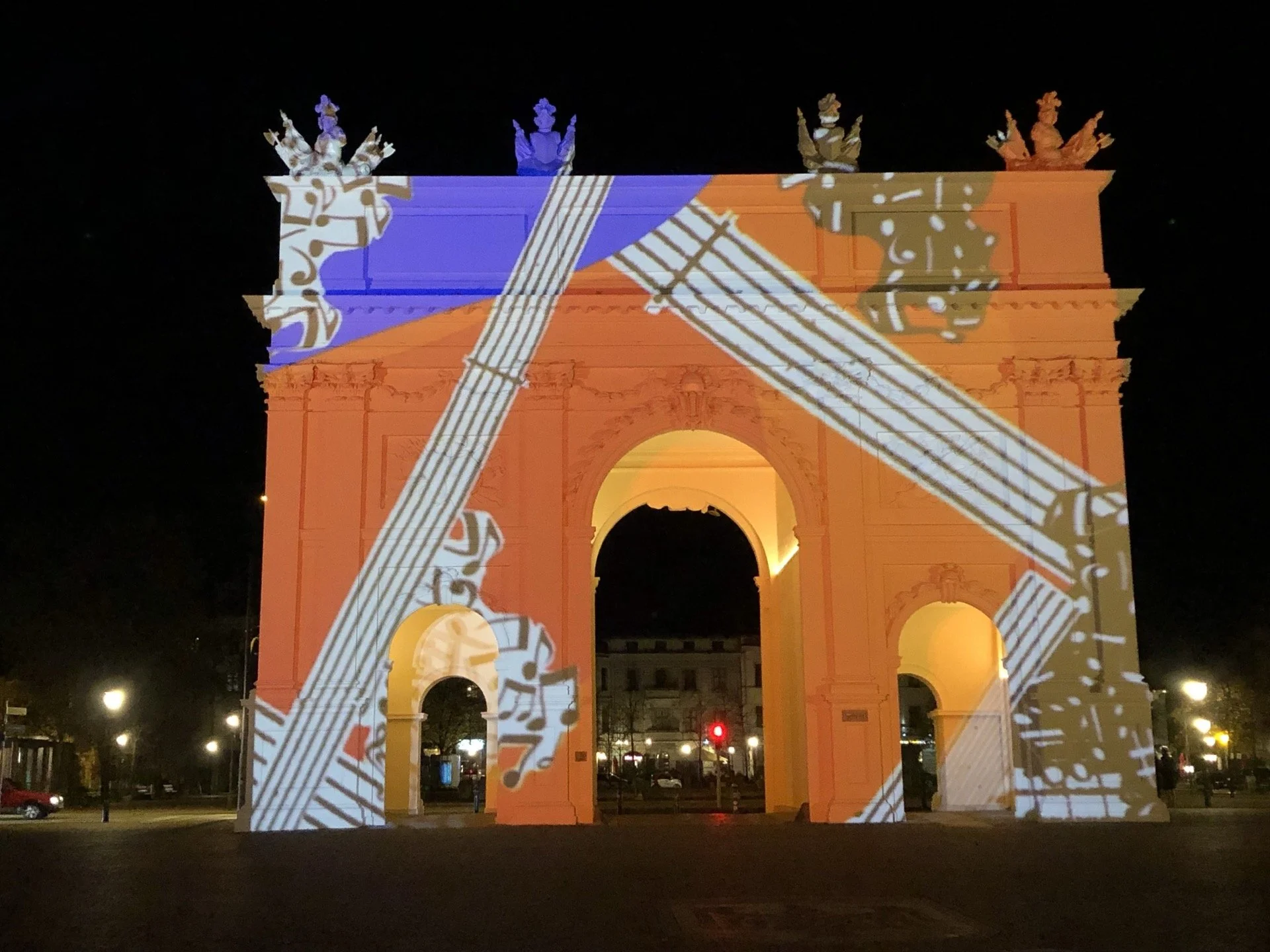
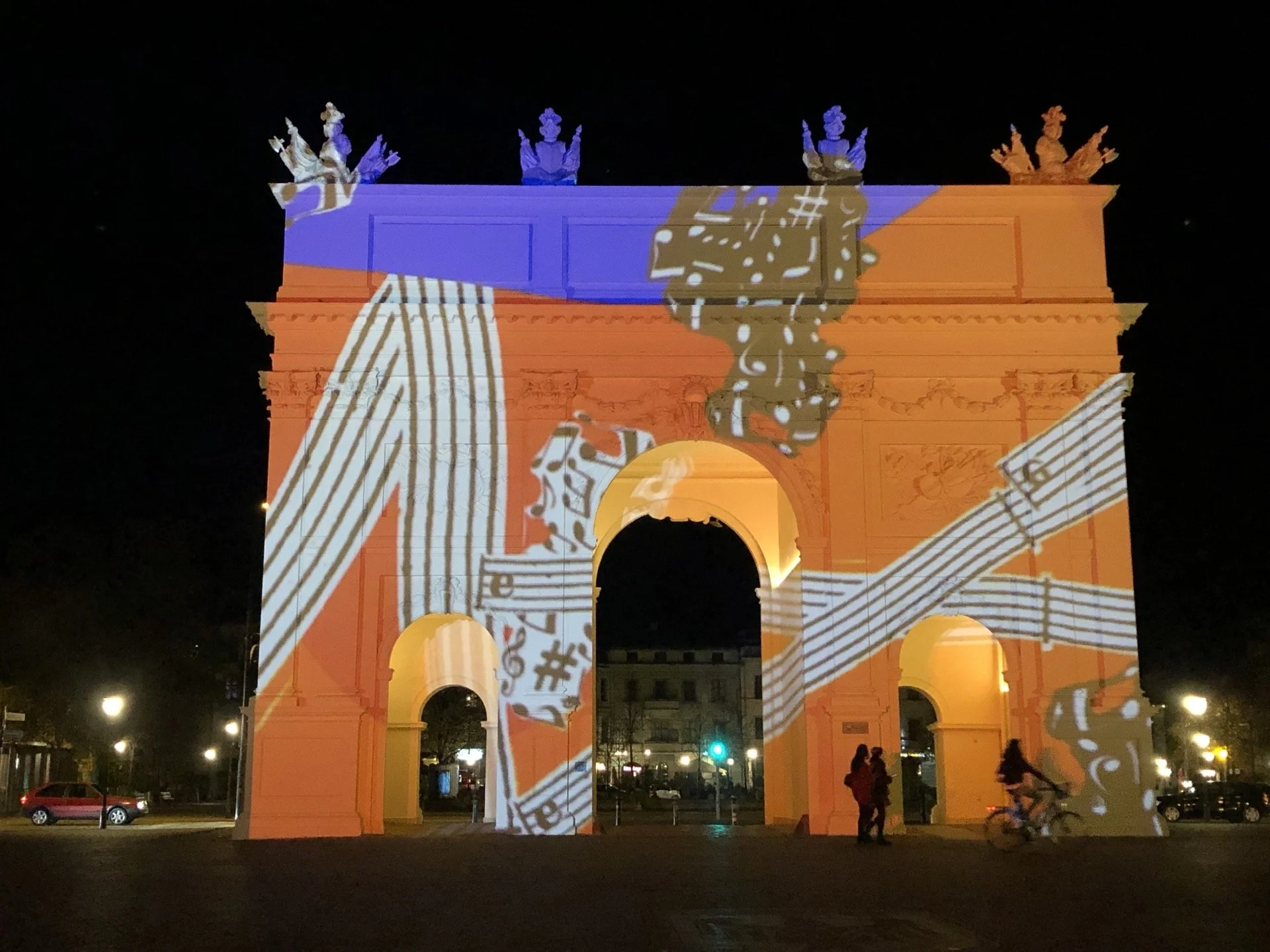
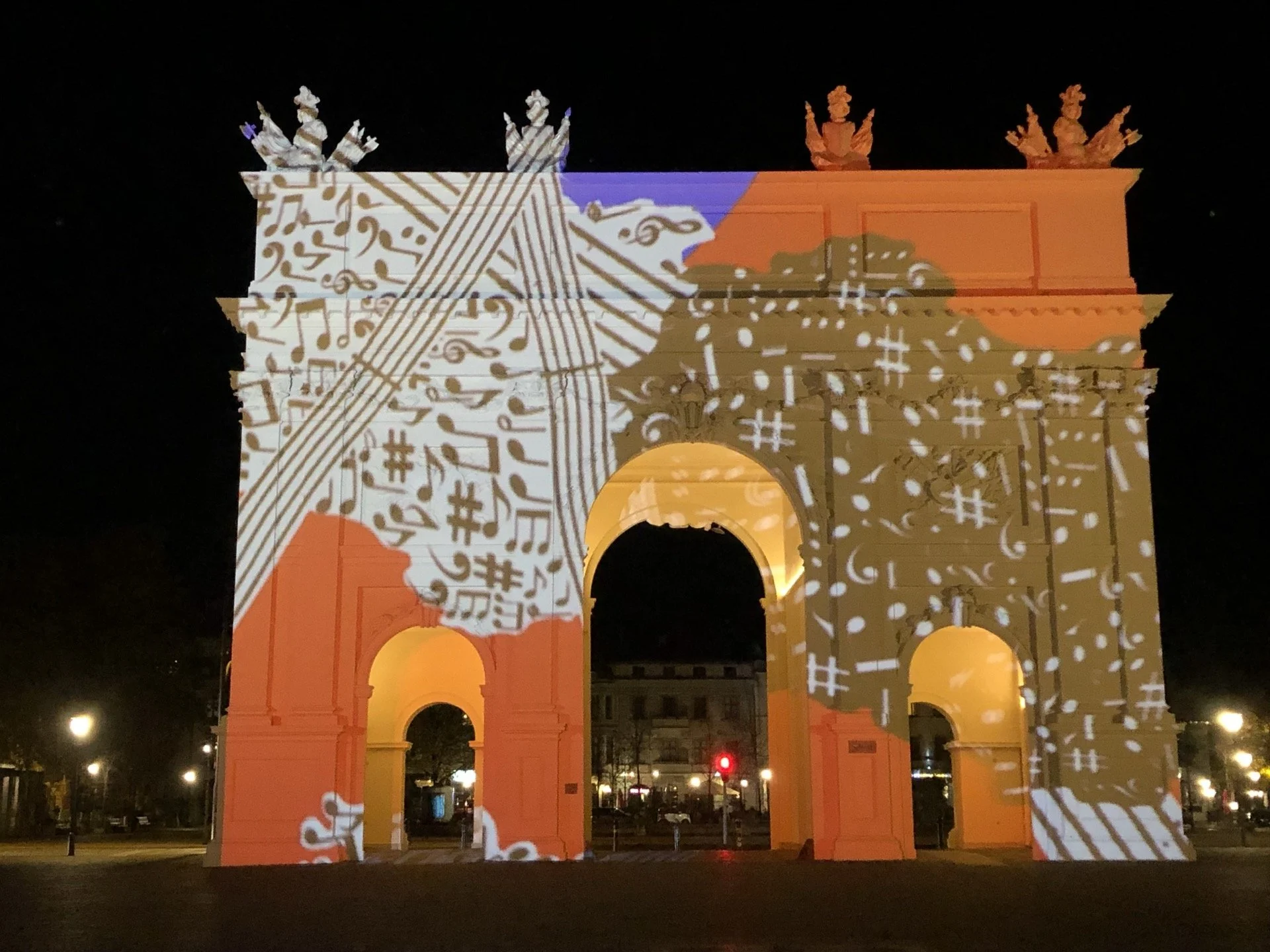
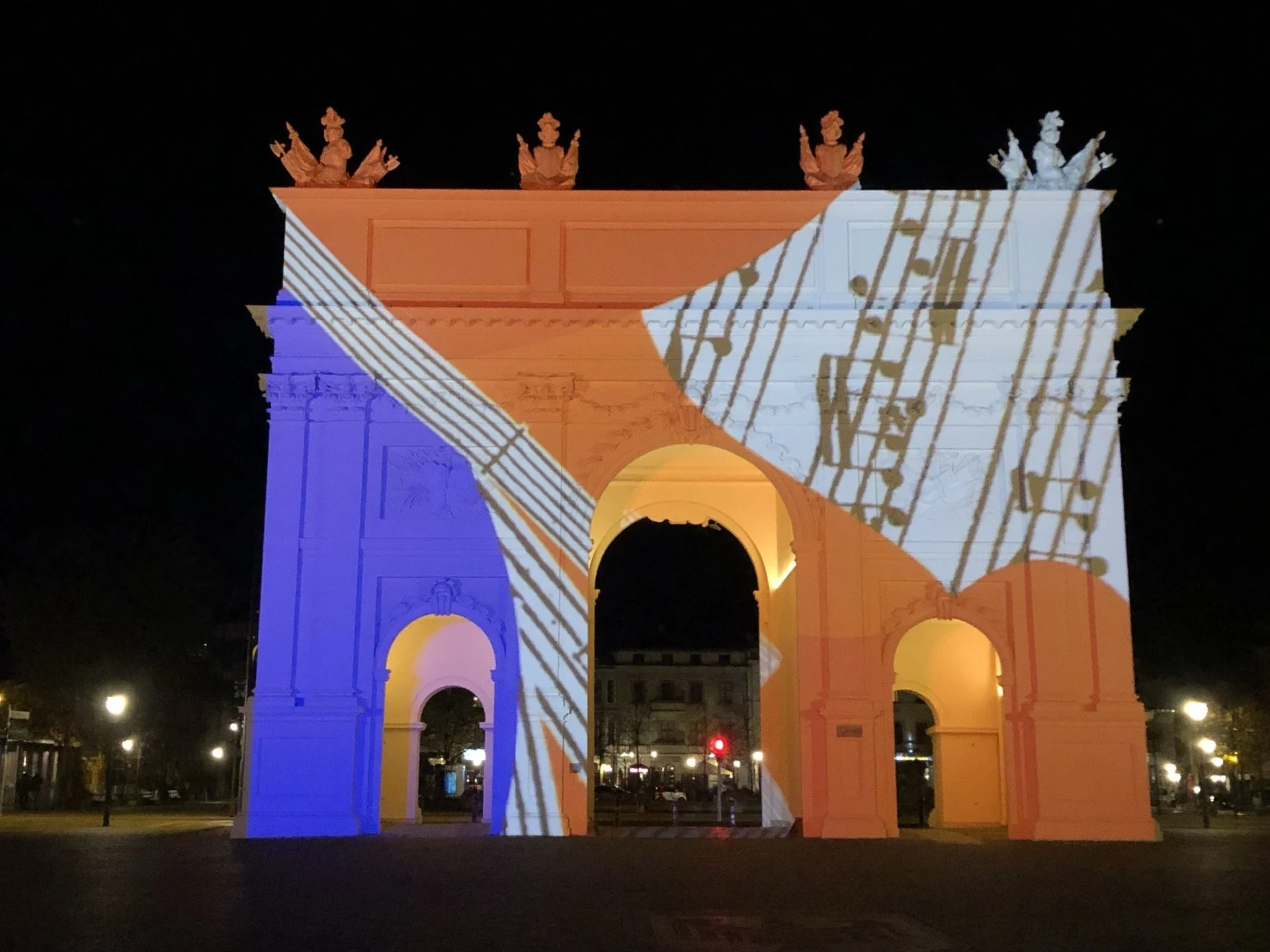
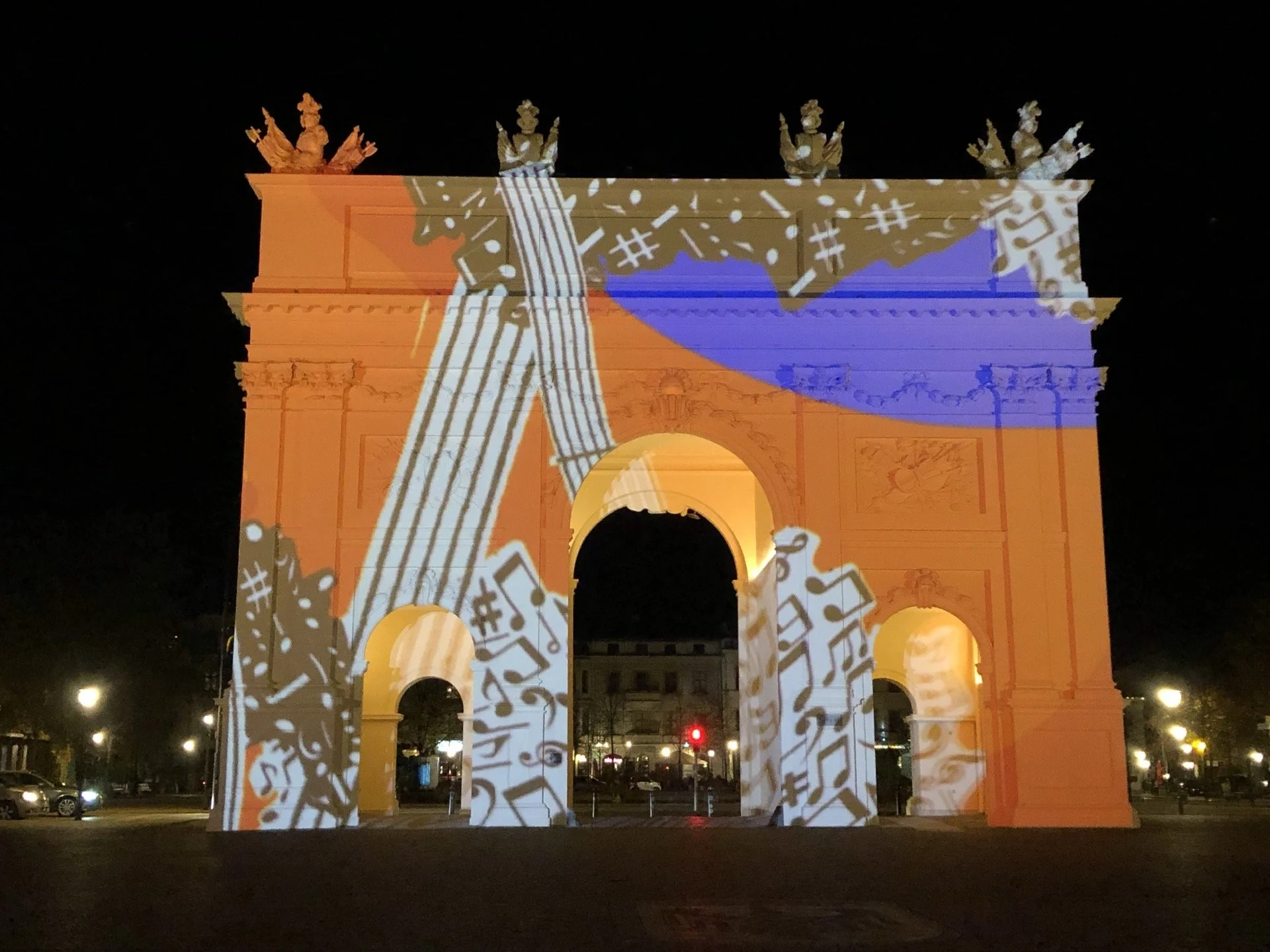
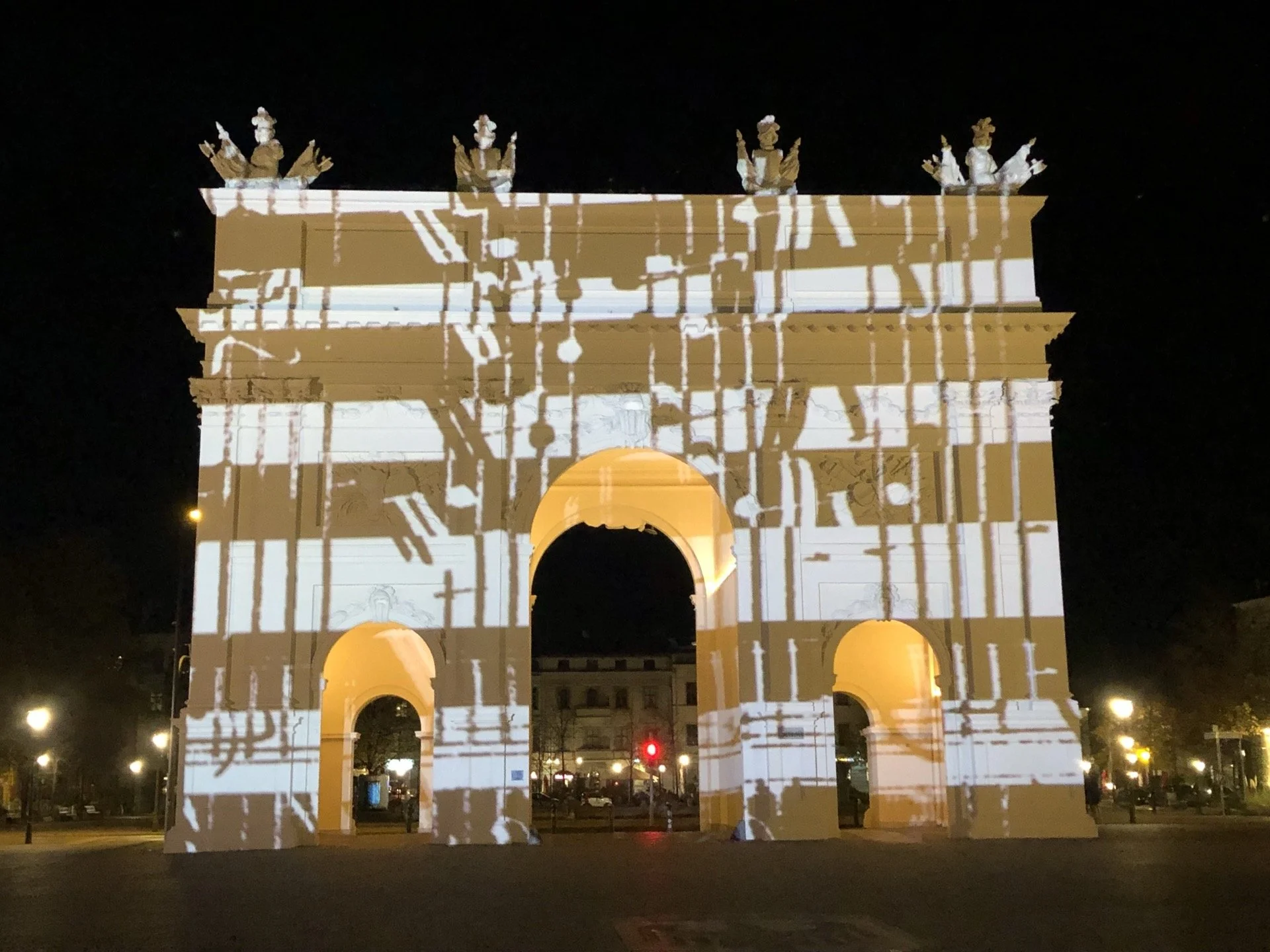
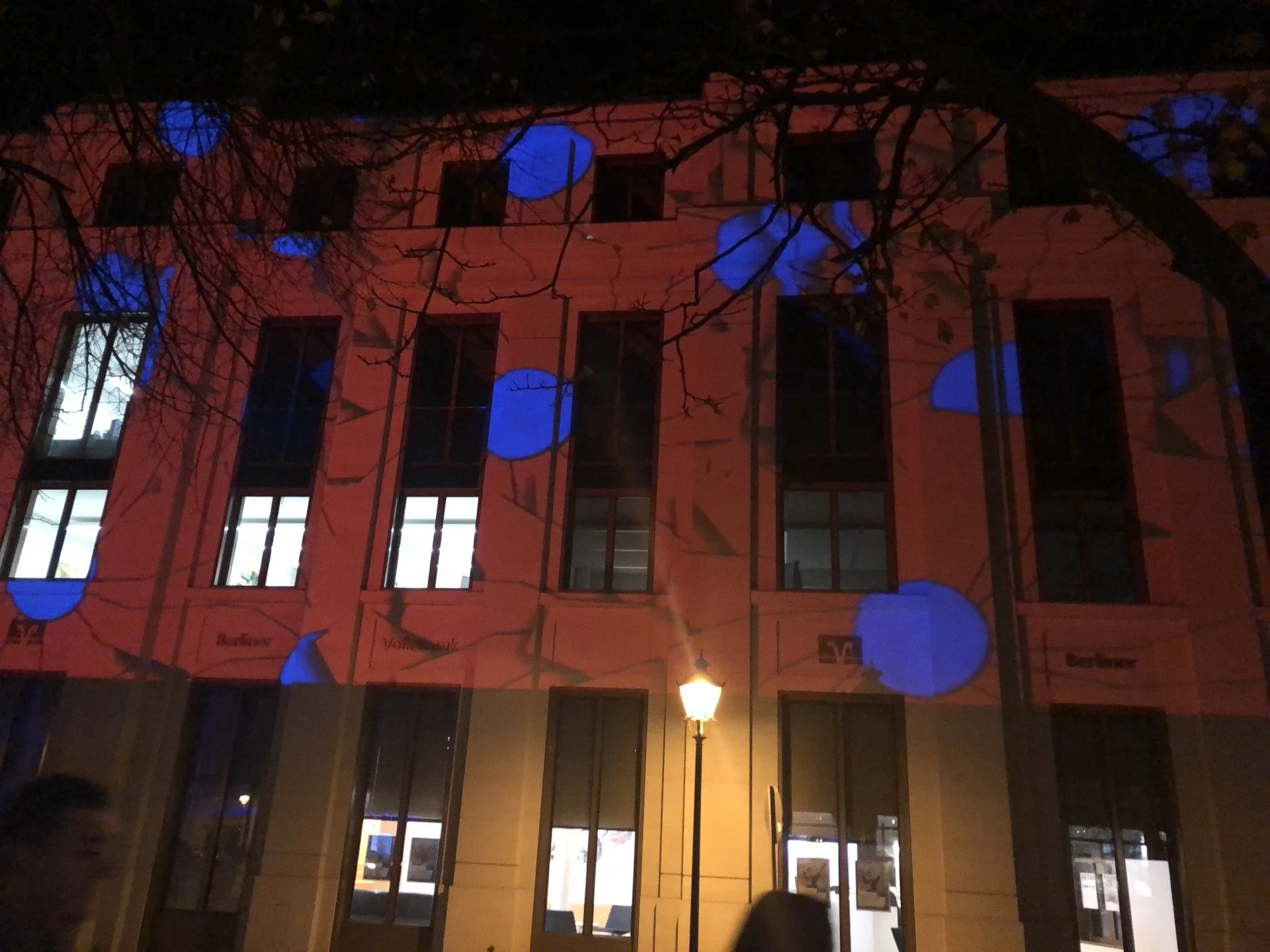
The interventions created for the Potsdamer Lichtspektakel brought Marjorie Chau’s work with light, image and space to an architectural and urban scale.
One of the pieces was created for the Brandenburg Gate in Potsdam, using the structure of the monument as part of the visual composition. The shape of the gate, its volumes and architectural elements influenced the organization and movement of the projected images.
Another intervention was created for the upper section of the Deutsche Bank building in Potsdam, where a large-scale projection temporarily transformed the façade and its presence within the urban landscape.
In both projects, Marjorie Chau was responsible for the visual concept and artistic direction. The ideas, drawings, images and visual sequences were developed from her artistic proposal, while Juan Sáez created the animation and audiovisual development of the projected content.
The architecture did not function simply as a screen. Each mapping was designed specifically for its location, integrating the physical characteristics of the building into the composition and movement of the image.
| Year | to be confirmed... |
|---|---|
| Format | Video mapping / architectural projection / urban intervention |
| Media | Video projection, architectural mapping, animation, digital image, light and architecture |
| Location | Potsdamer Platz, Germany |
| Visual concept and artistic direction | Marjorie Chau |
| Visual content development / graphic proposal | Marjorie Chau |
| Animation and audiovisual development | Juan Sáez |
| Production | Potsdamer Lichtspektakel |
-
The interventions created for the Potsdamer Lichtspektakel explore the relationship between image, light, architecture and the perception of urban space.
The starting point of each project was the architecture itself. Its proportions, volumes, divisions and surfaces determined how the visual composition was developed.
Marjorie Chau created the idea, visual concept and initial images for each intervention, considering how drawings, forms and sequences could respond to the architecture. Based on these proposals, Juan Sáez developed the animation and audiovisual movement needed to transform them into video mapping.
In this way, the work was built as a collaboration between artistic conception and audiovisual development.
Through mapping, architectural elements could be visually transformed, shifted, disappear or take on new forms through moving image. The architecture therefore stopped being a passive surface and became an active part of the work.
At the Brandenburg Gate, the composition responded to the monumental structure of the gate, using its forms as the basis for the visual narrative.
At the Deutsche Bank building, the intervention focused on the upper part of the façade, transforming this area through a large-scale projection visible from the public space.
These collaborations allowed Marjorie Chau to extend her research on visual environments into urban space, working together with Juan Sáez to transform a graphic and conceptual proposal into an audiovisual experience at architectural scale.