Painting Schubert
Painting Schubert is an interdisciplinary work that brings together live classical music, live painting, theatre, text, movement and video projection, inspired by the musical world of Franz Schubert.
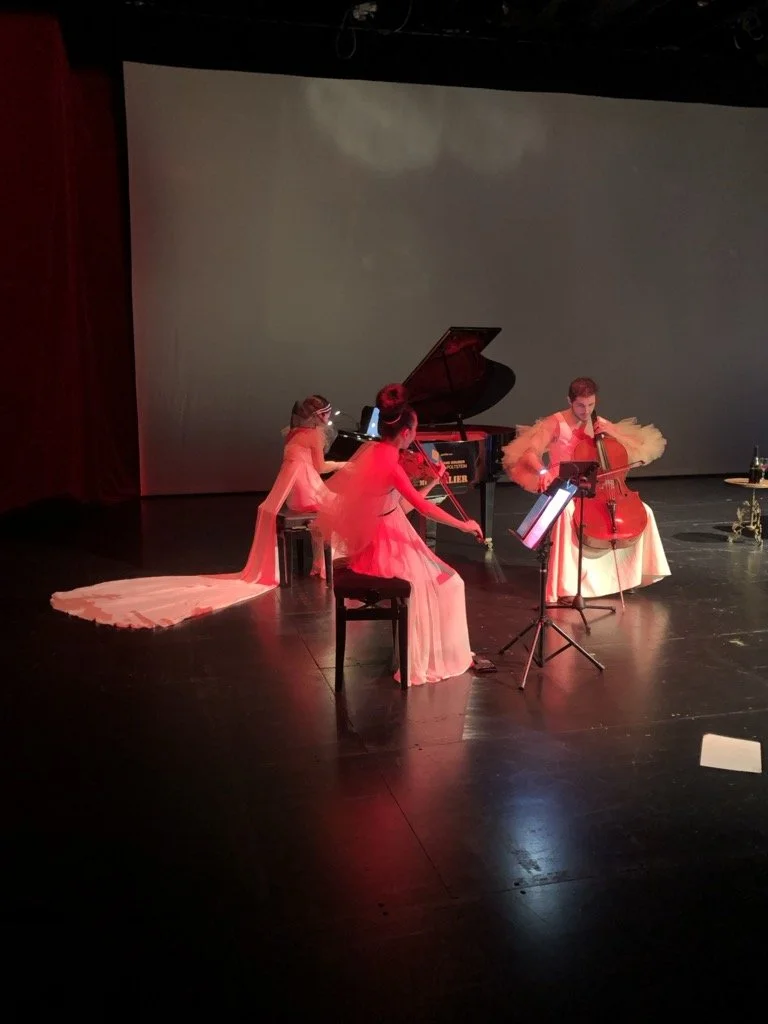
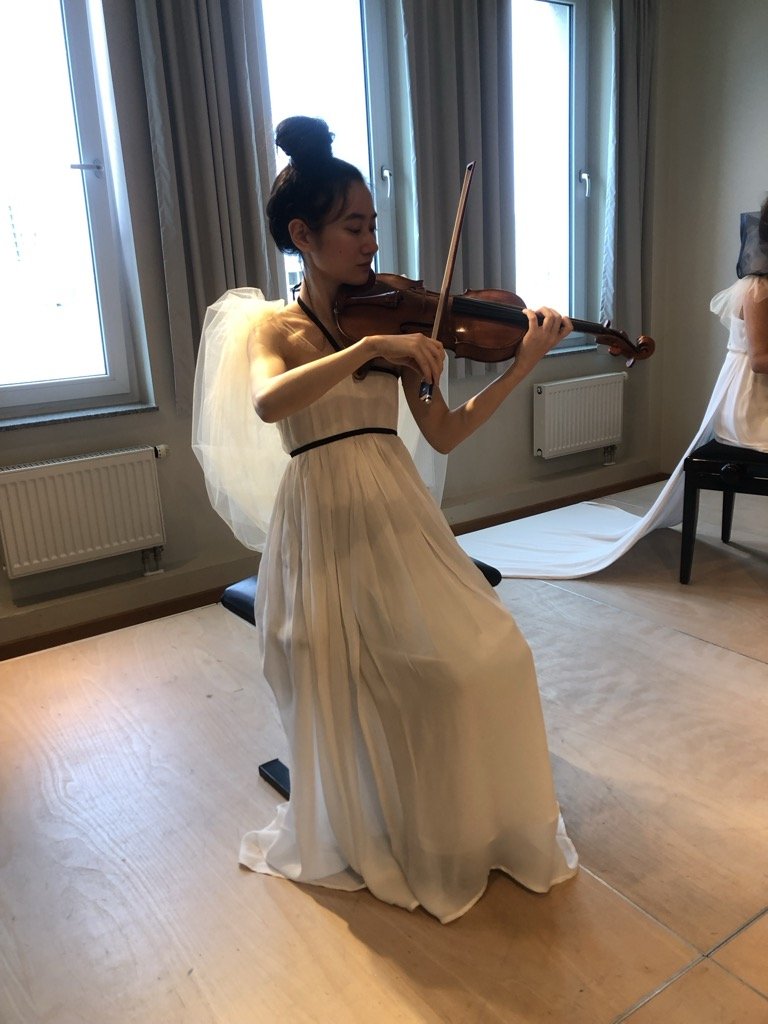
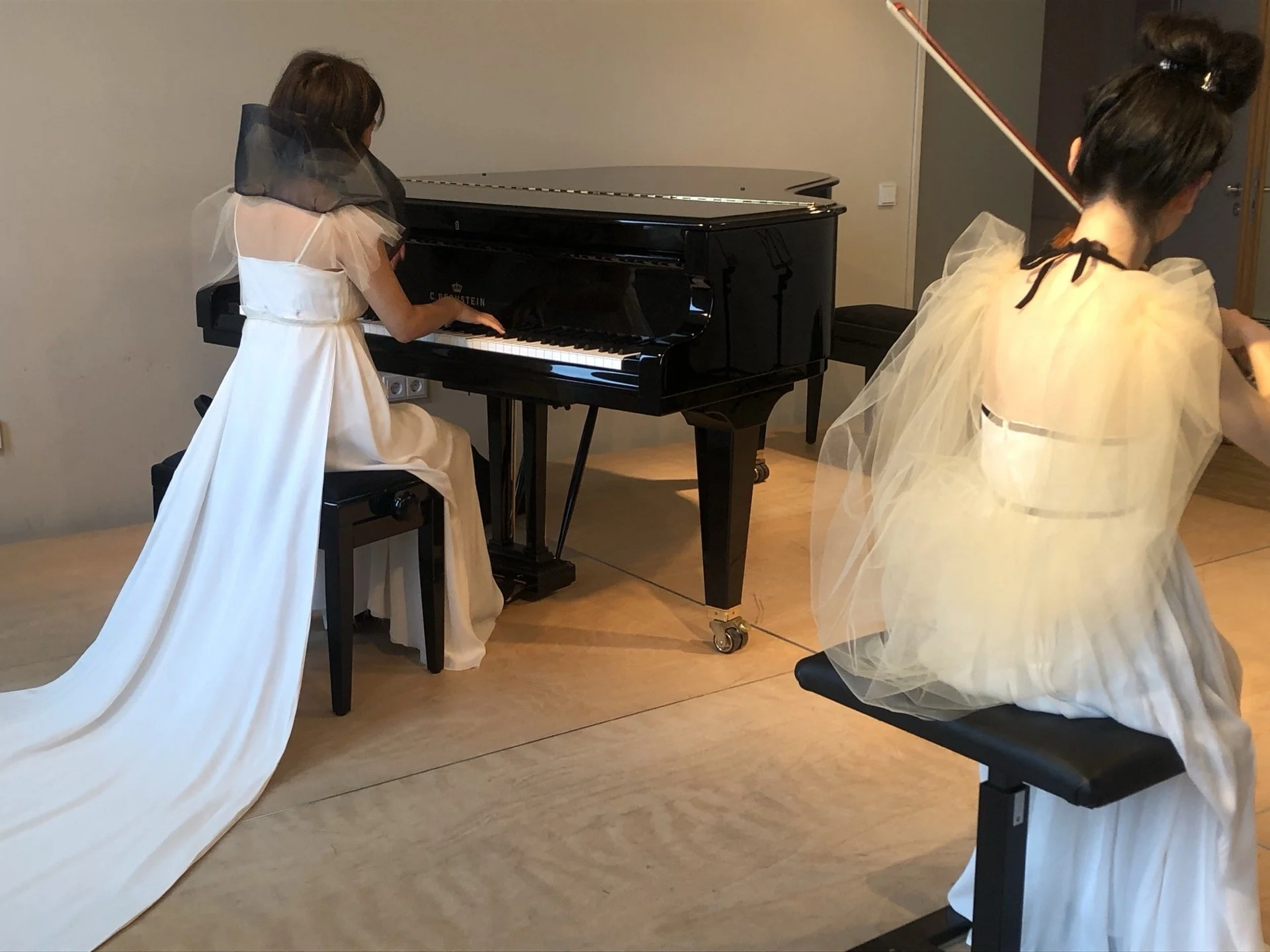
Painting Schubert was conceived as an interdisciplinary stage experience around the music of Franz Schubert.
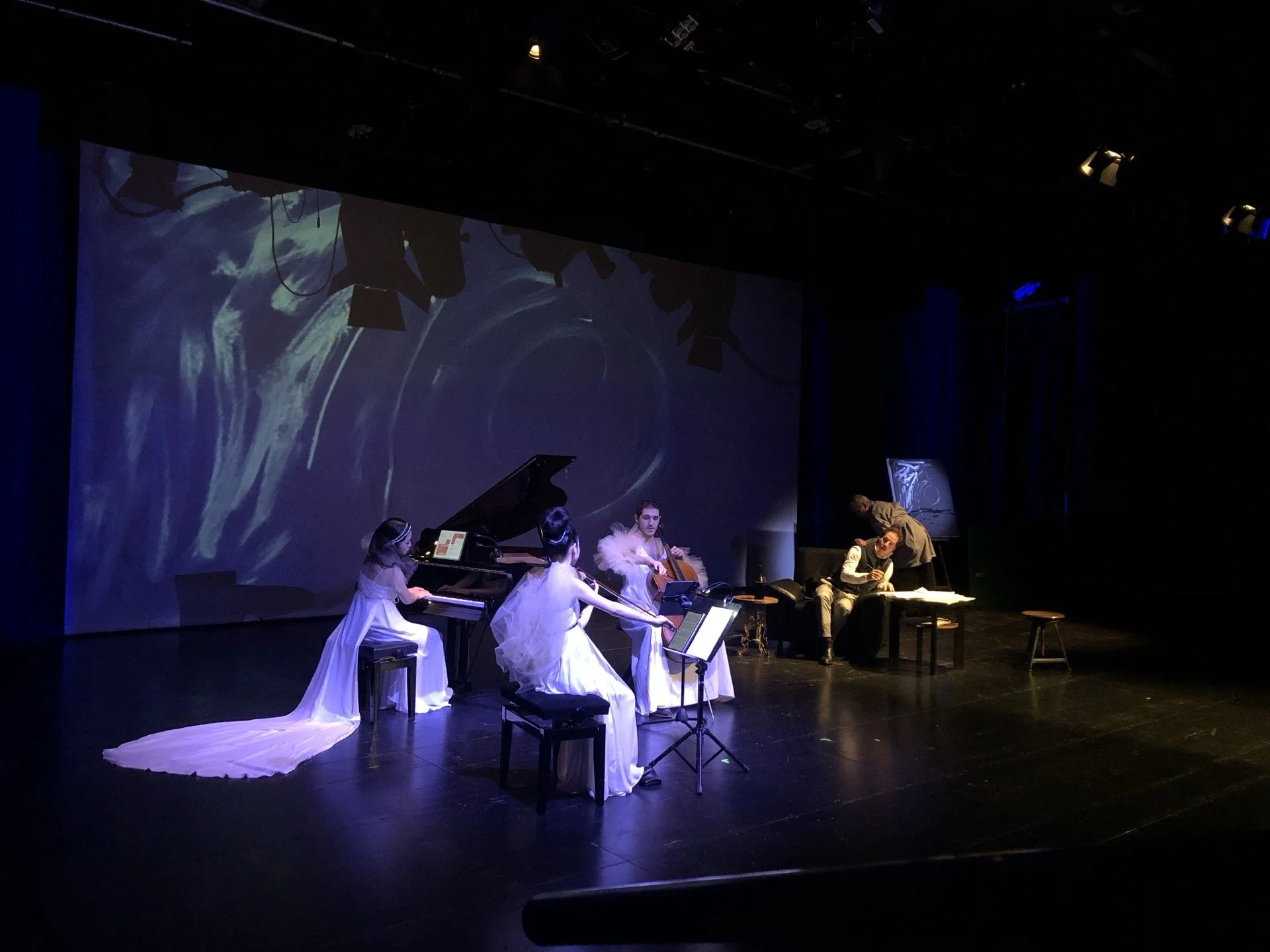
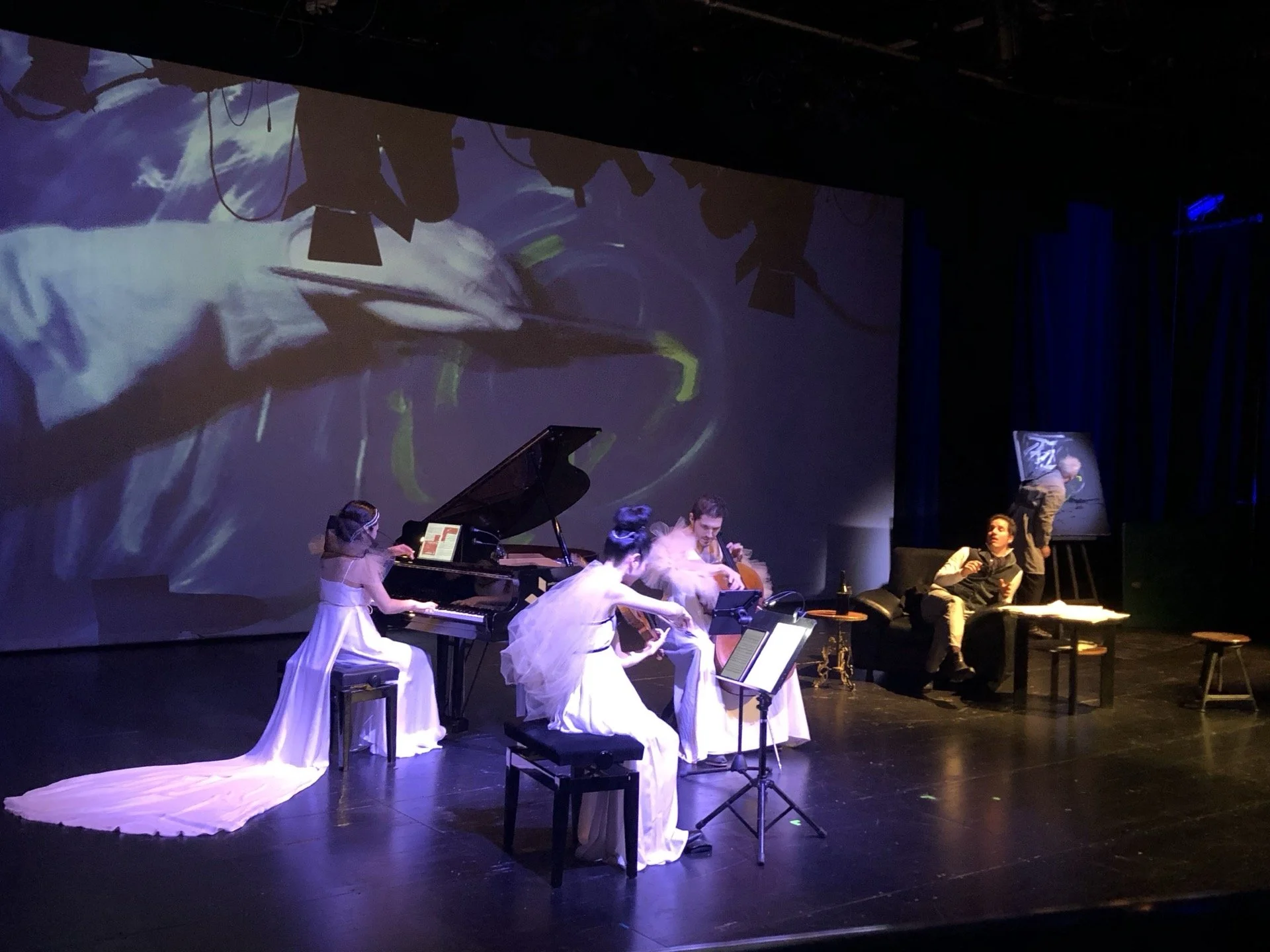
One of the central elements of the project was the direct relationship between music and live painting. While the painter worked in response to the music, the painting process was recorded on video and projected live into the space. In this way, the audience did not only see a finished painting, but also the process of its creation, visually expanded into the architecture.
The work also integrated theatre, text and movement, creating a continuous relationship between sound, body and image.
Within this collaboration, Marjorie Chau developed the visual and spatial concept of the production, working with video projection, lighting, stage space, visual elements and costume.
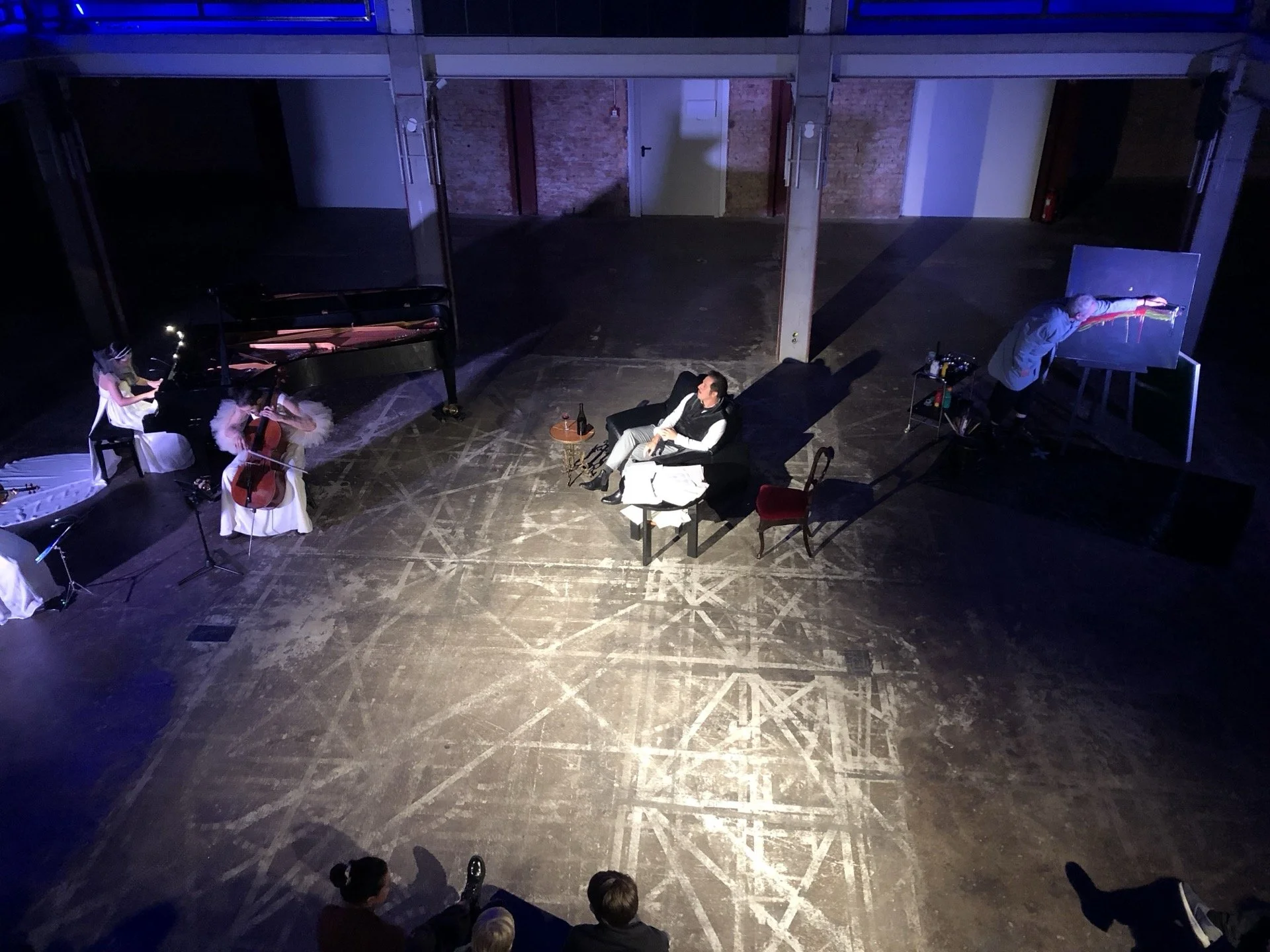
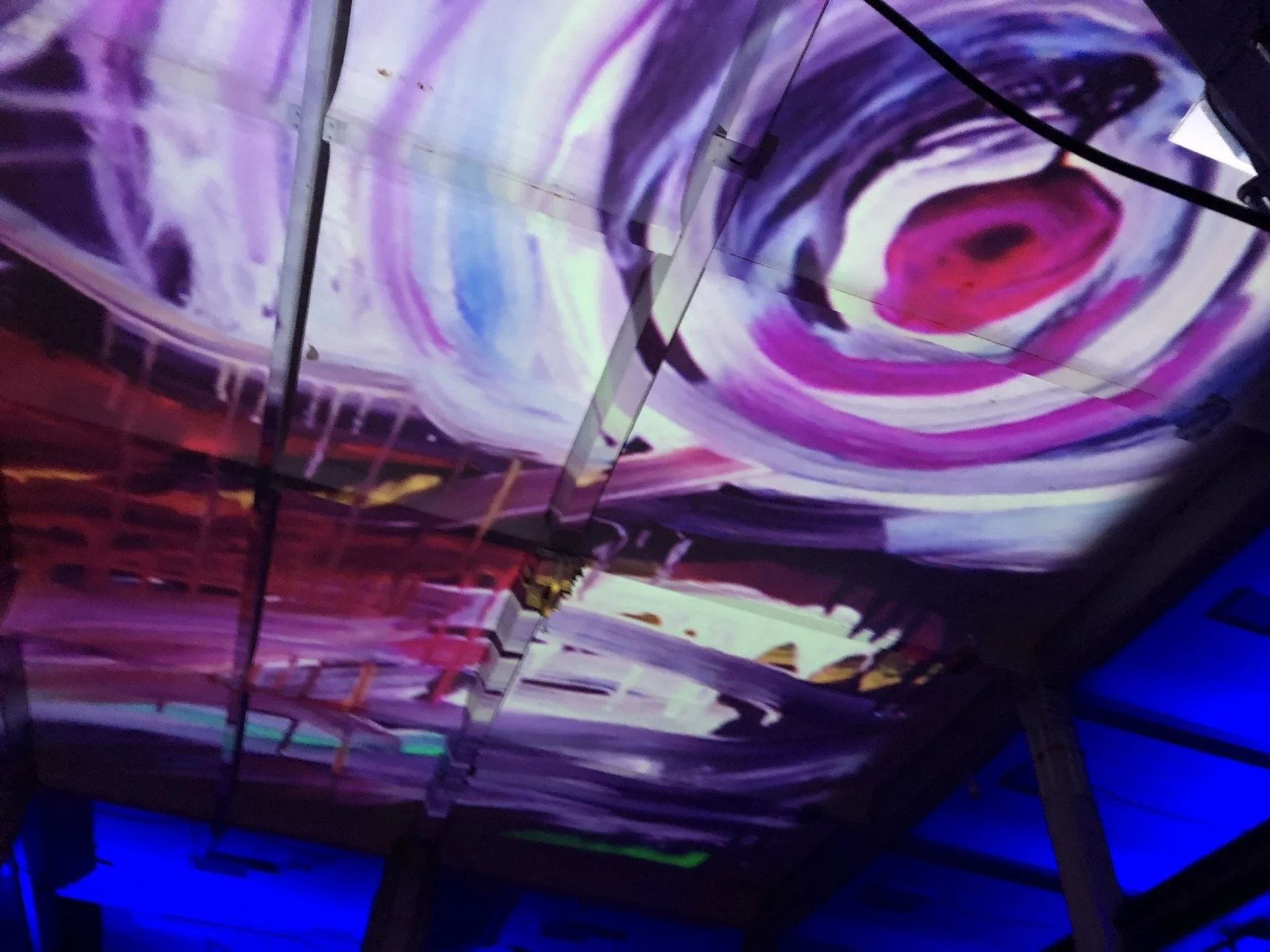
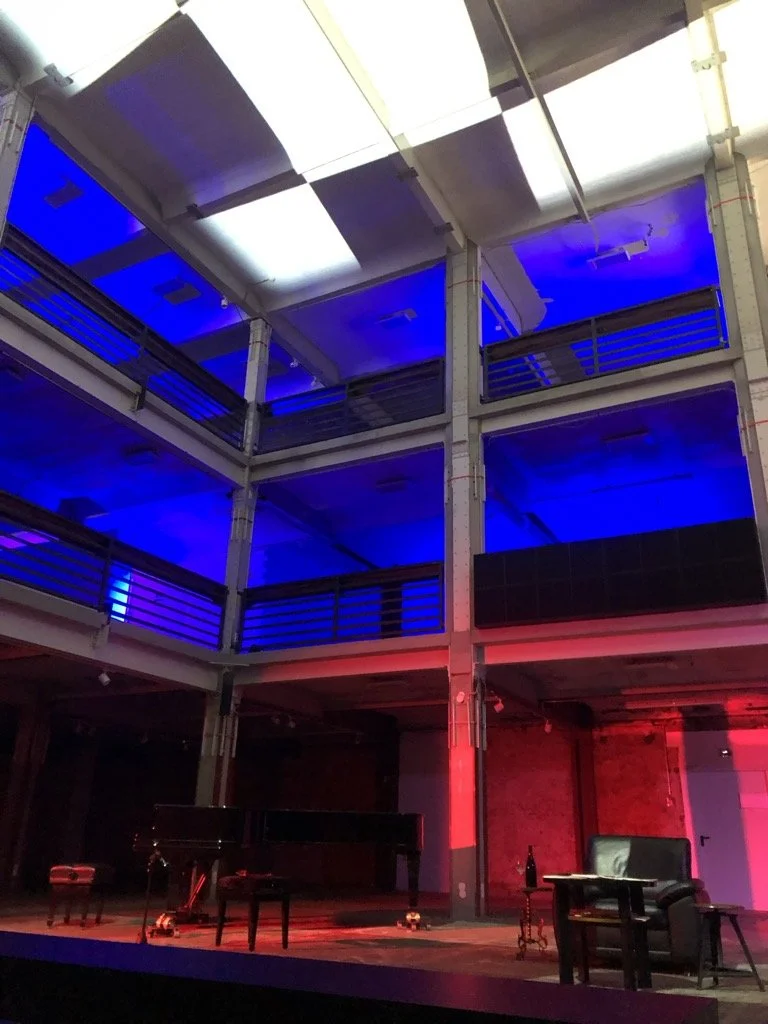
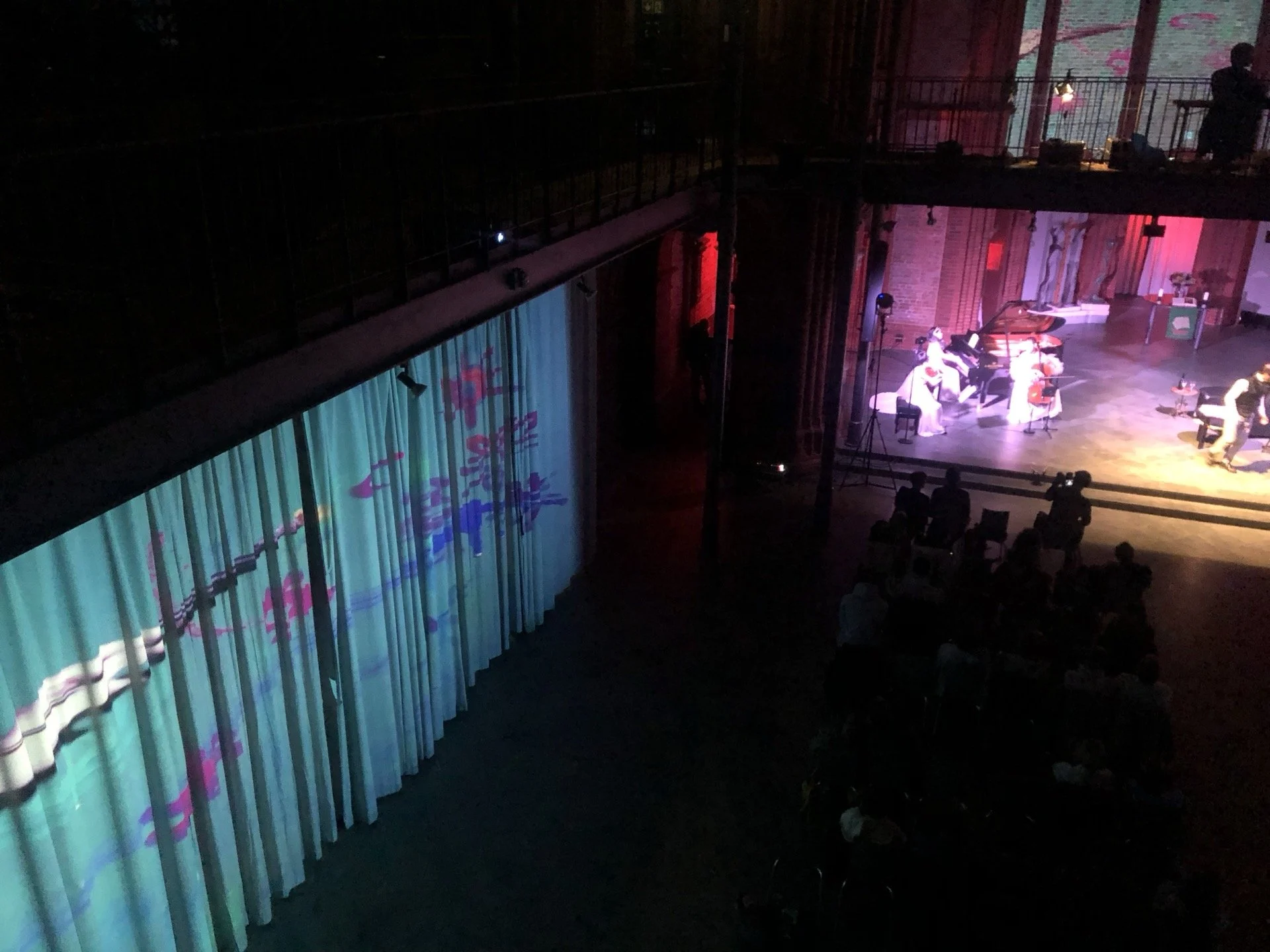
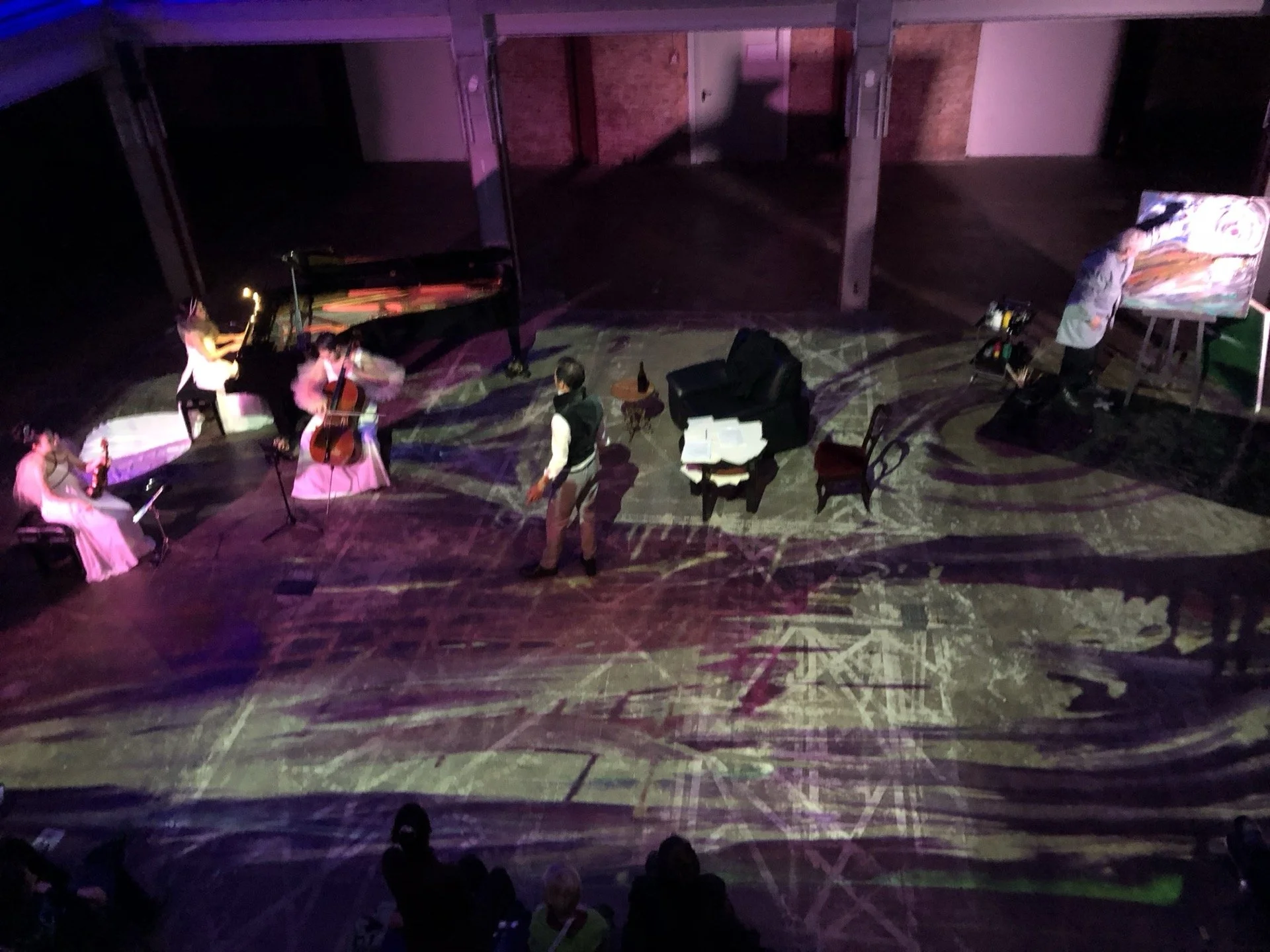
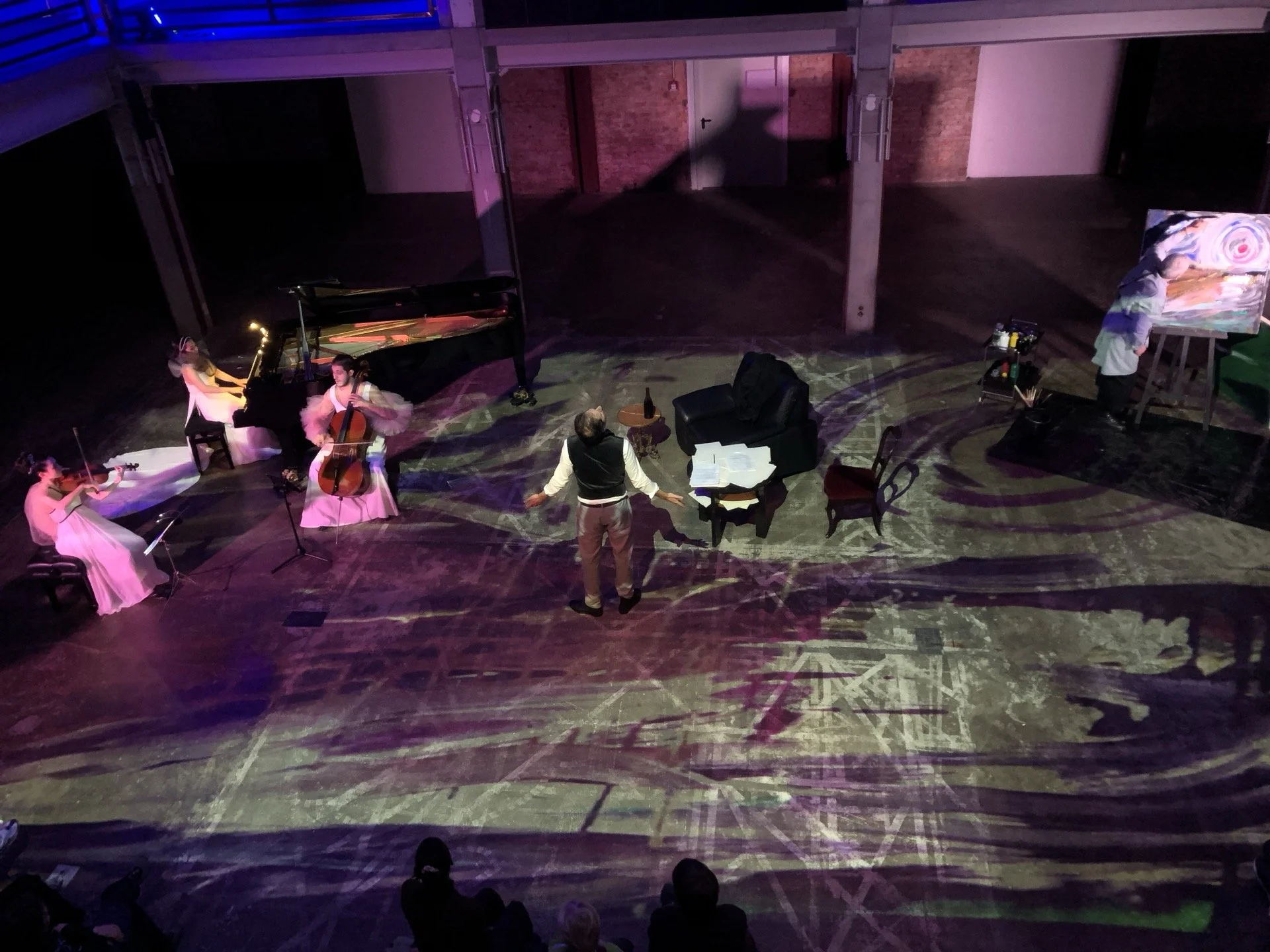
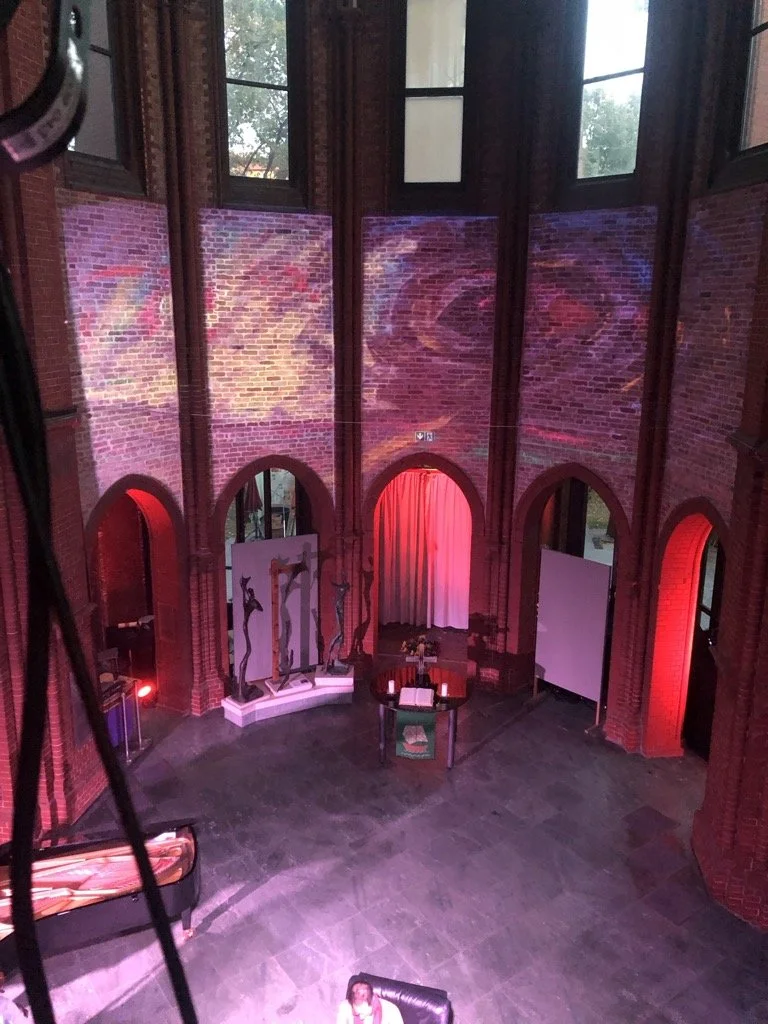
The visual concept was specifically adapted to each venue where the work was presented. In the church, the projections were integrated into the side walls and upper architecture of the space. At Kühlhaus Berlin, the images expanded across different surfaces, including the floor and ceiling, creating a more immersive experience.
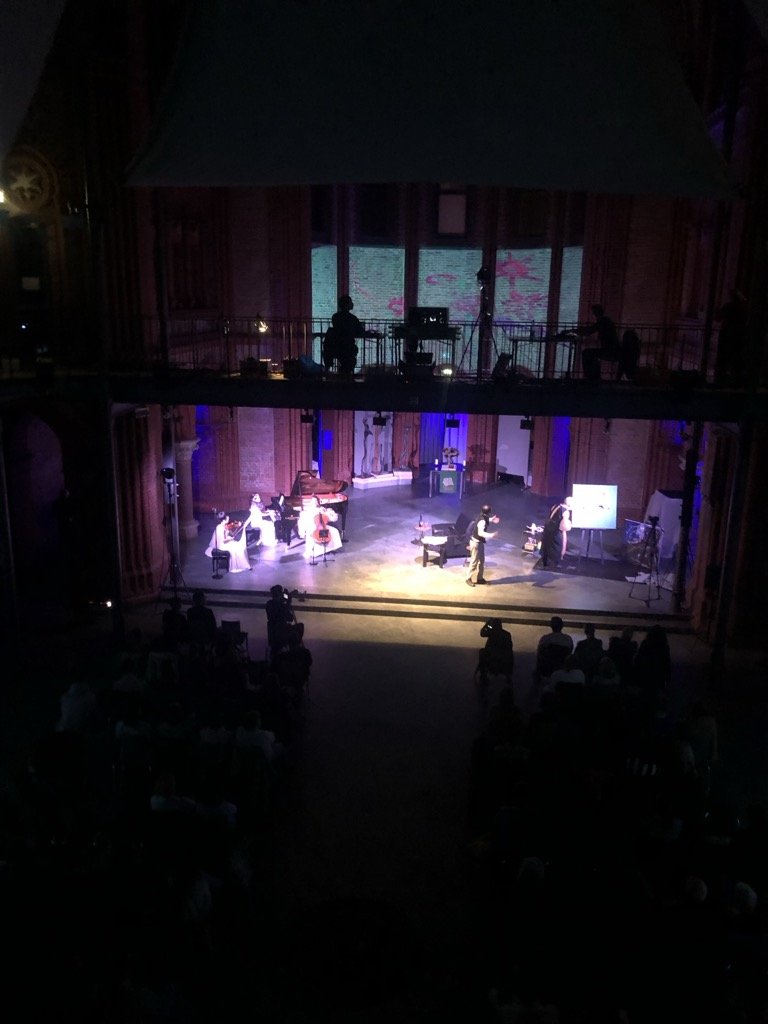
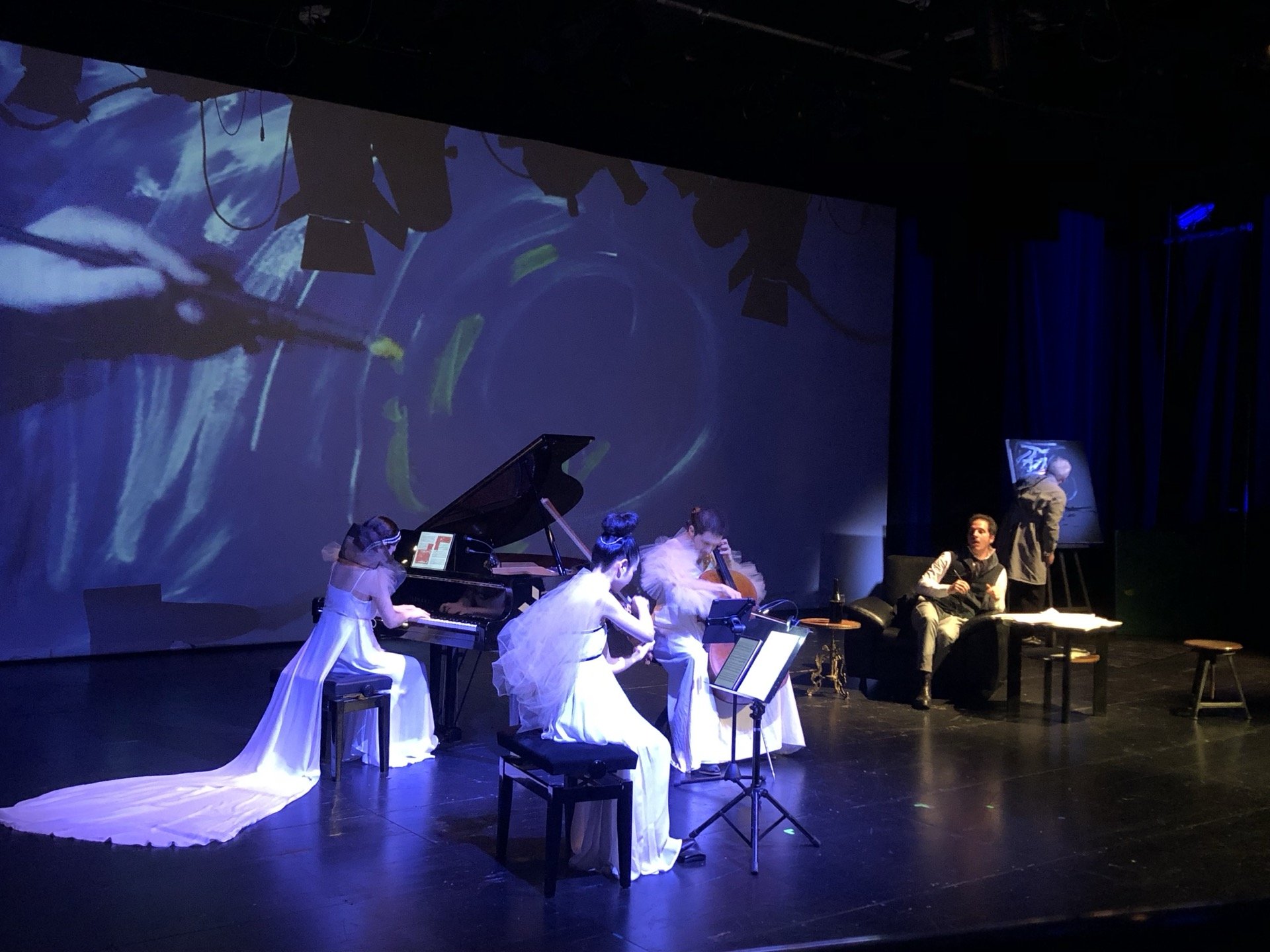
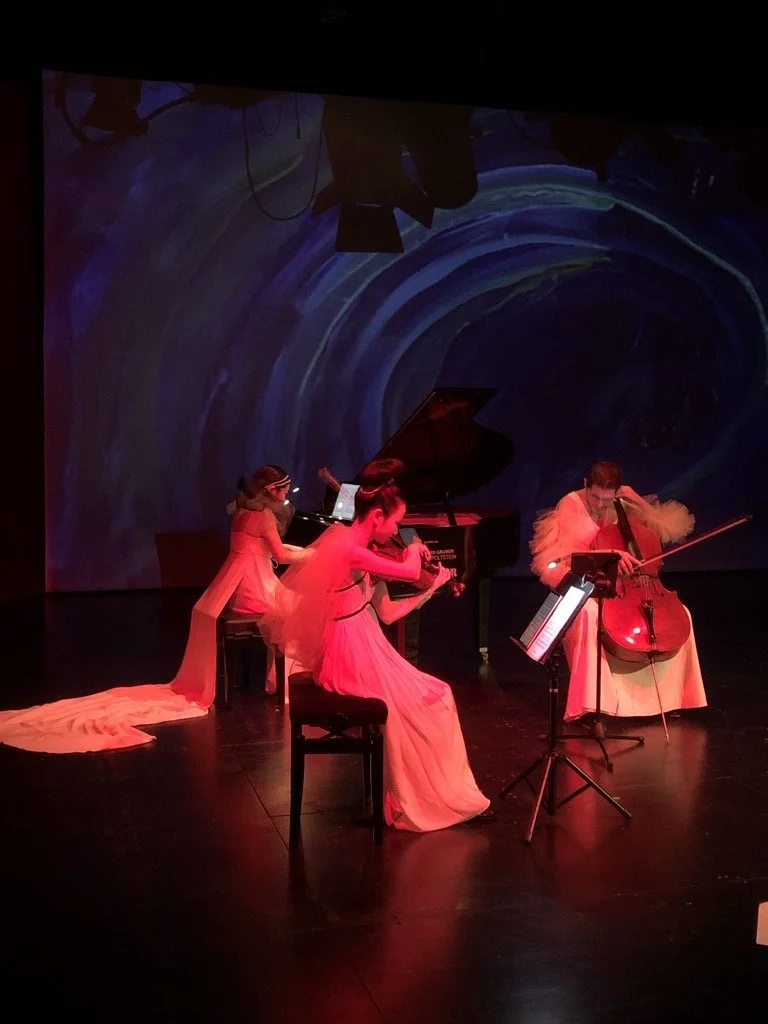
In the version presented in a conventional theatre, the work used a more frontal and classical solution: a large screen covered almost the entire back wall of the stage, projecting images behind the musicians, actors and painter. This configuration preserved the visual strength of the project within a traditional theatre setting, with the projected image becoming a large scenic landscape behind the performers.
| Year | 2024 |
|---|---|
| Format | Staged concert / interdisciplinary performance |
| Media | Reused materials, textiles, clothing, masks, objects, design, construction and recycling / upcycling |
| Music | Franz Schubert |
| Original Concept | Juan María Raso Llarás |
| Marjorie Chau’s Role | Visual artistic direction, spatial concept, video projection, lighting concept, performance space and costume |
| Main Collaborators: | Yugen Trio, Judith von Radetzky, actors, painters and the production’s audiovisual team |
| Documented Locations | Heilig-Kreuz-Kirche, Berlin; Theater Pfütze, Nuremberg; Kühlhaus Berlin |
Chronology
2022 — Heilig-Kreuz-Kirche, Berlin
First presentation of Painting Schubert, adapted to the architecture of the church through projection, light and spatial composition.
2022 — Theater Pfütze, Nürnberg
Adaptation of the work to a conventional theatre space. The projection was concentrated on a large screen at the back of the stage, covering almost the entire rear wall and creating a frontal composition behind the musicians, actors and painter.
2022 — Kühlhaus Berlin, Berlin
A new spatial version of the production, integrating projections into the industrial architecture of the building and expanding the images across different surfaces, including the floor and ceiling.
-
Painting Schubert explores how music can expand beyond the traditional concert format and become a visual, physical and spatial experience.
The project begins with the relationship between sound and image. The live painting responds directly to the music and, by being recorded and projected in real time, becomes a dynamic image that moves beyond the canvas and begins to inhabit the space.
The integration of theatre, text and movement expands this relationship, creating a language in which different disciplines exist simultaneously around the music.
Within this structure, Marjorie Chau’s research focused especially on the relationship between image, architecture, body and perception. The visual environment was not conceived as a fixed set, but as a system that could transform according to the characteristics of each venue.
In some spaces, the projection surrounded the architecture and the audience. In others, such as the theatre, it was concentrated on a large frontal surface behind the performers. This adaptability allowed the work to maintain its visual identity in a church, an industrial space or a traditional theatre stage.
Costume was also part of this visual composition. The musicians and characters did not appear separately from the projection, but were integrated into it. At certain moments, their bodies and costumes were crossed by or combined with the projected image, reinforcing the relationship between music, stage presence and the visual world.
In this way, projection, light, costume, painting, actors and musicians worked as different layers of the same composition.
Marjorie Chau’s contribution was to build this visual and spatial unity, allowing each version of Painting Schubert to transform according to the venue while maintaining a consistent relationship between music, image, body and space.